
The Smartphone Addiction: How Tech Giants Engineered the Loneliest Generation
For seventeen years, I sat across from human beings in corporate human resources offices. I have navigated the messy, beautiful, and deeply complex realities of human behavior. I have seen what happens when people feel valued, and I have witnessed the devastating fallout when they feel commodified. My entire career has been built on understanding the delicate social fabric that holds groups of people together, whether in a boardroom or a breakroom. But over the last decade, I have watched a chilling transformation unfold. The vibrant, chaotic hum of human connection has been replaced by an eerie, blue-lit silence.
I am writing this to you not just as a former HR executive, but as someone who cares deeply about the survival of our shared humanity. We are living through what I can only describe as the most successful and catastrophic psychological heist in human history. We are told that we are the most connected generation to ever walk the earth. Yet, objective reality tells a drastically different story. We are, by every measurable metric, the loneliest, most anxious, and most isolated generation ever recorded.
This is not a tragic accident of modernization. It is not the inevitable byproduct of human progress. The current state of our global digital dependency is the direct result of deliberate, precision-engineered psychological manipulation by some of the most powerful and profitable corporations in Silicon Valley. Tech giants have transformed social media platforms from tools of benign connection into weaponized ecosystems of behavioral engineering. They have looked at human attention, vulnerability, and the deep-seated desire for connection, and they have monetized it.
As someone whose core philosophy is rooted in fairness and objective truth, I cannot look away from this hypocrisy. We have billionaires who restrict screen time for their own children while simultaneously unleashing algorithms designed to addict the global working class. I fiercely oppose any system that preys on the vulnerable, and right now, the most vulnerable among us—our children, our lonely, our isolated—are being harvested for engagement metrics. Let’s sit down, look at the hard data, and have an unfiltered conversation about how the tech industry engineered the loneliness epidemic, and exactly how much they are profiting from our isolation.
The Neuroscience of the Hijack: Weaponizing Human Biology
When people talk about smartphone addiction, there is often an underlying tone of moral judgment. We tell ourselves, or our peers, to simply "put the phone down" or "log off." But this perspective is not just unhelpful; it is scientifically illiterate. Behind every endless scroll session lies a sophisticated web of psychological manipulation designed specifically to capture and maintain human attention.1 These companies are not building software; they are hacking the human central nervous system. Tech giants invest billions of dollars into understanding exactly how the human brain responds to digital stimuli, deliberately crafting interfaces that trigger the exact same reward pathways associated with gambling and severe substance addiction.1
The B.F. Skinner Playbook and the Dopamine Loop
To understand the mechanics of this addiction, we have to look at the neurotransmitter dopamine. Dopamine is deeply tied to our brain’s reward center; it is the "feel-good chemical" that our evolutionary biology uses to reward us for activities essential to our survival, like finding food, securing shelter, or making social connections.1 However, the architects of social media platforms have successfully hijacked these ancient pathways.1
They do this primarily through a concept known as "intermittent reinforcement." This principle was originally discovered through behavioral studies conducted by psychologist B.F. Skinner.1 Skinner demonstrated through his work with laboratory animals that variable ratio schedules of reinforcement—where rewards are entirely unpredictable in their timing and value—produce the most persistent, compulsive behaviors.1 If a rat gets a pellet every time it presses a lever, it only presses the lever when it is hungry. But if the pellet is dispensed randomly, the rat will press the lever obsessively.
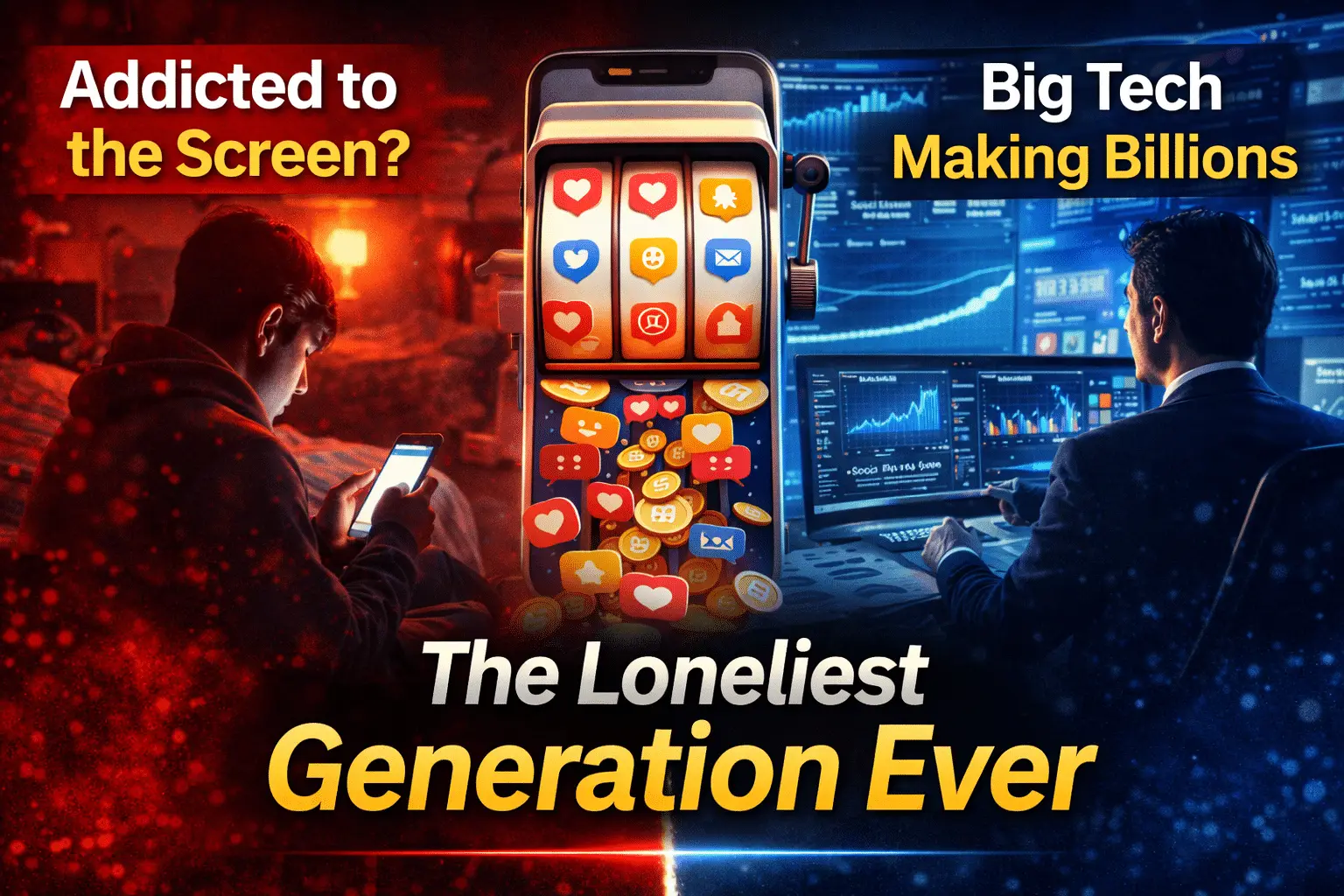
Social platforms deliberately randomize the timing and quality of the content they deliver to maximize our engagement.1 When you pull down to refresh your Instagram or TikTok feed, you are essentially pulling the lever of a digital slot machine. You encounter a mixture of mundane posts interspersed with highly engaging, emotionally resonant, or validating content. This unpredictability triggers a massive dopamine release in the brain’s reward center, creating intense anticipation for the next potentially rewarding experience.1 The cruelty of this biological hack is that the dopamine spike actually occurs during the anticipation of the reward, rather than the consumption of the reward itself, locking the user into a state of perpetual seeking.1
Designing for Compulsion: The Ludic Loop
The design features that facilitate this neurological hijacking are baked into the core architecture of the apps we use daily. Consumer advocates and addiction specialists correctly point out that Big Tech companies construct their platforms to exploit these chemical processes using very specific, weaponized features.4
Consider the "infinite scroll." By eliminating the natural stopping cues of traditional pagination, the endless stream of content creates a flow state where users lose all track of time.5 This forces the human mind into what anthropologist Natasha Dow Schüll accurately diagnoses as "ludic loops"—repeated, inescapable cycles of uncertainty, anticipation, and feedback.6
Then there are notifications. These are not helpful reminders; they are digital nudges explicitly designed to pull users back into the application by creating a sense of urgency and anxiety.5 Add to this the gamification of our social lives—badges, follower counts, and the social proof of "likes"—and you have an environment where human beings are constantly seeking external validation.5
The physiological cost of this is terrifying. The more dopamine users get from their devices, the more their brain demands it to feel normal.4 Eventually, attempting to go without this dopamine trigger leads to a surge in cortisol, the body’s primary stress hormone.4 The addicted user feels a rising tide of anxiety, and their re-engineered brain tells them that the only way to ease this stress is to pick up the phone and check for more notifications.4 This is not a lack of willpower; it is a chemically induced compulsion.
The Confessions of the Architects
I always believe that to truly understand a system, you must listen to what its creators say behind closed doors. The intentionality behind these addictive mechanics is not a conspiracy theory. It has been openly, and sometimes guiltily, admitted by the exact individuals who built them.
Chamath Palihapitiya, the former vice-president of user growth at Facebook, explicitly stated that he feels "tremendous guilt" because the "short-term, dopamine-driven feedback loops that we have created are destroying how society works".7 He accurately noted that this system results in no civil discourse, no cooperation, and the rampant spread of misinformation.7
Sean Parker, the founding president of Facebook, was even more blunt. He openly admitted that the initial goal of the platform was to figure out how to consume as much user time and conscious attention as possible.8 Parker confessed that they were fully aware they were "exploiting a vulnerability in human psychology," noting that the social-validation feedback loop was exactly the kind of thing a hacker would come up with.8 He admitted that the inventors understood this consciously, and they did it anyway.8
Furthermore, Justin Rosenstein, the engineer who helped create the Facebook "Like" button in 2007, originally envisioned it as a path of least resistance to send little bits of positivity.10 Instead, it became a wildly successful tool for engagement, allowing the platform to harvest immense amounts of valuable psychological data to sell to advertisers.10 These architects knew exactly what they were building. They knew it would exploit human vulnerability. But the financial incentives were simply too massive to ignore.
The Attention Economy: Monetizing Our Cognitive Focus
In my corporate life, I evaluated business models to understand organizational behavior. If you want to know why a company acts the way it does, you follow the money. To comprehend why technology conglomerates refuse to implement meaningful safeguards against digital addiction, we must look at the brutal economics of their industry.
We are living in the "attention economy," a system where human cognitive focus—a finite and incredibly precious resource—is treated as a raw commodity to be algorithmically extracted, packaged, and traded for profit.11 The current model treats human attention with the same extractive, exploitative tendencies that industrial corporations apply to natural resources, prioritizing economic gain entirely over human well-being and the public good.12
The Currency of the Digital Age
Digital platforms like Meta (Facebook, Instagram, WhatsApp), Alphabet (YouTube), and ByteDance (TikTok) act as global brokers of human consciousness.11 These corporations offer their services for "free," but they generate staggering revenue by selling highly targeted digital advertising.11 Advertisers pay these platforms to place ads in front of users who are statistically most likely to engage.11
Therefore, the algorithms are ruthlessly optimized not to show you what is true, what is helpful, or what is healthy. They are optimized strictly to maximize engagement, measured in time spent, clicks, and shares.11 This boosts the "attention supply," increasing the number of ad impressions the platform can sell.11 Once you understand this business model, it becomes glaringly obvious that the interests of social media companies are fundamentally opposed to the interests of humanity.13 They need you scrolling; you need to live your life. They cannot coexist peacefully.
The Staggering Financial Incentives to Isolate
To truly grasp the scale of this exploitation, we have to look at the financial metrics. The metric that rules Silicon Valley is Average Revenue Per User (ARPU).14 ARPU evaluates the user value and monetization strategies of a platform, showing exactly how much cash a company extracts from your attention.14
|
Social Media Platform |
Estimated Active Users / Reach |
Financial Metrics and Revenue Data (2024/2025 Estimates) |
|---|---|---|
|
Meta (Instagram) |
~2 Billion+ Globally |
Generates ~$66.9 billion in annual revenue. Projected to account for 50.3% of Meta’s US ad revenue by 2025. US ARPU: $223.15 |
|
Meta (Facebook) |
~2.8 Billion Globally |
Generates tens of billions annually despite an aging demographic. US ARPU: $191.16 |
|
ByteDance (TikTok) |
1.6 Billion Globally (2024) |
Generated an estimated $23 billion in 2024 (a 42.8% YoY increase). 77% of revenue comes from advertising. US ARPU: $109.16 |
|
YouTube (Alphabet) |
2.5 Billion+ Globally |
Dominates video. US users spend an average of 26.21 hours on the mobile app each month. US leads global viewership with 916 billion monthly views.19 |
|
|
89.9 Million US Users |
US users spend an average of 11.5 minutes per visit. Highly lucrative demographic yields a North American ARPU of $25.52.19 |
Table 1: The Economics of Attention – User Base and Revenue Generation across Dominant Platforms.15
Look closely at those numbers. Instagram extracts $223 per user in the United States.16 How do they do this? By morphing their platform to keep you hooked longer. Seeing the existential threat of TikTok’s algorithmic "For You" page, which drove ByteDance to $23 billion in revenue, Instagram pivoted aggressively to "Reels".18 Now, users spend close to two-thirds of their Instagram time watching endless short-form videos.16
Economists call this the "substitution effect." When we focus our attention glued to our phones, we forgo other critical life opportunities.3 Time spent generating that $223 for Mark Zuckerberg is time stolen from raising your children, engaging with your community, building real wealth, or simply getting adequate sleep. The sheer scale of this is mind-bending. Social media ad spending is expected to reach $247.3 billion by the end of 2024, representing a 14.3 percent increase from the previous year, and making it the top global media channel for advertising investment.22 We are quite literally paying for our own psychological manipulation with our finite time on this earth.
The Global Epidemic: Engineering the Loneliest Generation
The profound irony of the "social" media era is that the most digitally connected generation in human history is objectively the loneliest. These platforms were sold to us under the guise of bringing the world closer together. Instead, they have fostered an environment of severe social isolation, anxiety, and depression on a global scale.
The Public Health Catastrophe
The scale of the global loneliness epidemic is staggering. According to a 2025 report by the World Health Organization (WHO), loneliness is affecting people of all ages, but the youth are bearing the brunt of it. Between 17% and 21% of adolescents aged 13 to 29 report feeling lonely.23 Paradoxically, in low-income countries, the rate of reported loneliness is 24%—twice the rate found in high-income countries.23 As cheap smartphones and digital infrastructure rapidly penetrate emerging markets, they bring acute, engineered social isolation with them.
Research consistently demonstrates a direct, dose-response relationship between social media use and loneliness. A 2025 study led by Oregon State University, which surveyed adults aged 30 to 70, found that individuals in the upper 25% of social media usage frequency were more than twice as likely to test as lonely compared to those in the lower 25%.24 What I find most fascinating—and terrifying—about this study is that it isn’t just long hours spent scrolling that cause damage. Many short, compulsive "checks" throughout the day are just as strongly associated with profound loneliness.24
The health implications of this engineered isolation are severe. The U.S. Surgeon General has estimated the health impact of chronic loneliness to be equivalent to smoking 15 cigarettes a day.24 Loneliness and social isolation reduce physical health across the lifespan, increasing the risk of cardiovascular disease, stroke, substance abuse, poor mental health, and early mortality.23 By disrupting organic human connection, tech giants are perpetuating a measurable, lethal public health catastrophe.
The Weaponization of Youth and The Facebook Files
Nowhere is the predatory nature of the attention economy more evident, or more sickening, than in its impact on our children. Adolescence is a period characterized by rapid neurobiological changes that naturally increase the risk for addictive behaviors.25 Social media platforms weaponize these developmental vulnerabilities, exploiting the intense adolescent need for peer validation and social identity.
The impact is highly asymmetric, heavily skewing toward adolescent females. Pew Research indicates that teen girls are significantly more likely than boys to report that social media harms their mental health (25% vs. 14%), undermines their confidence (20% vs. 10%), and severely disrupts their sleep (50% vs. 40%).26 The proliferation of augmented reality filters on apps like Snapchat, TikTok, and Instagram allows users to alter their physical appearance drastically, creating false illusions of perfection that drive intense self-consciousness and body dysmorphia.2
If you want to understand the objective hypocrisy of these tech platforms, you must look at the 2021 Facebook Files. Whistleblower Frances Haugen leaked tens of thousands of internal documents proving that Meta possessed extensive internal research detailing the severe psychological damage their platforms inflicted on teenagers, yet the corporation consistently prioritized profit over product safety.17
The internal Meta documents included a presentation titled "Teen Mental Health Deep Dive," which provided damning, internal statistics regarding the effects of Instagram on youth.28 I want you to read these numbers carefully, because this is what a company accepted as the cost of doing business:
|
Internal Meta Findings: The Impact of Instagram on Teen Girls |
Statistic |
|---|---|
|
Suicidal Ideation |
13.5% of teen girls in the UK (and 6% in the US) who reported suicidal thoughts traced the desire to kill themselves directly to Instagram.25 |
|
Eating Disorders |
17% of teen girls stated that the platform actively worsened their eating disorder.29 |
|
Body Image Dysmorphia |
32% of teen girls who had felt bad about their bodies reported that Instagram made them feel even worse. Among girls already having "hard moments," 1 in 3 found Instagram made body issues worse.17 |
Table 3: Internal Meta Research Findings Leaked in the 2021 Facebook Files.17
Despite possessing this granular data, Facebook executives did damage control, went on press tours to deflect blame, and continued to push algorithms that promoted inflammatory content, anorexia nervosa, and self-harm materials to young users to maintain high engagement metrics.27 As U.S. Senator Richard Blumenthal accurately summarized during the Senate hearings, Facebook adopted the playbook of "Big Tobacco," hiding its own research on the toxic, addictive effects of its products and choosing corporate greed over the mental health of children.25
The Hollow Workplace: A 17-Year HR Perspective on the Collapse of Camaraderie
Let me speak directly from my 17 years of experience in corporate HR. I have spent thousands of hours analyzing employee engagement, workplace culture, and team dynamics. A decade ago, the biggest challenges we faced were interpersonal conflicts or misalignment of corporate goals. Today, the crisis is entirely different: our workplaces are hollowed out. We have highly efficient, digitally connected employees who are profoundly isolated, depressed, and disconnected from the human beings sitting right next to them.
The Crisis of Workplace Loneliness
Workplace loneliness is no longer an anomaly to be managed; it is a structural crisis threatening the very foundation of organizational success. According to Gallup’s State of the Global Workplace 2024 report, 20% of employees worldwide—one in five workers—frequently felt lonely during their previous workday.30 This loneliness cuts across all demographics, though it is particularly acute among younger generations entering the workforce, and interestingly, men are twice as likely as women to report feeling very lonely.31
The transition to remote and hybrid work environments, accelerated by the COVID-19 pandemic, permanently altered the social fabric of the workplace.30 While digital tools such as Slack, Zoom, and Microsoft Teams provide endless connectivity, they offer zero genuine connection.33 Fully remote employees are statistically more likely to report experiencing anger, sadness, and profound loneliness than their on-site counterparts.34
But here is the paradox that HR professionals are currently wrestling with: forcing people back into the office does not cure the loneliness. Research involving 1,000 knowledge workers found that "highly lonely" participants actually conducted nearly half of their work in person.31 You can put people in the same room, but if everyone is glued to their smartphones, the room is still empty.
This digital isolation has caused a catastrophic collapse in employee engagement, which dropped globally from 23% to 21% between 2023 and 2025—the sharpest drop since the pandemic lockdowns.35 Disengaged employees are significantly more susceptible to workplace loneliness, as they lack a sense of meaning or connection to their teams.30 When feelings of isolation go unaddressed, they escalate into hostility, apathy, and a highly toxic work environment.36
Phubbing and the Destruction of Social Capital
One of the most destructive manifestations of smartphone addiction in professional settings that I have observed is the phenomenon of "phubbing"—the act of snubbing a coworker or employee by paying attention to a mobile phone.37 While researchers historically studied this in romantic or private relationships, workplace phubbing is currently devastating organizational cohesion.
Recent research focusing on the corporate and service sectors highlights that coworker and leader phubbing directly triggers emotional irritation, interpersonal deviance, and conflict.38 Imagine an employee coming to their manager for guidance. If that leader "phubs" the employee—looking down at a notification, breaking eye contact—it sends a visceral, psychological signal that the employee is socially excluded and undervalued.40 This rejection creates intense social distance, leading to stress, emotional exhaustion, and a measurable decline in job performance.40 Over time, chronic phubbing incites emotional reactions that evolve into workplace aggression and negligence.38 A team composed of individuals constantly seeking their next dopamine hit via a screen cannot build the institutional trust required for high-level collaboration.
Inadequate Corporate Interventions and the IT/HR Disconnect
From an HR perspective, addressing this is incredibly difficult because we are fighting a billion-dollar neuro-engineering industry. We know that the constant barrage of emails, texts, and social media creates a tethering effect that spikes stress levels and burnout.33
Some progressive organizations have attempted to implement hard boundaries. For instance, Volkswagen configures its servers to shut down work emails for some employees when they are off shift, and Daimler allows employees on holiday to have incoming emails automatically deleted, completely removing the anxiety of a packed inbox upon return.42 For safety reasons, companies like General Motors have outright banned the use of smartphones while walking on facility grounds.42
However, the broader corporate response has been deeply flawed, largely because of a massive disconnect between HR and IT departments. Studies show that just 30% of HR and IT teams collaborate to deliver an effective digital employee experience, and only one in ten HR officers are involved in decisions regarding collaboration tools.43 As a result, the technology industry’s proposed solution to digital isolation is often simply more technology. Microsoft, recognizing the fraying of social fabric across business silos, introduced "Viva Engage," an application intended to act as a "digital twin" of the corporate watercooler.44
This is fundamentally misguided. You cannot digitally replicate the human soul. Substituting organic, face-to-face interaction with yet another digital interface completely misunderstands the crisis. True social capital cannot be algorithmically generated; it requires the undivided, synchronous attention of human beings—the exact resource that smartphones are engineered to destroy.
Global Shockwaves: The Cultural Disruption of Emerging Markets
It is easy to view smartphone addiction as a "first-world problem," confined to the affluent suburbs of Silicon Valley or London. But my commitment to a global perspective requires looking at how this technology is ravaging emerging economies. While Western nations experienced a gradual saturation of digital technology over two decades, emerging markets are currently undergoing hyper-accelerated, violent digital transformations.
The 5G Boom and the End of Traditional Sociability
In India, the surge in smartphone adoption is no longer just an urban phenomenon. Tier-2 and Tier-3 cities are currently the primary drivers of growth in the massive smartphone market.45 Driven by the rapid deployment of 5G networks by operators like Reliance Jio and Bharti Airtel, combined with aggressive retail expansion and flexible financing schemes (such as no-cost EMIs), premium smartphones have flooded rural and suburban areas.45
While this brings undeniable utility—such as digital literacy and financial access—it also introduces unfiltered behavioral engineering to populations that have not had the time to develop cultural antibodies to digital addiction. A survey of smartphone users in urban India highlighted that 81% engaged in social networking, with usage deeply integrated into daily life from ages 15 all the way to 85.46
Case Studies of Cultural Collapse: Hubballi and Belagavi, Karnataka
The real-world consequences of this rapid digital saturation are visibly disrupting local Indian communities. In the city of Hubballi, Karnataka, psychiatrists and educators are documenting a terrifying rise in severe digital addiction among youth.
Dr. Chaitra Hiremath and Dr. Shivanand Hiremath, a psychiatrist couple offering free counseling in local schools, reported identifying 72 severe cases of problematic internet usage and digital addiction within just 11 months, noting that this figure represents merely the "tip of the iceberg".47 They document cases like that of "Navneet," a top-performing 10th-grade student whose introduction to mobile gaming spiraled into a 12-to-14 hour daily addiction.47 The addiction led to aggressive behavioral changes, severe sleep deprivation, erratic eating habits, and complete isolation from his family and friends.47 When separated from his device, Navneet exhibited severe withdrawal symptoms, threatening to run away—a textbook manifestation of "Nomophobia" (the phobia of being without a mobile phone).47
The impact extends deeply into higher education. A comprehensive cross-sectional study conducted across three medical colleges in Karnataka involving 481 undergraduate medical students found that an alarming 43.9% were classified as mobile phone addicts.48 The study linked this addiction to male gender, continuous social media validation seeking, and emotional regulation issues, ultimately resulting in a measurable, statistically significant deterioration in their academic performance.48
Beyond academic and individual health, this digital obsession is fracturing the ancient, traditional cultural life of India. Researchers in Belagavi, Karnataka, observed that excessive smartphone usage has contributed to a noticeable decline in participation in cultural festivals and family gatherings, events that historically formed the absolute bedrock of Indian social life.49
|
Nomophobia Level |
Mean Smartphone Usage (Hours/Day) |
Standard Deviation |
Cultural Impact Observation |
|---|---|---|---|
|
High Nomophobia |
7.81 Hours |
0.9 |
Significant decline in participation in cultural festivals and family gatherings. |
|
Moderate Nomophobia |
5.88 Hours |
0.93 |
Noticeable substitution of physical human connections with digital interactions. |
|
Low Nomophobia |
4.01 Hours |
0.99 |
Maintained baseline social functioning. |
Table 2: ANOVA Group Summary on the Impact of Nomophobia on Screen Usage and Lifestyle Factors.50 The ANOVA test (Test Statistic 122.04, p-value 5.64E-26) indicates a highly statistically significant difference in smartphone usage across groups.50
Individuals with high levels of nomophobia (averaging 7.81 hours of screen time daily) are increasingly substituting physical human connections and familial relationships with shallow, algorithmically driven digital interactions.50 This phenomenon is spilling into urban public spaces. In cities like Hyderabad, digital overreach—particularly the public consumption of short-form video "reels"—has become a widespread public nuisance, transforming communal spaces like metro trains, hospitals, and restaurants into zones of alienated individuals glued to screens.51
Recognizing the severity of the crisis, the Karnataka government recently explored proposals to formally restrict mobile phone and social media usage for children under 16, launching initiatives like “Mobile Bidi, Pustaka Hidi” (Drop the Mobile, Hold a Book) to combat screen dependence.52 When a government has to launch initiatives to beg children to look up from their screens, we are witnessing a profound societal failure.
The Erosion of Democracy and Cognitive Autonomy
As a social commentator, I look at the broader implications of this addiction, and the reality is that the impact of global smartphone addiction extends far beyond individual loneliness and workplace inefficiency. It poses an existential threat to the cognitive autonomy of the individual and the stability of our democratic institutions.
The Hijacking of the Human Mind
Cognitive autonomy is the fundamental capacity of an individual to consciously direct their own focus and reasoning. The attention economy systematically dismantles this.11 We must stop viewing social media platforms as neutral public squares; they are engineered traps designed to monetize human behavior.11 By maintaining users in a state of continuous, fragmented, and emotionally charged stimulation, these platforms degrade the human brain’s capacity to sustain deep thought, consolidate memories, and regulate emotional responses.11
Furthermore, the algorithmic demand for continuous self-presentation creates a state of perpetual self-surveillance. Individuals are trained to view their personal worth as contingent upon external, algorithmic validation rather than internal reflection or moral grounding.11 This represents a form of what researchers call "digital asymmetrical warfare" against the individual mind, exploiting impulsive curiosity and social comparison without offering meaningful disclosure of the psychological costs.11
Affective Polarization and the Death of Civil Discourse
When cognitive autonomy fails, collective democratic reasoning collapses. The algorithms governing the attention economy do not distinguish between factual discourse and incendiary falsehoods; they optimize strictly for engagement.11 Because human psychology is deeply reactive to outrage, anxiety, and tribalism, algorithms naturally amplify divisiveness and hate.11
This has led to a severe increase in "affective polarization"—the extent to which individuals view opposing political or social groups with overt hostility.11 Research indicates that affective polarization in the United States has nearly doubled since the mid-1990s, with the acceleration directly correlating to the rise of the social media era.11 Linguistic analysis reveals that every additional use of "outgroup-related language" (e.g., disparaging political opponents) increases the likelihood of a post being shared by a massive 67%.11 False news and misinformation spread six times faster than truthful reporting precisely because falsehoods can be engineered to maximize emotional outrage, perfectly satisfying the algorithm’s insatiable demand for engagement.11
Substantive geopolitical and domestic debates are reduced to curated flashes of contextless outrage, distorting our collective memory and public discourse.11 This environment serves as a fertile breeding ground for online radicalization, moving individuals from isolated echo chambers into real-world violence.11 A handful of corporate actors now wield monopolistic influence over collective human consciousness, dictating the boundaries of reality for billions of users.11 Traditional antitrust laws, which focus primarily on consumer pricing, are entirely unequipped to address the profound harms of cognitive manipulation caused by these "attentional monopolies".11
The Regulatory Illusion: Protection vs. The Surveillance State
As the public health and democratic costs of the attention economy become undeniable, global regulatory bodies are attempting to intervene. But as someone who stands for fairness and the rule of law, I have to call out the immense complexity and frequent hypocrisy in how governments are trying to solve this. Regulating psychological manipulation on the internet often pits child safety advocates directly against privacy defenders.
The UK Online Safety Act
The United Kingdom has established one of the most aggressive frameworks to combat digital harm with the enforcement of the Online Safety Act (OSA).53 Passed in 2023, the law imposes stringent duties of care on search engines and social media platforms.53 Services accessed by children must proactively assess and mitigate the risks posed by their algorithms and features, specifically targeting content related to suicide, self-harm, eating disorders, and bullying.53
The most contentious enforcement mechanism of the OSA is the mandate for highly effective age assurance technologies.53 Platforms must prevent minors from accessing adult content or developmentally inappropriate features using biometric age estimation (such as AI selfie analysis), government ID uploads, or financial data verification.53
While well-intentioned, this framework has triggered massive secondary consequences. Terrified of staggering regulatory liabilities, many online services are engaging in rampant over-censorship. Platforms struggle to differentiate between malicious content promoting eating disorders and supportive content discussing recovery.55 Consequently, they aggressively take down vast swaths of content, paradoxically making it harder for individuals to access helpful mental health resources.55 Furthermore, independent forums and niche communities—such as cycling boards or web-based games—have shut down entirely, unable to afford the massive compliance infrastructure required by the law.55
The American Privacy Conundrum
In the United States, similar initiatives are gaining massive traction. By 2025, half of the U.S. states had mandated some form of age verification for accessing certain platforms, and federal legislation like the Kids Online Safety Act (KOSA) remains a major focal point of debate.53
However, digital rights organizations, such as the Electronic Frontier Foundation (EFF), vehemently oppose these mandates, and frankly, they have a valid point.56 They argue that age verification laws act as censorship mechanisms that undermine the fundamental speech rights and anonymity of all users, adult and youth alike.56 Forcing citizens to hand over biometric data or government identification to private corporations just to access the internet creates massive new privacy and security vulnerabilities.56
We are faced with a profound dilemma: how do we protect our most vulnerable citizens from corporate behavioral engineering without accidentally building an inescapable digital surveillance state? The European Commission is currently exploring what I believe is a much more sensible route: targeting the mechanism rather than the user. Their recent fitness checks on consumer protection legislation identified the extreme risks associated with "addictive design," specifically calling out infinite scrolling.57 Classifying these psychological traps as fundamentally deceptive or unsafe consumer products could provide a regulatory path that bans the manipulation itself, rather than attempting to age-gate the internet and force adults to scan their faces to read the news.57
The Path Forward: Reclaiming Our Humanity
I refuse to end this analysis on a note of despair. I have spent my life working with people, and I know the profound resilience of the human spirit. The narrative that smartphones and social media are merely neutral tools reflecting human nature is a highly lucrative corporate fiction. The data, the whistleblowers, and our own lived experiences present a distinctly different truth: a handful of technology conglomerates have intentionally engineered products to exploit fundamental human neurological vulnerabilities. Through the relentless application of variable reward schedules, dopamine hijacking, and algorithmic polarization, they have captured human attention and converted it into hundreds of billions of dollars in advertising revenue.
The externalities of this business model are catastrophic. It has manufactured a generation plagued by unprecedented loneliness, anxiety, and dysmorphia. It has hollowed out the social capital of the workplace, replacing collegial trust with digital phubbing and emotional exhaustion. In emerging markets, it is rapidly dismantling traditional cultural structures, substituting familial bonds with algorithmic addiction. On a macro level, it has eroded cognitive autonomy, fractured our shared reality, and weaponized our political discourse.
Addressing this crisis requires a fundamental paradigm shift. We must stop viewing digital addiction as an individual moral failing and recognize it as a structural consequence of an extractive economic model. Human attention and cognitive autonomy must be legally and culturally protected as public goods—a "cognitive commons" that cannot be endlessly mined for corporate profit without severe regulation.
The path forward does not require the abolition of the internet or the rejection of digital connectivity. I love technology; I just despise how it is currently being weaponized. The solution requires demanding that technology serve human flourishing rather than behavioral exploitation. This means outlawing predatory design mechanics like infinite scrolling and manipulative notifications. It means holding platforms legally accountable for algorithmic radicalization. Most importantly, it means fundamentally shifting the financial incentives away from the sheer extraction of human time.
Until the attention economy is dismantled and replaced with a regenerative, human-centric model of digital interaction, the global epidemic of isolation will only deepen. We have to look up from our screens. We have to look each other in the eye again. Our sanity, our society, and our shared humanity depend on it.
Works cited
- The Real Reason People Can’t Stop Scrolling — It’s Not What You Think – Ameco Press, accessed on March 6, 2026, https://amecopress.net/real-reason-people-cant-stop-scrolling-its-not-what-you-think/
- Social media’s impact on our mental health and tips to use it safely – UC Davis Health, accessed on March 6, 2026, https://health.ucdavis.edu/blog/cultivating-health/social-medias-impact-our-mental-health-and-tips-to-use-it-safely/2024/05
- Paying Attention: The Attention Economy – Berkeley Economic Review, accessed on March 6, 2026, https://econreview.studentorg.berkeley.edu/paying-attention-the-attention-economy/
- Detoxifying Addictive Tech | The Regulatory Review, accessed on March 6, 2026, https://www.theregreview.org/2024/04/27/detoxifying-addictive-tech/
- Designing for Dopamine. Discover how psychology influences… | by UX Magazine | Jan, 2026, accessed on March 6, 2026, https://uxmag.medium.com/designing-for-dopamine-540224fb0979
- Social media copies gambling methods ‘to create psychological cravings’ – The Guardian, accessed on March 6, 2026, https://www.theguardian.com/technology/2018/may/08/social-media-copies-gambling-methods-to-create-psychological-cravings
- Former Facebook executive: social media is ripping society apart – The Guardian, accessed on March 6, 2026, https://www.theguardian.com/technology/2017/dec/11/facebook-former-executive-ripping-society-apart
- Former Facebook executive warns of social media dangers – YouTube, accessed on March 6, 2026, https://www.youtube.com/watch?v=X6lEkO6NRAM
- Former Facebook execs believe social media is destroying society | kare11.com, accessed on March 6, 2026, https://www.kare11.com/article/tech/former-facebook-execs-believe-social-media-is-destroying-society/499015356
- ‘Our minds can be hijacked’: the tech insiders who fear a smartphone dystopia | Technology, accessed on March 6, 2026, https://www.theguardian.com/technology/2017/oct/05/smartphone-addiction-silicon-valley-dystopia
- The Attention Economy and the Collapse of Cognitive Autonomy …, accessed on March 6, 2026, https://www.law.georgetown.edu/denny-center/blog/the-attention-economy/
- ATTENTION ECONOMY – the United Nations, accessed on March 6, 2026, https://www.un.org/sites/un2.un.org/files/attention_economy_feb.pdf
- The Attention Economy – Humane Tech, accessed on March 6, 2026, https://www.humanetech.com/youth/the-attention-economy
- Understanding and Using ARPU: A Quick Guide to Average Revenue Per User, accessed on March 6, 2026, https://cfoproanalytics.com/cfo-blog/f/understanding-and-using-arpu-a-quick-guide-to-average-revenue-per-user/
- Meta Statistics 2026: Key Metrics & Platform Performance – Sociallyin, accessed on March 6, 2026, https://sociallyin.com/meta-statistics/
- Instagram Will Make Up More than Half of Meta’s US Ad Revenues in 2025 | EMARKETER, accessed on March 6, 2026, https://www.emarketer.com/press-releases/instagram-will-make-up-more-than-half-of-metas-us-ad-revenues-in-2025/
- Facebook revelations: what is in cache of internal documents? – The Guardian, accessed on March 6, 2026, https://www.theguardian.com/technology/2021/oct/25/facebook-revelations-from-misinformation-to-mental-health
- TikTok Revenue and Usage Statistics (2026) – Business of Apps, accessed on March 6, 2026, https://www.businessofapps.com/data/tik-tok-statistics/
- Social Media in America: 10 Stats that are Changing in 2025 – Sprinklr, accessed on March 6, 2026, https://www.sprinklr.com/blog/social-media-in-america/
- top social platforms in 2025 — DataReportal – Global Digital Insights, accessed on March 6, 2026, https://datareportal.com/reports/digital-2025-sub-section-top-social-platforms
- Social App Report 2025: Revenue, User and Benchmark Data, accessed on March 6, 2026, https://www.businessofapps.com/data/social-app-report/
- 28 Social Media Statistics Marketers and Creators Need to Know for 2025 – ClearVoice, accessed on March 6, 2026, https://www.clearvoice.com/resources/social-media-statistics/
- Social connection linked to improved health and reduced risk of …, accessed on March 6, 2026, https://www.who.int/news/item/30-06-2025-social-connection-linked-to-improved-heath-and-reduced-risk-of-early-death
- Loneliness in U.S. adults linked with amount, frequency of social media use, accessed on March 6, 2026, https://health.oregonstate.edu/news-and-stories/2025-10/loneliness-us-adults-linked-amount-frequency-social-media-use
- Questions & Answers – University of San Diego, accessed on March 6, 2026, https://www.sandiego.edu/cai/documents/20220714_FAQs_final.pdf
- Teens, Social Media and Mental Health – Pew Research Center, accessed on March 6, 2026, https://www.pewresearch.org/internet/2025/04/22/teens-social-media-and-mental-health/
- 2021 Facebook leak – Wikipedia, accessed on March 6, 2026, https://en.wikipedia.org/wiki/2021_Facebook_leak
- How the Media Frames Mental Health and Social Media: A Case Study of the Facebook Whistleblower – UNH Scholars Repository, accessed on March 6, 2026, https://scholars.unh.edu/cgi/viewcontent.cgi?article=1055&context=comm-entary
- Facebook Whistleblower: Frances Haugen | Social Media Victims Law Center, accessed on March 6, 2026, https://socialmediavictims.org/facebook-whistleblower-frances-haugen/
- Workplace loneliness: Why it affects 1 in 5 workers today – HR Executive, accessed on March 6, 2026, https://hrexecutive.com/workplace-loneliness-why-it-impacts-1-in-5-workers-today/
- The Lonely Workforce: How Disconnection Impacts Success – HRD Connect, accessed on March 6, 2026, https://www.hrdconnect.com/2025/06/11/the-lonely-workforce-how-disconnection-impacts-success/
- Factors and consequences of loneliness in the digital workplace: A systematic literature review and framework for empirical test, accessed on March 6, 2026, https://ceur-ws.org/Vol-4034/paper85.pdf
- The Dual Impact of Digital Connectivity: Balancing Productivity and Well-Being in the Modern Workplace – PMC, accessed on March 6, 2026, https://pmc.ncbi.nlm.nih.gov/articles/PMC12192724/
- The Remote Work Paradox: Higher Engagement, Lower Wellbeing – Gallup.com, accessed on March 6, 2026, https://www.gallup.com/workplace/660236/remote-work-paradox-engaged-distressed.aspx
- Gallup says employee engagement is falling — but does it still matter in 2025? – Simpplr, accessed on March 6, 2026, https://www.simpplr.com/blog/employee-engagement-falling-does-it-matter/
- Workplace Loneliness Threatens Employee Belonging and Retention – SHRM, accessed on March 6, 2026, https://www.shrm.org/topics-tools/news/hr-quarterly/workplace-loneliness-threatens-employee-belonging-retention
- Co-worker phubbing: A qualitative exploration of smartphone use during work breaks, accessed on March 6, 2026, https://pubmed.ncbi.nlm.nih.gov/39300692/
- Scrolling away and inviting tussle: unveiling the impact of peer phubbing on workplace aggression – Emerald Publishing, accessed on March 6, 2026, https://www.emerald.com/ijoa/article/doi/10.1108/IJOA-07-2024-4683/1271996/Scrolling-away-and-inviting-tussle-unveiling-the
- Managing coworker conflict: investigating the effect of workplace phubbing and mindfulness on employee deviant and negligent behavior | Evidence-based HRM | Emerald Publishing, accessed on March 6, 2026, https://www.emerald.com/ebhrm/article/13/5/781/1249191/Managing-coworker-conflict-investigating-the
- Leader Phubbing and Employee Job Performance: The Effect of Need for Social Approval, accessed on March 6, 2026, https://www.dovepress.com/leader-phubbing-and-employee-job-performance-the-effect-of-need-for-so-peer-reviewed-fulltext-article-PRBM
- The Impact of Technology on Employee Relations: Navigating Challenges and Opportunities Presented by Digital Communication Tools – Ignite HCM, accessed on March 6, 2026, https://www.ignitehcm.com/blog/the-impact-of-technology-on-employee-relations-navigating-challenges-and-opportunities-presented-by-digital-communication-tools
- Is your workplace culture fuelling a tech addiction?, accessed on March 6, 2026, https://www.wsps.ca/resource-hub/hr/is-your-workplace-culture-fuelling-a-tech-addiction
- HR and IT collaboration shortfall threatens digital employee experience success, accessed on March 6, 2026, https://www.thepeoplespace.com/insights/ideas/hr-and-it-collaboration-shortfall-threatens-digital-employee-experience-success
- How Technology Can Rebuild Workplace Connections, Camaraderie, accessed on March 6, 2026, https://www.shrm.org/topics-tools/news/technology/how-technology-can-rebuild-workplace-connections-camaraderie
- India’s Smartphone Boom: Tier-2 & 3 Cities Drive 5G Sales – Archive Market Research, accessed on March 6, 2026, https://www.archivemarketresearch.com/news/article/indias-smartphone-boom-tier-2-3-cities-drive-5g-sales-15631
- Smartphone Usage Trends in Urban India | PDF – Scribd, accessed on March 6, 2026, https://www.scribd.com/document/846821249/EMarketer-Smartphone-Activities-Conducted-by-Smartphone-Users-in-Urban-India-Feb-2018-236344
- Glued to phones, students spoil their life on net | Hubballi News – Times of India, accessed on March 6, 2026, https://timesofindia.indiatimes.com/city/hubballi/glued-to-phones-students-spoil-their-life-on-net/articleshow/71364893.cms
- The Effects of Smartphone Addiction on Academic Performance Among Undergraduate Medical Students in Karnataka, India: A Multi-centric Study – PMC, accessed on March 6, 2026, https://pmc.ncbi.nlm.nih.gov/articles/PMC11260275/
- PREVALENCE OF SMARTPHONE ADDICTION AND ITS IMPACT ON SLEEP QUALITY AMONG SCHOOL-GOING STUDENTS, accessed on March 6, 2026, https://jahm.co.in/index.php/jahm/article/download/1835/947/4797
- The Impact of Smartphone Addiction and Nomophobia on Lifestyle Factors – IJIP, accessed on March 6, 2026, https://ijip.in/wp-content/uploads/2024/12/18.01.206.20241204.pdf
- Reel Disruption: How Mobile Screen Addiction Is Disturbing Public Life – Deccan Chronicle, accessed on March 6, 2026, https://www.deccanchronicle.com/lifestyle/reel-disruption-how-mobile-screen-addiction-is-disturbing-urban-public-life-1890567
- Screen Time Concerns: Karnataka Mulls Mobile Phone Curbs for Under-16s to Curb Addiction – coastaldigest.com, accessed on March 6, 2026, https://coastaldigest.com/screen-time-concerns-karnataka-mulls-mobile-phone-curbs-for-under-16s-to-curb-addiction/
- UK Online Safety Act Tougher Than Proposed US Law – ConnectSafely, accessed on March 6, 2026, https://connectsafely.org/uk-enforcing-tough-online-protection-law-as-us-considers-less-ambitious-law/
- Digital regulation | UK Regulatory Outlook February 2026 – Osborne Clarke, accessed on March 6, 2026, https://www.osborneclarke.com/insights/regulatory-outlook-february-2026-digital-regulation
- The UK’s Online Safety Act’s Predictable Consequences Are a Cautionary Tale for America, accessed on March 6, 2026, https://itif.org/publications/2025/09/03/the-uks-online-safety-acts-predictable-consequences-are-cautionary-tale-for-the-us/
- The Year States Chose Surveillance Over Safety: 2025 in Review – EFF.org, accessed on March 6, 2026, https://www.eff.org/deeplinks/2025/12/year-states-chose-surveillance-over-safety-2025-review
- Life online in 2025 – safer how? – Taylor Wessing, accessed on March 6, 2026, https://www.taylorwessing.com/en/interface/2024/predictions-2025/life-online-in-2025—safer-how
Leave a Reply