
The Digital Pivot and the Modern Transaction
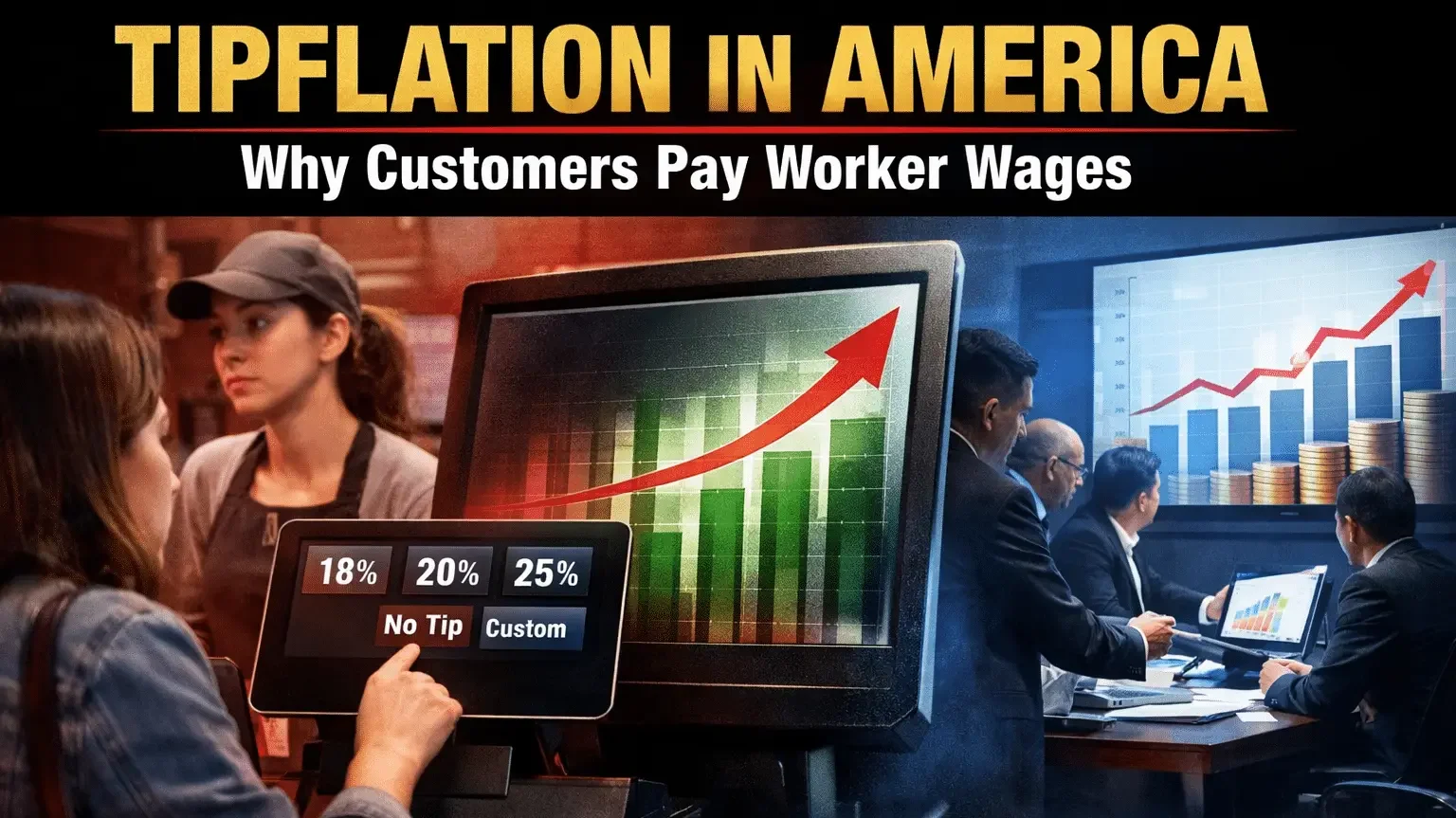
Within the brightly lit, fast-casual bakery franchises and independent coffee shops across the United States, a familiar and increasingly fraught ritual unfolds millions of times each day. A consumer orders a coffee and a pastry—items they will carry to their own table and the wrappers of which they will later discard into a self-service bin. The cashier taps a few buttons to finalize the order, and then comes the pivot. The digital point-of-sale (POS) screen is physically swiveled toward the consumer. It glows with a brightly colored, unavoidable prompt, offering preset gratuity options: 18%, 20%, 25%, or a custom amount. A significantly smaller, often grayed-out button at the bottom reads “No Tip.” The cashier deliberately averts their eyes, adhering to an unspoken script of enforced awkwardness, while the consumer, acutely aware of the line of people behind them and the minimum-wage reality of the worker in front of them, taps a preset percentage.
This brief, localized moment of social friction is not an accident of modern commerce; it is the deliberate, calculated outcome of a systemic shift in the United States economy. What was historically a discretionary reward for exceptional, personalized table service has been fundamentally re-engineered into a mandatory wage subsidy. By early 2026, the American consumer is experiencing profound “tipping fatigue,” with 66 percent of citizens reporting they feel pressured to tip more than is necessary, a significant increase from 53 percent in 2023.1 On average, consumers have paid approximately $150 over the past year in gratuities they felt were entirely unwarranted, with 64 percent admitting they provided a tip even after receiving demonstrably poor service.1
The frustration of the American consumer is palpable and widespread, yet it is frequently misdirected at the service workers themselves. The true architects of this dynamic are multi-million-dollar corporations that have seamlessly integrated digital behavioral nudges to emotionally manipulate working-class and middle-class customers. By weaponizing social guilt, these corporate entities have successfully outsourced their fundamental labor costs, effectively transforming the consumer base into a decentralized payroll department while simultaneously shielding and expanding their own profit margins. The checkout screen is no longer merely a payment processor; it is the frontline of a vast, structural transfer of economic responsibility.
Defining the Core Problem: The Anatomy of Tipflation
To understand the current crisis within the service economy, it is necessary to define the exact nature of the problem, a phenomenon widely referred to as “tipflation.” This term encompasses two distinct but converging trends: the inflation of the suggested gratuity percentages on digital screens, and the aggressive proliferation of contexts in which tips are now expected.3
The American service system operates on a fundamental misalignment of economic accountability. In a standard, healthy labor market, an employer purchases labor from an employee at a mutually agreed-upon, livable rate, which is then factored into the final retail price of the good or service. In the United States hospitality and service sectors, this equation has been intentionally fractured. Employers advertise artificially low menu prices, pay their staff a legally sanctioned subminimum wage, and rely on the unpredictable generosity of the customer to bridge the gap between poverty and survival.4
This dynamic matters immensely because it obscures the true cost of goods, creates volatile and often discriminatory income streams for workers, and places an unfair emotional and financial burden on the consumer.5 The issue is widely misunderstood in popular discourse as a crisis of modern etiquette, an overreach of entitlement by service workers, or a symptom of a demanding younger generation. In reality, it is a highly sophisticated corporate strategy. When 48 percent of quick-service restaurants—establishments where no traditional table service is provided and interactions are strictly transactional—now prompt for tips, the mechanism ceases to be a gratuity.6 It becomes a hidden, privatized service tax levied by the employer, paid by the consumer, and passed directly to the worker to offset corporate payroll liabilities.
The societal backlash is measurable. By 2026, 81 percent of Americans indicated that they believe tipping has gotten completely out of control, and a staggering 42 percent advocate for banning the practice of tipping entirely.4 The consumer is recognizing that the practice has mutated from a simple gratuity into a system where the public is expected to make up for what employers and policymakers have systematically failed to do: guarantee a decent, predictable wage for labor rendered.4
The Historical Context: The Erosion of the Service Wage
The architecture of the American tipping system was not constructed overnight; it is the culmination of decades of targeted corporate lobbying, policy decisions, and regulatory stagnation. To comprehend how the digital screens of 2026 operate, one must trace the legal evolution of the service wage.
The Fair Labor Standards Act (FLSA) of 1938 established the federal minimum wage, the 40-hour workweek, and the prohibition of child labor, standing as a landmark achievement of the New Deal.7 However, the federal government explicitly excluded tipped workers from these foundational protections.7 This exclusion was deeply rooted in post-Civil War legacy practices, originally designed to keep wages suppressed for newly freed, marginalized populations who were heavily concentrated in hospitality, domestic work, and railway service. By denying these workers a guaranteed minimum wage, employers were legally permitted to force them to rely entirely on the charity of patrons.
It was not until 1966 that Congress officially created the “tip credit,” a legal provision allowing employers to pay tipped workers a subminimum wage, under the explicit assumption that customer gratuities would elevate their total earnings over the standard minimum wage threshold.7 Initially, the tip credit was set as a proportional percentage of the prevailing minimum wage, ensuring that as the cost of living rose, the base wage for service workers would nominally rise alongside it.7
However, in 1996, intense lobbying efforts resulted in legislative amendments that completely decoupled the tipped minimum wage from the standard federal minimum wage, permanently freezing the subminimum rate at an astonishingly low $2.13 per hour.7 Three decades later, in 2026, this $2.13 rate remains the federal standard for tipped workers.7 While some states have enacted their own higher minimums, the federal stagnation has completely eroded the purchasing power of service workers across vast swaths of the country, deepening their absolute, existential reliance on the consumer.7
The situation was exponentially exacerbated by the macroeconomic shocks of the COVID-19 pandemic. During the height of the crisis in 2020 and 2021, consumers were heavily encouraged by societal messaging to tip generously to support “essential workers” who were risking their health to keep local businesses afloat.6 This temporary, crisis-driven surge in consumer goodwill coincided perfectly with the rapid replacement of cash transactions by contactless, digital point-of-sale systems.6 When the pandemic waned and the health risks subsided, corporate entities did not revert to pre-pandemic tipping norms. Instead, they permanently codified the inflated, crisis-era tipping expectations into the default software architecture of their checkout screens.6
The Structural Mechanism: UX Dark Patterns and Psychological Coercion
The transition from a glass tip jar resting passively on a counter to a glowing digital interface represents a masterclass in psychological manipulation. The point-of-sale ecosystem in 2026 is dominated by massive technology platforms such as Square, Toast, and Clover, all of which actively market their software to business owners specifically on the promise of increasing tip revenue.11 A study conducted by Square revealed that businesses implementing their digital tipping interfaces saw a 26 percent increase in total tip volume, while Toast reported that servers utilizing their digital prompts received average tips of 18.2 percent, compared to 15.4 percent without a digital prompt.11
These software platforms achieve these lucrative outcomes through applied psychological dynamics and User Experience (UX) “dark patterns”—design interfaces meticulously crafted to trick, nudge, or pressure users into making financial decisions that disproportionately benefit the business.15
The primary mechanism deployed is “Choice Architecture”.15 Traditional cash tipping requires discretionary mathematics and physical friction; the consumer must calculate a specific percentage of the bill and physically hand over additional currency.15 Digital interfaces entirely remove this friction through predefined, instant “tap-to-tip” options.15 By setting the minimum default option at an inflated 15% or 18% and anchoring the high end at 25% or 30%, the software establishes a new psychological baseline.15 It feels inherently unnatural—and socially punitive—for a consumer to bypass the large, brightly colored default buttons to manually type in a custom, lower amount, particularly while the employee and a line of waiting customers are watching.10
Furthermore, these interfaces weaponize social proof and the human desire for reciprocity. Sociological studies published in 2025 demonstrate that when tips are requested at the “pre-service stage”—such as when ordering a coffee before the beverage is actually crafted—the fundamental nature of the transaction devolves from a voluntary reward into a subtle, coercive contract.3 Consumers report a heightened sense of anxiety, fearing that selecting “No Tip” will result in slower service, lower quality food, or outright judgment from the staff.3 This “guilt tipping” coerces the customer to pay not out of genuine gratitude for services rendered, but out of social preservation and a desire to avoid conflict.20 The system also leverages the “Halo Effect,” wherein POS designs that combine a tipping prompt with a quick customer review generate a rewarding feedback loop that subconsciously encourages the diner to spend more to maintain a positive self-image.15
By outsourcing the emotional labor of wage negotiation to the digital screen, the corporation entirely removes itself from the transaction. The employer avoids the burden of raising prices or paying fair wages, leaving the consumer and the worker locked in a tense, digitized standoff.
The Evidence and Data: A System Under Severe Stress
Despite the relentless efficiency of these digital prompts, macroeconomic data from 2025 and 2026 indicates that the system is beginning to fracture under the weight of severe consumer exhaustion. The American public is recognizing the fundamental inequity of the arrangement, and the transactional statistics reveal a definitive, widespread backlash.
The economic volatility of 2025, combined with persistent, compounding inflation, deeply squeezed the discretionary income of the middle-class consumer. This resulted in a measurable, continuous decline in average gratuities across virtually all hospitality sectors. According to comprehensive transaction data covering over 900 million transactions processed by Square, tipping percentages actively fell as consumer confidence waned.21
Average Tip Percentages by Sector (U.S. Market, 2025)
| Sector | Average Tip (Q1 2025) | Average Tip (Q2 2025) | Trend Indication |
| Bars | 17.36% | 16.96% | Decline |
| Full-Service Restaurants (FSR) | 14.76% | 14.64% | Decline |
| Cafés / Coffee Shops | 14.72% | 14.57% | Decline |
| Quick-Service Restaurants (QSR) | 14.64% | 14.20% | Decline |
| Overall Average | 15.17% | 14.99% | Decline |
Data Source: Square Summer 2025 Restaurant Report 21
This downward trend in actual tip percentages is not an indicator of a sudden, collective loss of American generosity. Rather, it represents a definitive breaking point in discretionary spending capabilities. The financial burden of sustaining the service industry workforce has exceeded the financial capacity and emotional willingness of the consumer base.
Furthermore, regional data highlights that the fatigue is national but varies based on localized economic pressures. An analysis of 90,000 point-of-sale transactions by the payment app JIM generated a Generosity Index, revealing that states such as Oregon (13.10%), Virginia (13.58%), New York (13.72%), Alaska (14.11%), and Illinois (14.37%) recorded the lowest average tip percentages in the nation.22 The sheer frequency of tipping requests—with 46 percent of consumers now tipping at coffee shops, 32 percent at food trucks, and 27 percent at fast-food establishments—has diluted the perceived value of the tip, transforming it from a reward into a highly resented surcharge.2
Real-World Case Studies: Friction at the Frontlines
The systemic failure of the outsourced-wage model is most clearly visible in the daily interactions at major national corporate chains, where inflexible corporate policy directly clashes with consumer logic and worker dignity.
The Drive-Thru Dilemma at Starbucks
Between 2022 and 2026, the global coffee giant Starbucks rolled out a mandatory digital tipping system across its thousands of drive-thru locations.23 When paying by credit or debit card, customers were abruptly forced to interact with a card reader extended out the drive-thru window, prompting them to select a $1, $2, or custom tip amount before the transaction could clear.23 This created immense friction and operational bottlenecks. Customers expressed immediate outrage at being asked to tip simply for a barista handing a cup through a window—a purely transactional exchange involving no table service.23 Simultaneously, Starbucks workers recorded viral social media videos expressing their own deep embarrassment and discomfort at being forced to hold the payment terminal while the customer awkwardly navigated the tip screen, unable to simply process the payment quickly.24 In this scenario, Starbucks successfully pitted the frustrated customer against the underpaid barista, entirely insulating the corporation’s vast wealth from the localized conflict.
The Self-Service Illusion at Panera Bread
Panera Bread offers a stark, institutional example of “tipflation” infiltrating non-service environments. At many Panera locations in 2026, the traditional hospitality service model has been entirely dismantled. Customers order their food via a standalone self-service electronic kiosk, collect their own beverages from a fountain, retrieve their meals from a pickup counter, and bus their own tables when finished.25 Despite the near-total elimination of human service interactions, the checkout software proactively prompts the customer to leave a gratuity.25 Consumers rightfully question what service they are subsidizing if they are performing the physical labor themselves.26 The tipping prompt in this context acts solely as a mechanism for the corporation to supplement the wages of its back-of-house kitchen staff without having to raise menu prices or cut into corporate margins.
Algorithmic Tip Baiting in the Delivery Sector
In the food delivery sector, the psychology of tipping has morphed into a dark behavioral feedback loop. Because digital platforms allow for “tip adjustability,” the gratuity is often made visible to the gig worker before the delivery is accepted.3 This visibility has transformed the tip from a post-service reward into a pre-service contract.3 Consumers, realizing that their order will be ignored by drivers if a high tip is not attached, engage in “tip baiting”—offering a massive upfront tip to ensure rapid service, only to digitally revoke or reduce the tip after the food is delivered.3 This chaotic dynamic proves that when wages are left to an unregulated digital marketplace rather than guaranteed by an employer, the result is mutual exploitation between the consumer and the worker.
A Comparative Perspective: The Global Rejection of the American Model
The American model of wage outsourcing is an extreme anomaly when viewed through a global comparative lens. The vast majority of developed economies operate on systems where the cost of labor is integrated directly and transparently into the price of the good.
In France, the law mandates a service compris model, meaning a 15 percent service charge is automatically included in every menu price by default.27 Tipping in France is therefore purely optional; leaving a small rounding of change is appreciated as a gesture of goodwill but is never required for the worker’s basic survival.28 Similarly, in Australia, where service workers earn a statutory living wage often exceeding $21 per hour, tipping is practically nonexistent outside of high-end fine dining establishments.29 In Japan and China, the practice of tipping is not only absent but is culturally perceived as deeply rude, as it inherently implies that the employer is failing to adequately compensate their staff.29
When comparing the underlying economic structures, the systemic disparity becomes undeniable. A comprehensive 2025 labor analysis comparing employment costs between the United States and Europe revealed that European employers bear significantly higher mandatory social contributions to ensure a baseline standard of living for their workforce.30 For example, when comparing a benchmark salary of $67,850, an employer in Paris pays an additional 59.1 percent above the employee’s base salary to cover social safety nets, healthcare, and living wages, resulting in a total employment cost of $107,772.30 In contrast, an employer in Atlanta, Georgia pays a total cost of only $74,560 for the exact same salary.30
Global Minimum Wage Comparison (Service Sector Context, 2025/2026)
| Country | Hourly Minimum Wage (Approx. USD) | Standard Tipping Culture |
| Australia | ~$15.00+ | Rare / Not Expected |
| France | $13.51 (€11.65) | Service Compris (Included in price) |
| United Kingdom | $15.65 (£12.21) | 10-15% (Discretionary service charge) |
| Canada | $12.64 (Federal) | 15-20% (Similar to U.S. model) |
| United States | $7.25 (Federal) / $2.13 (Tipped) | 15-25% (Mandatory for worker survival) |
Data Source: Global Wage Reports and Comparative Studies 2025/2026 29
The United States service sector bypasses these foundational social overheads by utilizing the tip credit to shift the wage burden directly to the unpredictable charity of the consumer. The European model unequivocally proves that it is entirely possible to operate a profitable, highly functional hospitality sector without resorting to the emotional extortion of the customer. The American reliance on digital tipping is a deliberate policy choice designed to protect capital, not an economic inevitability.
Broader Implications: Federal Policy, Labor Exploitation, and Systemic Collapse
The consequences of this system extend far beyond the immediate frustration at the checkout counter. The institutional drive to maintain artificially low labor costs has recently been codified and exacerbated by federal tax policy, revealing a deeply troubling macroeconomic trend that threatens to destabilize the service economy.
The OBBBA “No Tax on Tips” Legislation
In July 2025, the passage of the federal budget reconciliation act, widely known as the “One Big Beautiful Bill Act” (OBBBA), introduced a highly controversial new tax provision: the “No Tax on Tips” deduction.33 Effective retroactively from the beginning of 2025 through 2028, this policy allows eligible workers to deduct up to $25,000 in tipped income from their federal taxable income, with phase-outs beginning at an adjusted gross income of $150,000 for single filers.33
While fiercely marketed by politicians as a populist victory designed to provide relief for working-class Americans, the structural design of the policy reveals a massive, hidden giveaway to corporate employers. By making tip income tax-preferred over standard base wages, the federal government has created a perverse economic incentive.39 Employers in lower-wage states are now highly motivated to halt base hourly wage increases entirely and instead pivot to relying almost exclusively on tips to compensate their workforce.39 Rather than giving a hotel housekeeper, a landscaper, or a counter cashier an inflation-adjusted hourly raise, corporations are incentivized to simply add a tipping screen to the checkout process, thereby shifting the tax-advantaged compensation burden onto the customer.39
The equity issues generated by OBBBA are severe. The policy divides the working class, completely excluding essential low-income workers who do not receive tips—such as warehouse staff, sanitation workers, and teachers—while failing to provide any meaningful help to the poorest service workers.36 More than one-third of tipped workers already earned too little to owe federal income taxes prior to the bill’s passage, meaning the deduction disproportionately benefits higher-earning service workers at fine-dining establishments.36 Regression analysis further demonstrates that the value of the deduction is significantly higher in states with the lowest minimum wages, effectively rewarding states that suppress base wages.36
The fiscal consequences are equally disastrous. The Tax Foundation projects that this narrow carveout will cause a federal revenue loss of $118 billion over the next decade.33 Furthermore, if states conform their local tax codes to match the federal deduction, state budgets will suffer catastrophic losses estimated at $8.6 billion in 2026 alone, with states like Michigan projected to lose $105 million.39 Ultimately, the “No Tax on Tips” provision serves to permanently entrench the tip credit, actively depressing base wages and cementing the consumer as the primary funder of the service economy payroll.36
Corporate Profitability Amidst a Labor Squeeze
While service workers suffer the immense volatility of tip-dependent income, the corporations actively utilizing these digital systems are reporting robust, insulated financial health. Quick-service (QSR) and fast-casual restaurants—the very establishments aggressively pushing digital tip screens for counter service—reported strong EBITDA margins of 18.9 percent and 23.6 percent, respectively, in early 2025.21 By aggressively investing in self-service kiosks and digital POS systems, these corporations have successfully driven their own labor margins downward, extracting greater operational efficiency and profit while outsourcing the remaining wage requirements to the customer.21
This corporate exploitation is actively compounding a severe, ongoing labor crisis. Throughout 2025 and into 2026, strict federal immigration policies and heightened enforcement resulted in a dramatic collapse in net migration to the United States.42 The Brookings Institution estimates that net migration fell to near zero or turned negative, creating downward population pressure and starving the labor force of its primary source of growth.42 The hospitality and leisure sector, heavily reliant on immigrant labor, suffered immense losses, with employment falling by 98,000 jobs year-over-year in 2025.45
As the immigrant labor pool shrinks, the remaining native and documented workforce faces brutal workloads, mandatory overtime, and immense operational stress.44 When establishments are chronically understaffed, the quality of service inherently degrades. This degradation leads frustrated consumers to lower their tips—a direct, immediate reduction in the survival income of the over-stressed worker.46 The corporation, safely insulated behind the digital POS screen and protected by subminimum wage laws, remains financially untouched by this downward spiral of worker exhaustion and consumer anger.
Conclusion: Dismantling the Illusion
The digital point-of-sale screen currently dominating the checkout counters of the American economy is not merely an advanced payment processor; it is a mirror reflecting a deeply broken, structurally exploitative economic model. The 2026 crisis of tipping fatigue is not a cultural failing of the consumer, nor is it the fault of the worker attempting to survive. It is the highly predictable outcome of an institutional framework that prioritizes corporate profit extraction over honest, transparent commerce.
By freezing the subminimum wage at $2.13 for thirty years, and by enacting federal tax policies like OBBBA that actively incentivize tip-based compensation over stable hourly wages, policymakers have colluded with corporate interests to create a modern indentured service class. Multi-million-dollar restaurant groups and technology platforms leverage UX dark patterns, choice architecture, and manufactured social guilt to seamlessly transfer their payroll liabilities directly into the pockets of the American public.
The resulting horizontal hostility—the frustrated consumer glaring at the exhausted barista over an 18 percent surcharge on a cup of coffee—is the ultimate victory for the corporate entity. As long as the working and middle classes are fighting each other over the mechanics of digital gratuity, the institutional failure of the employer remains safely out of view.
Resolving this crisis requires society to abandon the enduring illusion that tipping is an act of voluntary generosity. True systemic reform necessitates abolishing the subminimum tip credit entirely, mandating that corporations pay a statutory living wage, and tightly regulating the deceptive choice architecture of digital payment interfaces. Until the true cost of labor is fully absorbed by the employer and reflected transparently in the retail price of the product, the American consumer will remain trapped in the guilt-trip checkout, forced to continuously subsidize the moral and financial bankruptcy of the corporate sector.
Works cited
- Americans Experiencing ‘Tipping Fatigue’ – Indianapolis Today, accessed on March 12, 2026, https://nationaltoday.com/us/in/indianapolis/news/2026/03/02/americans-experiencing-tipping-fatigue/
- 77% of Consumers Say Tipping in the U.S. Has Become Ridiculous, According to Popmenu’s Annual Study – PR Newswire, accessed on March 12, 2026, https://www.prnewswire.com/news-releases/77-of-consumers-say-tipping-in-the-us-has-become-ridiculous-according-to-popmenus-annual-study-302577741.html
- (PDF) Consumer Tipping: A Cross-Country Study – ResearchGate, accessed on March 12, 2026, https://www.researchgate.net/publication/24098838_Consumer_Tipping_A_Cross-Country_Study
- Survey Says Over 40% of Americans Want to Ban Tipping – Cheapism, accessed on March 12, 2026, https://www.cheapism.com/americans-want-to-ban-tipping-survey/
- January 15th, 2026 edition by The St. Louis American – Issuu, accessed on March 12, 2026, https://issuu.com/stlamerican/docs/january_15th_2026_edition/10
- Tipping is different than it was just a few years ago – CBS Boston, accessed on March 12, 2026, https://www.cbsnews.com/boston/news/americans-tipping-less/
- The History of Tipping in Restaurants: The Complicated Past, Present, and Future – 7shifts, accessed on March 12, 2026, https://www.7shifts.com/blog/history-of-tipping-restaurants/
- The FLSA After 80 Years, Part III: The Tip Credit Is Here To Stay – Ogletree, accessed on March 12, 2026, https://ogletree.com/insights-resources/blog-posts/the-flsa-after-80-years-part-iii-the-tip-credit-is-here-to-stay/
- This memorandum provides guidance concerning prohibited cost and fee shifting under the H-2A visa program as well as the employ – U.S. Department of Labor, accessed on March 12, 2026, https://www.dol.gov/sites/dolgov/files/WHD/legacy/files/fab2012_2.pdf
- Why Has Tipping Culture Become So Confusing? – Psychology Today, accessed on March 12, 2026, https://www.psychologytoday.com/us/blog/state-of-anxiety/202312/why-has-tipping-culture-become-so-confusing
- How A Touchscreen POS Design Encourages Higher Tips – Velocity Merchant Services, accessed on March 12, 2026, https://www.getvms.com/why-people-tip-more-with-a-touchscreen/
- 16 Best POS Software Tools for 2026: Point of Sale Systems to Consider – FoodDocs, accessed on March 12, 2026, https://www.fooddocs.com/post/best-pos-software
- Clover POS vs Square – Loman AI, accessed on March 12, 2026, https://loman.ai/blog/clover-pos-vs-square
- Best Restaurant POS Systems Compared: Toast, Clover, and Square – TMA Accounting, accessed on March 12, 2026, https://www.tmasmallbusinessaccounting.com/blog/restaurant-pos-systems-compared
- The Psychology Behind Digital Tipping and Guest Behavior – Sunday, accessed on March 12, 2026, https://sundayapp.com/the-psychology-behind-digital-tipping-and-guest-behavior/
- Dark patterns explained: how to spot and avoid deceptive UX – Finance Watch, accessed on March 12, 2026, https://www.finance-watch.org/blog/dark-patterns-explained-how-to-spot-and-avoid-deceptive-ux/
- Talk to the Elephant – Design Learning for Behavior Change [1 ed.] 9780138073688, 0138073686 – DOKUMEN.PUB, accessed on March 12, 2026, https://dokumen.pub/talk-to-the-elephant-design-learning-for-behavior-change-1nbsped-9780138073688-0138073686.html
- Service sweethearting: An effective way to increase tips? | Request PDF – ResearchGate, accessed on March 12, 2026, https://www.researchgate.net/publication/373586480_Service_sweethearting_An_effective_way_to_increase_tips
- As digital payments become commonplace, tipping frustrates some consumers | PBS News, accessed on March 12, 2026, https://www.pbs.org/newshour/economy/as-digital-payments-become-commonplace-tipping-frustrates-some-consumers
- Americans fight back against growing ‘guilt tipping’ pressure at digital checkout screens | FOX 13 Tampa Bay, accessed on March 12, 2026, https://www.fox13news.com/news/americans-guilt-tipping-digital-checkout-screens
- Square Data Shows How 2025’s Economic Volatility Is Impacting the …, accessed on March 12, 2026, https://squareup.com/us/en/press/summer-restaurant-report-2025
- Do You Live in a Cheapskate State? These States Tip the Worst – Reader’s Digest, accessed on March 12, 2026, https://www.rd.com/article/worst-states-for-tipping-2026/
- Starbucks Customers Are Furious Over New Digital Tipping System – Entrepreneur, accessed on March 12, 2026, https://www.entrepreneur.com/business-news/starbucks-customers-are-furious-over-new-digital-tipping/440437
- Starbucks employees left feeling uncomfortable by ‘awkward’ tipping system – UNILAD, accessed on March 12, 2026, https://www.unilad.com/news/money/starbucks-tipping-automatic-tiktok-593306-20240301
- Dumb Corporate Tipping Policy : r/Panera – Reddit, accessed on March 12, 2026, https://www.reddit.com/r/Panera/comments/7regs9/dumb_corporate_tipping_policy/
- Woman Questions Why Panera Is Asking for Tips – The Daily Dot, accessed on March 12, 2026, https://dailydot.com/woman-questions-panera-tips
- MAY 2025 CURRENT AFFAIRS – Cloudfront.net, accessed on March 12, 2026, https://d14tz9u25kttx3.cloudfront.net/The_Recitals_May_2025_5306dd4976.pdf
- Dunkerque, French Flanders | Exploring France – Biveros Bulletin, accessed on March 12, 2026, https://biveros.com/dunkerque-france/
- The Complete Tipping Guide for 2026 | splitty, accessed on March 12, 2026, https://splittyapp.com/learn/tipping-guide/
- US vs Europe employment costs comparison | Boundless, accessed on March 12, 2026, https://boundlesshq.com/blog/us-vs-europe-employment-costs-salaries-net-pay-compared-2025-study/
- Highest & Lowest Minimum Wage by Country in 2025 – Pebl, accessed on March 12, 2026, https://velocityglobal.com/resources/blog/minimum-wage-by-country/
- The real value of minimum wages by country report 2025 | Moorepay, accessed on March 12, 2026, https://www.moorepay.co.uk/the-ultimate-guide-to-global-minimum-wages/
- New Income Tax Deductions for Tax-Free Tips and Overtime | Cato Institute, accessed on March 12, 2026, https://www.cato.org/briefing-paper/new-income-tax-deductions-tax-free-tips-overtime
- OBBBA in 2026: Immediate Action Required for Employers – Jackson Lewis, accessed on March 12, 2026, https://www.jacksonlewis.com/insights/obbba-2026-immediate-action-required-employers
- US Economic Forecast 2026-2030 – Deloitte, accessed on March 12, 2026, https://www.deloitte.com/us/en/insights/topics/economy/us-economic-forecast/united-states-outlook-analysis.html
- A First Look at ‘No Tax on Tips’ – The CPA Journal, accessed on March 12, 2026, https://www.cpajournal.com/2026/01/28/a-first-look-at-no-tax-on-tips-2/
- No tax on tips and overtime: What employers should know – RSM US, accessed on March 12, 2026, https://rsmus.com/insights/services/business-tax/no-tax-on-tips-and-overtime-what-employers-should-know.html
- Treasury, IRS provide guidance for individuals who received tips or overtime during tax year 2025 | Internal Revenue Service, accessed on March 12, 2026, https://www.irs.gov/newsroom/treasury-irs-provide-guidance-for-individuals-who-received-tips-or-overtime-during-tax-year-2025
- Linking to Tipped and Overtime Income Deductions Would Worsen …, accessed on March 12, 2026, https://itep.org/tips-overtime-income-tax-deduction-state-budgets/
- Despite ‘No Tax on Tips,’ Trump’s Big ‘Beautiful’ Bill Is Bad for Tipped …, accessed on March 12, 2026, https://www.americanprogress.org/article/despite-no-tax-on-tips-trumps-big-beautiful-bill-is-bad-for-tipped-workers/
- The Self-Service Kiosk Tipping Point: Why 2026 Is the Year Kiosks Become Essential for Restaurant Success | GRUBBRR, accessed on March 12, 2026, https://grubbrr.com/self-service-kiosks-2026-restaurant-tipping-point/
- Macroeconomic implications of immigration flows in 2025 and 2026: January 2026 update – Brookings Institution, accessed on March 12, 2026, https://www.brookings.edu/articles/macroeconomic-implications-of-immigration-flows-in-2025-and-2026-january-2026-update/
- Immigration will play an essential role in shaping the future of US economic growth – Deloitte, accessed on March 12, 2026, https://www.deloitte.com/us/en/insights/topics/economy/spotlight/us-immigration-impact-us-economy.html
- INHOSPITABLE | Unite Here, accessed on March 12, 2026, https://unitehere.org/wp-content/uploads/Inhospitable-Report-%E2%80%93-FINAL_021226.pdf
- United States: Immigration policy hits the hospitality sector, says UNITE HERE report – IUF, accessed on March 12, 2026, https://www.iuf.org/news/united-states-immigration-policy-hits-the-hospitality-sector-says-unite-here-report/
- Hospitality Workers Union UNITE HERE Releases New Report …, accessed on March 12, 2026, https://unitehere.org/press-releases/hospitality-workers-union-unite-here-releases-new-report-showing-white-house-immigration-policies-are-devastating-the-u-s-tourism-industry/
Leave a Reply