
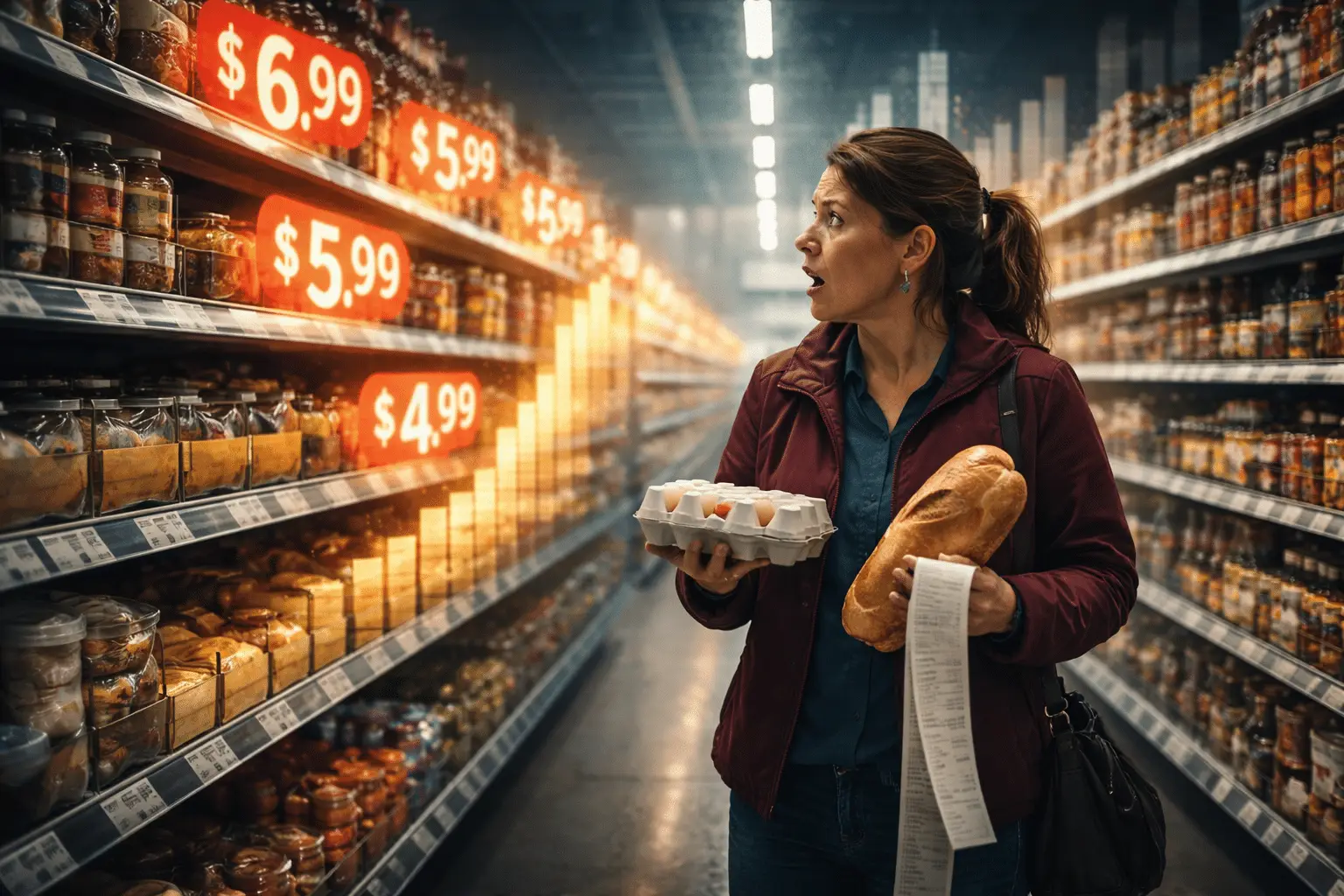
1. Introduction: The Divergence of Food Prices and General Macroeconomic Inflation
The global macroeconomic landscape spanning the post-pandemic recovery through early 2026 has been characterized by a complex, uneven deceleration of aggregate inflation. Central banks worldwide have engaged in aggressive monetary tightening to rein in soaring prices, achieving notable success in cooling broad consumer price indices. However, the retail food sector has remained stubbornly resistant to this broader disinflationary trend, precipitating a severe affordability crisis for the global consumer base. Since the onset of acute inflationary pressures in 2022, overall grocery prices in North America have escalated by approximately 22%, a figure that dramatically outpaces the 13% average increase observed across other consumer goods and services during the same period.1 This pronounced divergence between the cost of essential nutrition and the cost of general commodities has catalyzed intense debate among economists, policymakers, and antitrust regulators regarding the foundational drivers of food price inflation.
Historically, orthodox macroeconomic theory has attributed such retail price escalations to a combination of aggregate supply shocks, supply chain bottlenecks, tight labor markets, and monetary expansion. Prominent macroeconomic voices and leading financial publications have frequently dismissed the concept of corporate profiteering—colloquially termed “greedflation”—as a fundamental misunderstanding of market dynamics.2 Critics of the greedflation narrative, including figures associated with the American Enterprise Institute and various mainstream economic forums, argue that the concept is a politically convenient “nonsense idea” that is fundamentally inconsistent with standard price theory.2 From this orthodox perspective, corporations do not spontaneously acquire the market power to dictate prices; rather, they face downward-sloping demand curves and merely respond to elevated input costs and shifting supply-and-demand equilibriums.2 When materials are in short supply or geopolitical conflicts disrupt energy markets, retailers are theoretically forced to raise prices to manage production flows and survive tightening margins.3
However, rigorous empirical analyses of the 2024-2026 economic period reveal a much more structural, microeconomic mechanism at play, challenging the orthodox consensus. Investigations by federal regulatory bodies and comprehensive studies by heterodox economists suggest that extreme market concentration, algorithmic pricing architectures, and implicit coordination among major conglomerates have allowed the food industry to leverage temporary supply shocks into permanent margin expansions.6 Rather than acting as passive price-takers in a perfectly competitive market, dominant food manufacturers and grocery retailers have increasingly operated as price-makers, utilizing crises ranging from the war in Ukraine to the 2024-2025 avian flu outbreaks as smokescreens to elevate baseline profitability.6
This comprehensive report provides an exhaustive analysis of the contemporary grocery inflation crisis. By synthesizing global price index trajectories, supply chain cost architectures, antitrust litigation, and the profound socioeconomic stratifications resulting from sustained food insecurity, the analysis evaluates the extent to which structural market power has superseded traditional supply-and-demand dynamics. Examining corporate earnings data alongside regulatory findings from the United States Federal Trade Commission (FTC) and the United Kingdom Competition and Markets Authority (CMA), this report details how the modern food industry has optimized profitability at the direct expense of consumer welfare.
2. Macroeconomic Trajectories and Global Food Price Indices
To accurately contextualize the scale and persistence of grocery inflation, it is necessary to examine the empirical trajectories of consumer price indices across major economies. While the velocity of price increases has moderated from the historic highs of 2022, the absolute affordability of basic nutrition continues to deteriorate, cementing a permanently higher cost floor for consumers.
2.1 Domestic U.S. Inflation Metrics
By the end of 2025, the U.S. Consumer Price Index (CPI) for all items rose by 2.7% year-over-year.10 Yet, consistent with the trend of divergence, food prices outpaced this general metric, increasing by 3.1% from December 2024 to December 2025.10 This composite figure reflects a 2.4% increase in the prices for “food at home” (grocery purchases) and a more robust 4.1% increase in prices for “food away from home” (restaurant and foodservice purchases).10
Data from the U.S. Department of Agriculture (USDA) Economic Research Service further illustrates this sustained pressure. In January 2026, the CPI for all food increased by 0.4% from the previous month, leaving food prices 2.9% higher than they were in January 2025.11 While the annual pace of food inflation in 2024 (2.3%) and 2025 (2.9%) represents a significant deceleration from the historic 9.9% surge witnessed in 2022—which was the fastest rate since 1979—prices remain elevated well above pre-pandemic baselines.11 The historical average pace of growth for food-at-home prices is 2.6% per year; the recent stabilization merely represents a return to this baseline rate of growth applied to a massively inflated principal cost.11
Interestingly, USDA data reveals a disconnect between raw agricultural inputs and final retail prices. Corn, wheat, and soybeans comprise the vast majority of field crop inputs to the U.S. food supply.12 In 2023, the production-weighted price of these crops actually fell by 12.1%, yet retail food prices increased by 5.8% during the same period.12 This discrepancy strongly indicates that the primary drivers of retail food inflation are situated downstream in the processing, manufacturing, and retail sectors, rather than at the farm level. Furthermore, while total nominal food spending by U.S. consumers reached a staggering $2.58 trillion in 2024, food prices proved to be significantly less volatile than motor fuel or household energy, suggesting a structural rigidity in food pricing where costs go up but rarely come down.12
2.2 Global and Regional Disparities
Globally, the food inflation narrative is defined by stark regional disparities. The Food and Agriculture Organization (FAO) Food Price Index, which measures the monthly change in international prices of a basket of food commodities, averaged 125.3 points in February 2026.13 This represented a localized rise of 0.9% driven by surging cereal, meat, and vegetable oil prices, despite the index remaining 21.8% below its historic March 2022 peak.13
Regional projections for 2026 outline a highly uneven macroeconomic landscape. While global food inflation is expected to fall into the single digits, North America is projected to see food prices rise by an average of 4.3%.14 Within this region, the United States anticipates a 2.7% increase, while Canada is forecasted to suffer inflation rates more than twice that pace.14 Conversely, much of the Asia-Pacific region is projected to experience relatively modest food price growth.14
Table 1 delineates the trajectory of key food inflation metrics and regional forecasts from 2024 through early 2026.
| Economic Indicator / Region | 2024 Annual Growth | 2025 Annual Growth | 2026 Projected / Jan YoY | Historical Average Pace |
| U.S. All Food CPI | 2.3% | 2.9% | 2.9% (Jan 2026) | N/A |
| U.S. Food at Home | 1.2% | 2.3% | 2.1% (Jan 2026) | 2.6% |
| U.S. Food Away from Home | 4.1% | 3.8% | 4.0% (Jan 2026) | 3.5% |
| North America Forecast | N/A | N/A | 4.3% (Projected) | N/A |
| U.S. Forecast | N/A | N/A | 2.7% (Projected) | N/A |
Source Data: U.S. Department of Agriculture (USDA) Economic Research Service and Visual Capitalist, 2026.11
3. Deconstructing Supply Chain Mechanics and Retail Margins
Understanding why food prices have increased by 22% since 2022 while broader consumer goods have risen only 13% requires a granular deconstruction of the food supply chain. The agricultural and food retail ecosystem is highly complex, incorporating multiple stages of value addition: farming, processing, packaging, international transit, domestic wholesale distribution, and retail.1
3.1 The Eight Categories of Food Cost Architecture
A rigorous analytical framework deployed by the Bank of Canada categorizes retail food prices into eight underlying cost vectors to determine what actually drives final costs at the grocery store.1 This framework, which excludes highly volatile items like fresh fruits and vegetables, demonstrates that domestic costs account for nearly two-thirds of total grocery prices.1 The eight categories are:
- Direct Imports: Ready-to-sell packaged products that require no further domestic production steps, such as imported olive oil. Packaged foods are highly sensitive to this category.1
- Imported Inputs: Foreign-sourced raw ingredients, as well as the fertilizers and machinery required for domestic agriculture.1
- Domestically Produced Goods: Foundational national staples such as wheat, dairy, and eggs.1
- International Shipping Costs: The logistical expense of maritime and cross-border freight.1
- Energy Costs: Expenses for natural gas, electricity, and diesel fuel used throughout the production and transport lifecycle.1
- Business Services: Domestic operational fees including marketing, commercial real estate rent, and domestic trucking.1
- Wages: The cost of labor spanning from farmworkers to retail checkout clerks.1
- Profits and Taxes: The financial margins extracted by the businesses involved, alongside government levies.1
In 2025, the resurgence of food inflation (which reached 5% year-over-year in Canada by December) was heavily driven by the first two categories: direct imports and imported inputs.1 A significant depreciation of the Canadian dollar in late 2024 exponentially increased the cost of these foreign goods.1 However, domestic agricultural pressures also played a severe role. Retail beef prices rose by 17% in 2025 due to localized drought conditions and skyrocketing feed costs for live animals.1 Similarly, extreme weather patterns and supply shortages decimated specific global yields, driving retail coffee prices up by 31% and confectionery items up by 14% year-over-year.1
3.2 The Temporal Lag in Cost Pass-Through
A critical macroeconomic insight into food pricing dynamics is the temporal lag between wholesale cost shocks and retail price adjustments. Economic models tracking the 32 most common underlying cost components demonstrate a predictable six-to-nine-month delay between the emergence of supply chain cost pressures and their manifestation at the grocery checkout.1 This delay occurs because major grocers operate on long-term procurement contracts and hold massive inventories purchased at older, lower prices.1 Furthermore, retailers typically wait to determine if a cost pressure is persistent or merely a transitory spot-market fluctuation before altering shelf prices.1
While this lag theoretically insulates consumers from immediate volatility, it serves a dual purpose that heavily favors corporate balance sheets. When global supply chain costs eventually decline—such as the 12.1% drop in field crop prices noted in 2023—the same six-to-nine-month lag is rarely observed in reverse.12 Retailers frequently maintain elevated consumer prices long after their wholesale input costs have normalized, absorbing the widening spread as pure profit margin.
3.3 The Tariff Effect and Institutionalized Volatility
Compounding these supply chain frictions is the increasing utilization of international trade tariffs. In 2025, steep new U.S. tariffs fueled localized inflation, increasing input costs for packaging materials and essential raw ingredients.15 The Food Industry Association (FMI) noted that tariffs introduce severe volatility into the supply chain, necessitating more frequent pricing adjustments by retailers.15 Because the grocery business relies heavily on predictable forecasting, retailers respond to tariff-induced uncertainty by padding their margins, preemptively raising prices to hedge against future hypothetical costs.15 This dynamic reveals how macroeconomic trade policy directly translates into microeconomic margin expansion at the retail level.
4. The Theory and Evidence of Sellers’ Inflation
The traditional macroeconomic consensus views inflation almost exclusively as a phenomenon of “too much money chasing too few goods,” necessitating central bank intervention via interest rate hikes to destroy demand and cool the economy.6 However, this paradigm fails entirely to explain how non-financial corporate profit margins in the U.S. reached historic highs precisely as inflation peaked. In the second quarter of 2021, after-tax profit margins climbed to 13.5%, breaking a record that had stood since the post-war inflation of 1947.6 If corporations were merely passing along higher costs to survive, profit margins would remain flat or contract; instead, they expanded massively.
Research spearheaded by heterodox economist Isabella Weber introduces the comprehensive framework of “sellers’ inflation” or profit-led inflation, providing a robust microeconomic foundation for understanding the 2024-2026 grocery crisis. The theory posits that in highly concentrated, oligopolistic markets, dominant firms act as price-makers rather than price-takers.6 However, under normal economic conditions, an individual firm will hesitate to unilaterally raise prices for fear of alienating consumers and losing market share to competitors.6
4.1 The Three-Stage Heuristic of Profit-Led Inflation
Weber’s framework identifies economy-wide cost shocks—such as the COVID-19 pandemic, avian flu outbreaks, or sudden global tariff implementations—as critical “implicit coordination mechanisms”.6 Because all firms within a sector experience the supply shock simultaneously, they possess mutual assurance that their competitors will also be forced to raise prices.6 This shared knowledge neutralizes the risk of undercutting, allowing firms to safely elevate their pricing structures in tandem without engaging in illegal, explicit cartel communication.17
The inflationary process unfolds in three distinct stages: First, the Impulse Stage occurs when upstream sectors (such as commodity agriculture, shipping, or energy) experience severe supply bottlenecks. These constraints drive up wholesale prices and generate massive windfall profits for the commodity producers.6 Second, the Propagation and Amplification Stage begins as downstream sectors—namely, food manufacturers and grocery retailers—absorb these higher costs. Crucially, leveraging the temporary monopolies created by supply shortages, these downstream firms do not merely pass the costs onto consumers; they amplify the price pressures to protect and actively expand their profit margins.6 Finally, the process enters the Conflict Stage. As the cost of basic survival skyrockets, labor responds by demanding higher wages to fend off severe declines in real purchasing power. Corporations subsequently point to these rising labor costs as the public rationale for instituting yet another round of price hikes, creating a self-sustaining inflationary spiral.6
4.2 Empirical Validation via Corporate Sentiment Analysis
To empirically validate the sellers’ inflation hypothesis, Weber and a team of researchers conducted an unprecedented natural language processing (NLP) and sentiment analysis on 138,962 corporate earnings call transcripts from 4,823 publicly listed U.S. corporations, spanning a 15-year period.17 The analysis revealed a profound and counterintuitive reality: there is a strong correlation between large input price shocks and positive sentiments expressed by corporate executives regarding cost increases.17
Rather than viewing supply constraints and macroeconomic shocks as existential threats to their business models, executives explicitly discussed them as unprecedented opportunities.17 The qualitative analysis demonstrated pervasive optimism among corporate leadership regarding their ability to turn economy-wide cost shocks into justifications to raise prices, protect margins, and achieve record profitability.17
This dynamic was overtly visible during the political and economic upheaval of 2025. A report by the Groundwork Collaborative highlighted how corporate executives across the food, retail, and consumer goods sectors explicitly detailed strategies in their Q1 2025 earnings calls to utilize impending tariff threats as a justification to “jack up prices and boost profits”.18 The financial media frequently abets this strategy by providing the necessary public relations cover. A comprehensive study by antitrust economist Hal Singer analyzed business press coverage across major outlets (including The Wall Street Journal, Bloomberg, and The Economist), finding that in over 60% of articles, price hikes were attributed strictly to external, uncontrollable factors like weather or bird flu.19 By downplaying the role of corporate profiteering, the media feeds policymakers a “constant diet” of inevitability, allowing companies to execute margin expansions without facing regulatory or consumer backlash.19
5. Corporate Profitability and Margin Expansion: Empirical Case Studies
The theoretical framework of sellers’ inflation is robustly supported by empirical financial data extracted from the earnings reports of the world’s largest food conglomerates and grocery retailers between 2024 and 2026. A landmark report issued by the FTC exposed how large market participants not only weathered supply chain disruptions but aggressively distorted them to entrench their market dominance and extract excess capital from the working class.8
5.1 The FTC Findings on Structurally Elevated Margins
The FTC’s exhaustive analysis of grocery supply chains revealed a definitive, structural shift in the profit-to-cost ratios of food and beverage retailers. In 2015, the industry’s peak revenue over total costs stood at 5.6%.8 By 2021, amid the chaos of the pandemic, this figure breached 6%, and throughout the first three quarters of 2023, retailer profits soared to an astonishing 7% over total costs.8
The Commission explicitly noted that these structurally elevated margins “cast doubt” on the industry’s defensive narrative that higher retail prices were merely passive reflections of higher wholesale costs.8 The empirical data proves that retailers utilized the inflationary environment as a pretext to pad their margins. Furthermore, the FTC found that dominant firms leveraged their immense buying power to bully upstream suppliers. Large grocers re-imposed strict delivery requirements and threatened suppliers with severe financial fines for noncompliance.8 This coercion forced manufacturers to preferentially allocate scarce products to massive conglomerates, leaving smaller, independent, and regional grocery retailers with barren shelves.8 This tactic protected the product supply of the largest firms while simultaneously strangling their smaller competitors, further centralizing market share into the hands of a few dominant players.8
5.2 Case Studies in Margin Management: Kroger, Mondelez, and Hershey
Financial disclosures from 2024 through early 2026 provide granular visibility into how specific major firms executed these pricing strategies to outpace overall sales growth.
The Kroger Co. Kroger’s fiscal 2025 results perfectly illustrate the lucrative nature of the modern consolidated grocery model. For the full year 2025, Kroger’s identical sales (excluding fuel and a divested specialty pharmacy business) grew by only 2.9%.20 Despite this relatively modest top-line growth, Kroger achieved an adjusted FIFO (First-In, First-Out) Operating Profit of $4.9 billion, a significant increase from $4.7 billion the prior year.20 Crucially, the company’s gross margin rate improved to 22.9%, representing a 44-basis-point increase in their FIFO gross margin.20
Kroger achieved this outsized profit growth through aggressive sourcing improvements, lower shrink, and a massive $1.5 billion injection from “Alternative Profit Businesses,” which includes highly lucrative retail media networks and consumer data monetization.20 For fiscal 2026, the company forecasts further FIFO operating profit growth, projecting between $5.0 billion and $5.2 billion in profit, despite anticipating an even slower identical sales growth rate of just 1.0% to 2.0%.20 This divergence—where profit growth continually outpaces sales volume growth—is the hallmark of a corporation utilizing pricing power and alternative revenue streams to extract maximum value from a captive consumer base.
Mondelez International and The Hershey Company In the packaged food and confectionery sector, the corporate focus on “pricing power” has been paramount. During Q4 2025 earnings calls, Mondelez reported robust quarterly revenues of $10.49 billion with a gross profit margin of 28.16%.21 CEO Dirk Van de Put openly discussed the resilience of the global chocolate category despite massive, consumer-facing price hikes. He noted that while market penetration remained stable, the frequency and quantity of consumption declined as consumers pushed back against higher costs.21 However, this volume decline was more than offset by the higher prices. Mondelez utilized a strategic playbook termed “price pack architecture” (PPA)—meticulously adjusting package sizes and price points to maximize revenue per unit and maintain strong profit margins.21 The company’s CFO noted that they anticipate a “considerable” increase in profit margins by 2027 once current high-cost cocoa inventory is cleared.21
Similarly, The Hershey Company reported a massive 250-basis-point increase in gross margins in 2024, reaching 47.3%.22 This increase was driven explicitly by “favorable price realization” (the corporate term for raising prices) and favorable mark-to-market activity on commodity derivative instruments.22 These financial maneuvers more than offset the lower costs associated with sales volume declines.22 These disclosures unequivocally demonstrate that food manufacturers are entirely willing to sacrifice unit volume growth so long as aggressive price hikes result in net margin expansion.21
Table 2 synthesizes the margin expansion and financial trajectories of these key players.
| Corporation | Fiscal Year | Key Margin Metric | Strategic Profit Drivers |
| The Kroger Co. | 2025 | FIFO Gross Margin up 44 bps to 22.9% | Alternative profit streams ($1.5B), lower supply chain costs 20 |
| Mondelez Intl. | Q4 2025 | Gross Profit Margin of 28.16% | Price Pack Architecture (PPA), strategic pricing adjustments 21 |
| The Hershey Co. | 2024 | Gross Margin up 250 bps to 47.3% | Favorable price realization, commodity derivative hedging 22 |
6. Stealth Price Increases: Shrinkflation and Skimpflation
As consumer elasticity reached its breaking point—evidenced by the volume and frequency declines noted by executives at companies like Mondelez and Hershey—food manufacturers pivoted to more covert, deceptive methods of margin protection. These tactics, known as shrinkflation and skimpflation, represent a fundamental degradation of the consumer value proposition, effectively functioning as hidden price hikes that are notoriously difficult for standard CPI metrics to capture accurately.23
6.1 Shrinkflation: Downsizing the Basket
Shrinkflation, or product downsizing, occurs when manufacturers reduce the physical volume, weight, or quantity of an item while maintaining or even increasing its retail price.24 A 2025 analysis of grocery store inventory revealed pervasive downsizing across key consumer categories. The U.S. Government Accountability Office (GAO) noted that popular items commonly bought by consumers were targeted at the highest rates, with household paper products experiencing severe downsizing.24 For example, major brands reduced toilet paper packages from 12 mega rolls down to 10 mega rolls while holding the price static.25
In the food sector, the impact is equally stark. Breakfast cereal box sizes decreased from 19.3 ounces to 18.1 ounces across several national brands, representing a roughly 6% loss in volume.25 Beverage containers shrank from 64 fluid ounces to 59 fluid ounces.25 Data compiled by LendingTree in 2025 revealed that approximately 38% of candy items were being sold in smaller amounts; party-size Reese’s miniatures dropped from 40 ounces to 35.6 ounces, and party-size M&M’s shrank from 42 ounces to 38 ounces.26 Furthermore, 27% of standard snack items underwent portion reductions. A glaring example is Frito-Lay’s party-size Cheetos, which shrank from 17.5 ounces to 15 ounces; simultaneously, the per-ounce price exploded from 17 cents to 40 cents.26
In the United Kingdom, the consumer watchdog organization Which? uncovered egregious examples of shrinkflation in late 2025. Haleon’s Aquafresh complete care toothpaste was reduced from 100ml to 75ml while its retail price simultaneously jumped from £1.30 to £2.00 across major supermarkets like Tesco and Sainsbury’s—representing a staggering 105% effective price increase per 100ml.27 Similarly, Gaviscon heartburn medicine shrank by 100ml while the price remained frozen at £14, yielding a 20% stealth inflation rate.27 Nestle’s Nescafe original instant coffee was cut from 200g to 190g, resulting in a 5% rise per 100g, while Morrisons increased the price of Quality Street tubs—which had been reduced from 600g to 550g—resulting in a 27% price increase per 100g.27
6.2 Skimpflation: The Erosion of Quality and Brand Equity
An even more insidious corporate strategy is “skimpflation,” wherein the quality of the ingredients is downgraded to cheaper alternatives without altering the price or the outward appearance of the packaging.29 Because the total weight of the product remains the same, skimpflation completely evades detection by casual consumers and creates a massive blind spot for inflation trackers.23
In early 2026, a highly public controversy erupted over Reese’s Peanut Butter Cups, highlighting the risks of this strategy. Brad Reese, the grandson of the brand’s original inventor, launched a public campaign against The Hershey Company after purchasing a bag of seasonal Reese’s Mini Hearts.29 He revealed that these seasonal variations had quietly swapped the classic ingredients of real milk chocolate and peanut butter for inferior, cheaper concoctions labeled “chocolate candy” compound coatings and “peanut butter creme”.29 Calling the product “not edible” and a “devastating” blow to his family’s legacy, Reese’s public condemnation ignited a firestorm regarding corporate ingredient dilution.29
From a corporate finance standpoint, these reformulations are highly logical. With input volatility high and cocoa prices surging to historic records, replacing premium ingredients with cheap fillers like palm oil and shea oil offers a seamless way to manage costs and protect margins without officially changing the flagship product’s SKU.30 This exact tactic was observed in the UK, where McVitie’s Club and Penguin biscuits underwent ingredient dilutions to the extent that they contained more palm and shea oil than cocoa, meaning they could no longer legally be described as “chocolate biscuits”.27 However, as the Reese’s controversy demonstrates, skimpflation risks severely eroding generational brand equity once consumers realize the sensory quality of their food has been permanently degraded.30
Table 3 highlights the documented impact of these stealth inflation tactics.
| Tactic | Product Example | Pre-Inflation Metric | Post-Inflation Metric | Effective Impact |
| Shrinkflation | Cheetos (Party Size) | 17.5 oz ($0.17/oz) | 15.0 oz ($0.40/oz) | 135% price increase per ounce 26 |
| Shrinkflation | Aquafresh Toothpaste | 100ml (£1.30) | 75ml (£2.00) | 105% price increase per 100ml 27 |
| Shrinkflation | Quality Street Tubs | 600g (£6.00) | 550g (£7.00) | 27% price increase per 100g 27 |
| Skimpflation | Reese’s Seasonal Shapes | Milk Chocolate / Peanut Butter | “Chocolate Candy” / “Peanut Butter Creme” | Material degradation of ingredient quality 29 |
7. Market Consolidation and Aggressive Antitrust Enforcement
The ability of food producers and retailers to dictate prices, force supplier concessions, and execute synchronized shrinkflation across entire product categories is directly tethered to decades of unchecked market consolidation. In response to the 2024-2026 price crisis, federal regulators have shifted from a posture of passive observation to one of aggressive, proactive antitrust enforcement.
7.1 Blocking the Kroger-Albertsons Megamerger
The most significant and high-profile regulatory intervention in the retail grocery space was the FTC’s successful, bipartisan lawsuit to block the $24.6 billion acquisition of Albertsons Companies, Inc. by The Kroger Co.—the largest proposed supermarket merger in United States history.31 Concluded in December 2024 via a preliminary injunction granted by the U.S. District Court for the District of Oregon, the decision prevented the consolidation of thousands of supermarkets and hundreds of thousands of union employees under a single corporate umbrella.31
The FTC, led by Chair Lina M. Khan, argued forcefully that eliminating competition between these two grocery titans would inevitably lead to higher prices for essential goods (from milk to eggs), reduce access to fresh food by creating food deserts, and suppress employee wages and union bargaining power.32 The Bureau of Competition Director heralded the injunction as a “historic win” that protects millions of Americans from predatory pricing.32
Conversely, the merger’s corporate proponents argued that consolidation was absolutely necessary to build sufficient economies of scale to compete with retail behemoths like Walmart, Amazon, and Costco.33 They invoked the economic concept of the “waterbed effect,” hypothesizing that the newly merged firm would possess immense monopsony power, allowing it to negotiate lower input prices from wholesale suppliers.35 However, legal and economic critics pointed out that this argument is deeply flawed; empirical evidence—including the FTC’s own supply chain report—demonstrates that when dominant retailers extract supplier concessions, they rarely pass those savings onto the consumer, instead absorbing the difference into their expanding operating margins.8 The blocking of the merger represents a foundational shift in regulatory philosophy, acknowledging that localized retail monopolies directly cause regional inflation.
7.2 The DOJ Strike Force and Legislative Action
Recognizing that antitrust litigation is a slow mechanism, the executive branch initiated broader systemic actions. The FTC and the Department of Justice (DOJ) cohosted the first public meeting of the Strike Force on Unfair and Illegal Pricing.36 This task force is explicitly designed to combat corporate lawbreaking, fraudulent pricing schemes, and anti-competitive practices that raise prices for Americans in vital industries like food, agriculture, and healthcare.36 During this convening, Chair Khan announced a sweeping inquiry into the specific tactics big grocery chains use to “extract profits from everyday Americans at the checkout counter”.36
Simultaneously, lawmakers introduced targeted legislation to combat stealth inflation. Senators Elizabeth Warren and Bob Casey introduced the Shrinkflation Prevention Act in early 2024, designed to crack down on corporations that deceive consumers by selling smaller product sizes without lowering prices.37 This was paired with the reintroduction of the Price Gouging Prevention Act of 2024, which seeks to authorize the FTC and state attorneys general to enforce a federal ban against grossly excessive corporate price increases.37
8. Case Study: The Egg Cartel and Collusion Under the Guise of Crisis
The most blatant and thoroughly documented example of antitrust violations driving food inflation is the multi-district litigation and federal investigation into the United States egg industry. This case study perfectly encapsulates Isabella Weber’s theory of sellers’ inflation, wherein corporations utilize a highly publicized crisis to mask illegal price coordination.
Between 2022 and early 2025, the retail price of a dozen eggs repeatedly shattered historical records. Prices peaked at an astonishing $5.90 per dozen in February 2025, with some regions seeing prices creep up to $10 per dozen.9 This represented a massive spike from the $3.00 average a year prior, and more than triple the 2021 average.9 Industry executives and their trade associations unilaterally attributed these unprecedented spikes to outbreaks of Highly Pathogenic Avian Influenza (HPAI), which resulted in the culling of over 160 million birds.9
However, investigations launched by the DOJ, coupled with massive class-action lawsuits filed by direct purchasers, revealed a highly coordinated price-fixing scheme lurking behind the avian flu narrative.36 In November 2025, major lawsuits were filed in the U.S. District Court for the Southern District of Indiana targeting the country’s largest egg producers, including Cal-Maine Foods, Rose Acre Farms, Versova Holdings, and Daybreak Foods, alongside price reporting agencies like Urner Barry.39
The litigation asserts that these dominant producers utilized their market control to artificially inflate prices far beyond what the biological supply shock dictated.39 The complaints allege that the defendants illegally shared competitively sensitive information and manipulated industry price benchmarks to coordinate supply reductions and stabilize exorbitant prices, even as actual production conditions normalized and operating costs fell.9 Internal industry data suggested that the actual impact of HPAI on overall egg production was vastly overstated to the public.40
The most damning evidence of this artificial manipulation is the market’s reaction to regulatory scrutiny. In March 2025, the DOJ officially launched an antitrust probe, issuing civil investigative demands and subpoenas to companies like Cal-Maine and Rose Acre.40 Immediately following the announcement of this DOJ investigation, wholesale egg prices collapsed by a staggering 60%.41 Lawmakers and plaintiffs argue that this precipitous drop is definitive proof that the true cause of the high prices was not bird flu, but rather impermissible cartel coordination and price manipulation designed to maximize corporate profitability.38
9. Disparate Impacts: Geographic, Socioeconomic, and Demographic Stratification
The macroeconomic data outlining corporate profit expansion stands in stark contrast to the lived economic reality of the global consumer base. The grocery inflation crisis of 2024-2026 has engineered a severe K-shaped economic environment, disproportionately fracturing low-to-middle-income households, senior citizens, and marginalized geographic regions.42
9.1 Socioeconomic Asymmetries in Inflation Burden
Food is an inelastic biological necessity; consumers cannot simply abstain from purchasing calories when prices rise. Consequently, food inflation acts as a highly regressive tax on the working class. Analysis by the Bank of Canada indicates a massive disparity in burden: households in the lowest income quintile allocate over 27% of their disposable income toward food and non-alcoholic beverages, whereas those in the highest quintile spend only 5%.1
Data compiled by the Federal Reserve Bank of Cleveland demonstrates that from the inflation peak in June 2022 through the end of 2024, households and workers in the bottom 40% of the income distribution experienced consistently higher localized inflation than the top 20%.42 Although cumulated wage growth in the lower and middle quintiles outpaced inflation by roughly 4.5 percentage points during this period, the sheer volume of their income dedicated to basic necessities erased much of this gain.42 The reality is bleak: roughly one in three low-income households in the U.S. now spends 95% of their total income strictly on basic survival needs—housing, food, and electricity—leaving virtually zero margin for savings or emergency expenses.43
9.2 Geographic Inequity and Retail Concentration
The severity of food inflation is not uniformly distributed across geography. Deep-dive research utilizing NielsenIQ Retail Scanner data found that from 2006 to 2020, and accelerating rapidly into the post-pandemic era, poorer metropolitan statistical areas (MSAs) experienced annualized food inflation significantly higher than wealthier areas.44 Over a 15-year period, this amounted to a cumulative 8.8 percentage point differential between the poorest and richest deciles of MSAs.44
This geographic inequality is intrinsically linked to the antitrust issues discussed previously. Poorer MSAs feature significantly higher retailer concentration—meaning there is less supermarket competition.44 In communities dominated by a single supermarket chain, the retailer possesses a localized monopoly. This allows them to pass on 100% of supply chain cost increases—alongside additional profit markups—without fear of the consumer driving to a competitor, establishing a causal link between high market concentration and amplified localized inflation.44
9.3 The Nutritional Crisis Among Senior Citizens
The affordability crisis has forced the most vulnerable demographics into impossible trade-offs between essential utilities, medications, and basic nutrition. A comprehensive August 2025 survey by the National Council on Aging (NCOA) of adults aged 60 and older revealed devastating trends.45 A staggering 71% of respondents cited affordability as the primary reason they could not purchase healthy food, and nearly half (48%) reported it was hard or very hard for their household to regularly eat healthy foods over the previous 12 months.45 As fresh produce and high-quality proteins sustained massive price hikes, seniors were forced into cheaper, ultra-processed alternatives, leading directly to exacerbations of chronic conditions, with 75% reporting significant joint discomfort.45
Despite these alarming statistics, the political response has been deeply flawed. Federal nutrition programs and the 2025-2030 Dietary Guidelines for Americans emphasize whole foods and protein, yet these guidelines are completely disconnected from the economic reality of senior citizens.46 Legislative efforts like the bipartisan HR 6199 aimed to expand Medicare coverage for Medical Nutrition Therapy, but without broader economic relief, dietary counseling is useless to those who cannot afford the prescribed food.46 Compounding this disaster, the USDA decided in 2025 to eliminate the long-standing Household Food Security Survey—a tool used for 30 years to track hunger trends.47 Advocacy groups warn that abandoning this critical data collection tool will blind policymakers to the true extent of the senior hunger crisis precisely as inflation pushes more elderly individuals below the poverty line.47
10. Institutional Trust, Social Cohesion, and the Normalization of Food Banks
The psychological and societal fallout of the grocery affordability crisis extends far beyond individual physical health; it is actively eroding the foundational social contract of advanced economies.
10.1 The UK Experience: Middle-Class Food Insecurity
In the United Kingdom, the affordability of food has severely degraded the standard of living for the middle and working classes. The UK Food Security Digest 2025 reported a stark decline in the proportion of “food secure” households, falling from 93% in the financial years ending (FYE) 2021 and 2022 down to 90% in FYE 2023 and 2024.48 This data indicates that millions of previously stable families have transitioned into food insecurity.48
The reliance on emergency food banks has transitioned from an anomaly reserved for the absolute destitute to a structural, normalized pillar of the UK welfare state.49 In FYE 2024, 9% of young adults (aged 16-24) and 6% of all households with children were forced to utilize a food bank.48 Usage is overwhelmingly prevalent among those relying on the state safety net, with 19% of those on Universal Credit requiring emergency food parcels.48 To cope with food inflation that outpaced general inflation for most of the year, 63% of survey respondents reported engaging in high-risk behaviors to save money, such as consuming food past its use-by date.48 The psychological toll on single parents in the UK is profound, with the cost-of-living crisis compounding economic strain with intense social isolation and mental health deterioration.54
10.2 The Erosion of Democratic Trust
The societal implications of this widespread deprivation are severe. The World Economic Forum’s (WEF) 2026 Global Risks Report and subsequent European policy analyses highlight that sustained cost-of-living crises are a primary driver of “Societal polarization,” which ranks as a top-five global concern.55 When basic biological needs become unaffordable while corporate profits hit historic highs, citizens experience a profound erosion of trust in democratic and institutional governance.56
Trust is the bedrock of the social contract.57 The strain of the last five years has triggered an insidious undertow, decreasing trust in national governments and crippling cooperation.57 This institutional distrust accelerates societal polarization, as economic grievances—such as the inability to afford basic groceries—are frequently weaponized into political fractures, hardening extremist beliefs, and generating animosity against marginalized out-groups.55
11. Regulatory Investigations into Retailer Practices: The UK CMA Probe
In response to the growing public consensus that market power and deceptive practices are contributing to grocery inflation, international regulatory bodies initiated sweeping investigations into the specific pricing architectures of massive supermarket chains.
The UK Competition and Markets Authority (CMA) executed a multi-year, exhaustive probe into the grocery sector to determine if ineffective competition was driving the cost-of-living crisis.59 While the initial 2023 aggregate findings suggested that high food price inflation was not primarily driven by weak competition at the retail level—pointing instead to the global supply chain pressures and commodity costs discussed earlier—subsequent deep dives into specific retail pricing mechanics yielded crucial insights regarding consumer psychology and corporate strategy.59
In November 2024, the CMA published its final findings on “loyalty pricing” architectures deployed by dominant grocers such as Tesco, Sainsbury’s, and Morrisons.60 By analyzing over 50,000 grocery products across various promotional cycles, the CMA determined that loyalty schemes do, in fact, offer genuine financial savings to the consumer. Shoppers utilizing these schemes saved an average of 17% to 25% compared to the usual price.61 The investigation largely debunked the accusation that supermarkets were synthetically inflating “usual” non-member prices simply to make the loyalty discount appear artificially attractive.60
However, the CMA’s consumer survey uncovered a darker reality regarding consumer trust and the psychological impact of modern retail pricing. Despite the statistical reality of the savings, 40% of shoppers believed that loyalty prices were deceptive and did not represent genuine savings.61 Furthermore, 55% of consumers believed that non-member prices were deliberately punitive and inflated.61 This widespread suspicion highlights the deep fracture in trust between consumers and food retailers. Furthermore, these loyalty pricing schemes act as highly effective data-harvesting tools. By forcing consumers to opt-in to secure affordable food, grocers can algorithmically track individual purchasing elasticity and optimize their “price pack architecture” at a granular level, further tilting the informational asymmetry in favor of the retailer and allowing for targeted margin extraction.21
12. Conclusion
The persistence of high grocery prices through 2026 cannot be accurately diagnosed or rectified through the lens of traditional macroeconomics alone. While aggregate supply shocks, supply chain disruptions, avian flu outbreaks, and geopolitical conflicts provided the initial inflationary ignition in 2022, the sustenance of these exorbitant price levels is fundamentally a product of structural microeconomic failures and aggressive corporate maneuvering.
The extensive data synthesized in this report dictates several critical conclusions regarding the modern food retail and manufacturing sectors:
First, corporate earnings transcripts, FTC investigations, and comprehensive NLP analyses conclusively demonstrate that major food conglomerates utilized legitimate supply chain disruptions as a smokescreen to systematically expand their profit margins. By exercising dominant pricing power in highly consolidated markets, these entities achieved profit-to-cost ratios unseen in previous decades, deliberately sacrificing unit volume to maximize net revenue per item.
Second, the structural consolidation of the food system allows mega-cap firms to rely on “implicit coordination.” Outright backroom collusion—while present in localized sectors like the U.S. egg industry—is no longer strictly necessary to execute market-wide price hikes. Dominant firms use public phenomena like tariffs, weather events, or disease outbreaks as mutual signals to safely raise prices in tandem without sacrificing market share.
Third, to maintain these inflated margins against a consumer base with rapidly depleting disposable income, the industry has universally adopted the deceptive tactics of shrinkflation and skimpflation. The physical downsizing of products and the covert substitution of premium ingredients with cheap, ultra-processed alternatives represent a fundamental, permanent degradation of global food quality.
Finally, the current pricing architecture relies heavily on geographic and socioeconomic captivity. In lower-income, highly concentrated markets, consumers lack the competitive options required to discipline predatory pricing. This reality has forced vulnerable demographics—particularly children, single parents, and senior citizens—into severe food insecurity and a normalized reliance on emergency food banks. The resulting economic desperation is actively eroding institutional trust and accelerating dangerous societal polarization.
Addressing the ongoing crisis of grocery affordability requires a profound paradigm shift in how governments and regulatory bodies interact with the global food supply. Traditional monetary policy—specifically the blunt instrument of adjusting interest rates—is wholly incapable of solving margin-driven, sector-specific inflation. Meaningful economic relief necessitates robust, continuous antitrust enforcement to block monopolistic mergers and break up localized retail monopolies. Furthermore, it requires stringent transparency laws regarding package downsizing, ingredient dilution, and algorithmic loyalty pricing, alongside the potential implementation of international buffer stocks to limit the initial commodity shocks that corporations leverage to coordinate price hikes. Absent these structural, microeconomic interventions, the elevated baseline of food pricing established between 2024 and 2026 will remain a permanent, extractive feature of the global economy.
Works cited
- Understanding the resurgence of food inflation in 2025 – Bank of …, accessed on March 7, 2026, https://www.bankofcanada.ca/2026/02/sparks-at-bank-article-2026-3/
- The Greedflation Myth – The Daily Economy, accessed on March 7, 2026, https://thedailyeconomy.org/article/the-greedflation-myth/
- Citations Needed – Libsyn, accessed on March 7, 2026, https://citationsneeded.libsyn.com/rss
- The Economist: July 2023 Insights | PDF | Marriage | East Asia – Scribd, accessed on March 7, 2026, https://www.scribd.com/document/710939989/TheEconomist-2023-07-08
- The Economist – July 8th To July 15th | PDF | Inflation | Marriage – Scribd, accessed on March 7, 2026, https://www.scribd.com/document/865486409/The-Economist-July-8th-to-July-15th
- Sellers’ Inflation, Profits, and Conflict: Why Can Large Firms Hike Prices in an Emergency – PERI UMASS, accessed on March 7, 2026, https://peri.umass.edu/wp-content/uploads/joomla/images/publication/WP571.pdf
- (PDF) Sellers’ inflation, profits and conflict: why can large firms hike prices in an emergency?, accessed on March 7, 2026, https://www.researchgate.net/publication/370171854_Sellers’_inflation_profits_and_conflict_why_can_large_firms_hike_prices_in_an_emergency
- FTC Releases Report on Grocery Supply Chain Disruptions …, accessed on March 7, 2026, https://www.ftc.gov/news-events/news/press-releases/2024/03/ftc-releases-report-grocery-supply-chain-disruptions
- DOJ Antitrust Investigation Broadens Across U.S. Food Supply Chain – JD Supra, accessed on March 7, 2026, https://www.jdsupra.com/legalnews/doj-antitrust-investigation-broadens-2104175/
- Consumer Price Index: 2025 in review : The Economics Daily – Bureau of Labor Statistics, accessed on March 7, 2026, https://www.bls.gov/opub/ted/2026/consumer-price-index-2025-in-review.htm
- Food Price Outlook – Summary Findings | Economic Research Service – ers.usda.gov, accessed on March 7, 2026, https://www.ers.usda.gov/data-products/food-price-outlook/summary-findings
- Ag and Food Statistics: Charting the Essentials – Food Prices and Spending – ers.usda.gov, accessed on March 7, 2026, https://www.ers.usda.gov/data-products/ag-and-food-statistics-charting-the-essentials/food-prices-and-spending
- FAO Food Price Index | Food and Agriculture Organization of the United Nations – FAO.org, accessed on March 7, 2026, https://www.fao.org/worldfoodsituation/foodpricesindex/en/
- Mapped: Where Food Inflation Will Hit Hardest in 2026 – Visual Capitalist, accessed on March 7, 2026, https://www.visualcapitalist.com/mapped-where-food-inflation-will-hit-hardest-in-2026/
- How the 2025 Economy Reshaped US Grocery Stores and Suppliers and What Comes Next, accessed on March 7, 2026, https://winneram.com/the-economic-impact-on-us-grocery-stores-and-suppliers/
- America’s deepening affordability crisis summed up in 5 charts – CBS News, accessed on March 7, 2026, https://www.cbsnews.com/news/affordability-2025-inflation-food-prices-housing-child-care-health-costs/
- Implicit coordination in sellers’ inflation: how cost shocks facilitate price hikes, accessed on March 7, 2026, https://ideas.repec.org/p/ehl/lserod/128231.html
- New Report Finds Trump Tariff Upheaval Empowers Companies to Hike Prices on Consumers – Groundwork Collaborative, accessed on March 7, 2026, https://groundworkcollaborative.org/news/new-report-finds-trump-tariff-upheaval-empowers-companies-to-hike-prices-on-consumers/
- Corporate Media Doesn’t Want to Talk About Greedflation – Jacobin, accessed on March 7, 2026, https://jacobin.com/2025/08/corporate-media-greedflation-price-gouging
- Kroger Reports Fourth Quarter and Full-Year 2025 … – The Kroger Co., accessed on March 7, 2026, https://ir.kroger.com/news/news-details/2026/Kroger-Reports-Fourth-Quarter-and-Full-Year-2025-Results-andAnnounces-Guidance-for-2026/default.aspx
- Mondelez International (MDLZ) Q4 2025 Earnings – MLQ.ai | AI for …, accessed on March 7, 2026, https://mlq.ai/stocks/MDLZ/q4-2025-earnings/
- hsy-20241231 – SEC.gov, accessed on March 7, 2026, https://www.sec.gov/Archives/edgar/data/47111/000004711125000014/hsy-20241231.htm
- Is Inflation Higher Than We Think? – Of Dollars And Data, accessed on March 7, 2026, https://ofdollarsanddata.com/is-inflation-higher-than-we-think/
- What is “Shrinkflation,” And How Has It Affected Grocery Store Items Recently? – GAO.gov, accessed on March 7, 2026, https://www.gao.gov/blog/what-shrinkflation-and-how-has-it-affected-grocery-store-items-recently
- Shrinkflation Examples: Products That Got Smaller in 2025 – Consumer Protection Journal -, accessed on March 7, 2026, https://consumerprotectionjournal.com/market-analysis/shrinkflation-examples-2025/
- Shrinkflation has affected one-third of grocery items, analysis finds. Here are the worst offenders. – CBS News, accessed on March 7, 2026, https://www.cbsnews.com/news/inflation-shrinkflation-skimpflation-toilet-paper-candy-cereal-lendingtree/
- Shrinkflation hits everyday staples, piling more pressure on households – The Guardian, accessed on March 7, 2026, https://www.theguardian.com/business/2025/oct/28/shrinkflation-hits-everyday-staples-piling-more-pressure-on-households
- Shrinkflation: the brands charging you more for less – Which?, accessed on March 7, 2026, https://www.which.co.uk/news/article/shrinkflation-the-brands-charging-you-more-for-less-atUkT4m2GjuP
- The candy heir vs. chocolate skimpflation – capradio.org, accessed on March 7, 2026, https://www.capradio.org/news/npr/story?storyid=g-s1-111940
- Reese’s Quality Debate Highlights Shrinkflation Risk – Retail Insider, accessed on March 7, 2026, https://retail-insider.com/retail-insider/2026/02/reeses-quality-debate-highlights-shrinkflation-risk/
- Grocery/Supermarkets | Federal Trade Commission, accessed on March 7, 2026, https://www.ftc.gov/industry/retail/grocerysupermarkets
- Statement on FTC Victory Securing Halt to Kroger, Albertsons Grocery Merger, accessed on March 7, 2026, https://www.ftc.gov/news-events/news/press-releases/2024/12/statement-ftc-victory-securing-halt-kroger-albertsons-grocery-merger
- Could the Kroger-Albertsons Merger Gouge Grocery Prices? An Economics Professor Answers. – Georgetown University, accessed on March 7, 2026, https://www.georgetown.edu/news/could-the-kroger-albertsons-merger-gouge-grocery-prices-an-economics-professor-answers/
- The Kroger and Albertsons Merger: An Urgent Need for Antitrust Action in Food Retail, accessed on March 7, 2026, https://bppj.berkeley.edu/news/kroger-and-albertsons-merger-urgent-need-antitrust-action-food-retail
- Food-Retail Competition, Antitrust Law, and the Kroger/Albertsons Merger – International Center for Law & Economics, accessed on March 7, 2026, https://laweconcenter.org/resources/food-retail-competition-antitrust-law-and-the-kroger-albertsons-merger/
- FTC and Justice Department Host First Strike Force on Unfair and Illegal Pricing Meeting, accessed on March 7, 2026, https://www.ftc.gov/news-events/news/press-releases/2024/08/ftc-justice-department-host-first-strike-force-unfair-illegal-pricing-meeting
- Warren, DeLauro, Lawmakers Renew Push For FTC Action to Prevent Corporations From Using Trump’s Chaotic Tariffs as Cover to Price Gouge Americans, accessed on March 7, 2026, https://www.warren.senate.gov/newsroom/press-releases/warren-delauro-lawmakers-renew-push-for-ftc-action-to-prevent-corporations-from-using-trumps-chaotic-tariffs-as-cover-to-price-gouge-americans
- Warren, Banks Letter to DOJ on Egg Prices, accessed on March 7, 2026, https://www.warren.senate.gov/imo/media/doc/warren_banks_letter_to_doj_on_egg_prices.pdf?itid=lk_inline_enhanced-template
- DiCello Levitt, Co-Counsel File Class Action Alleging Price Fixing in the U.S. Egg Industry, accessed on March 7, 2026, https://dicellolevitt.com/dicello-levitt-co-counsel-file-class-action-alleging-price-fixing-in-the-u-s-egg-industry/
- Price-Fixing Investigation | Grabar Law Office, accessed on March 7, 2026, https://grabarlaw.com/the-latest/egg-pricing-investigation/
- Egg producers accused of engaging in price-fixing scheme – Feedstuffs, accessed on March 7, 2026, https://www.feedstuffs.com/agribusiness-news/egg-producers-face-price-fixing-accusations
- Did Inflation Affect Households Differently? A Look at the Postpandemic Inflation and Wage Growth Dynamics – Federal Reserve Bank of Cleveland, accessed on March 7, 2026, https://www.clevelandfed.org/publications/economic-commentary/2025/ec-202511-did-inflation-affect-households-differently
- High prices, thin buffers: America’s affordability crisis persists – Allianz.com, accessed on March 7, 2026, https://www.allianz.com/en/economic_research/insights/publications/specials_fmo/260211-US-affordability.html
- Geographic Inequality in Food Inflation – Federal Reserve Bank of Atlanta, accessed on March 7, 2026, https://www.atlantafed.org/research-and-data/publications/policy-hub-papers/2026/02/02/01-geographic-inequality-in-food-inflation
- Food Affordability & Joint Health: What Older Adults Shared in 2025 Survey, accessed on March 7, 2026, https://www.ncoa.org/article/food-affordability-joint-health-what-older-adults-shared-in-2025-survey/
- Good Eating – Aging in America News, accessed on March 7, 2026, https://aginginamerica.news/2026/01/26/good-eating/
- National Aging Groups Oppose Elimination of Household Food Security Survey, accessed on March 7, 2026, https://www.mealsonwheelsamerica.org/news/national-aging-groups-oppose-elimination-of-household-food-security-survey/
- United Kingdom Food Security Digest 2025 – GOV.UK, accessed on March 7, 2026, https://www.gov.uk/government/statistics/united-kingdom-food-security-digest-2025/united-kingdom-food-security-digest-2025
- Hunger in the UK – Trussell, accessed on March 7, 2026, https://cms.trussell.org.uk/sites/default/files/2025-09/hunger_in_uk_sept25.pdf
- Nothing Left in the Cupboards: Austerity, Welfare Cuts, and the Right to Food in the UK | HRW, accessed on March 7, 2026, https://www.hrw.org/report/2019/05/20/nothing-left-cupboards/austerity-welfare-cuts-and-right-food-uk
- Navigating infant food insecurity: low-income parents infant feeding intentions and practices in the UK – PMC, accessed on March 7, 2026, https://pmc.ncbi.nlm.nih.gov/articles/PMC12797389/
- Food insecurity amongst universal credit claimants: the benefits and nutrition study (BEANS), a cross-sectional online study – PMC, accessed on March 7, 2026, https://pmc.ncbi.nlm.nih.gov/articles/PMC11893655/
- Did increasing the UK’s Universal Credit and working tax credits by £20 per week in 2020–2021 reduce food insecurity? | Journal of Social Policy | Cambridge Core, accessed on March 7, 2026, https://www.cambridge.org/core/journals/journal-of-social-policy/article/did-increasing-the-uks-universal-credit-and-working-tax-credits-by-20-per-week-in-20202021-reduce-food-insecurity/9CDAA69B84E5EA4183D57106BB3D547B
- Full article: Heat or Eat: Exploring the Impact of the Cost-Of-Living Crisis on Single parents’ Mental Wellbeing in the United Kingdom – Taylor & Francis, accessed on March 7, 2026, https://www.tandfonline.com/doi/full/10.1080/10875549.2024.2379764
- World Economic Forum – Global Risks Report 2026, accessed on March 7, 2026, https://reports.weforum.org/docs/WEF_Global_Risks_Report_2026.pdf
- Food Security | Food Insecurity Statistics & Solutions – World Bank, accessed on March 7, 2026, https://www.worldbank.org/en/topic/agriculture/brief/food-security-update
- Trust in crisis: Europe’s social contract under threat – Eurofound – European Union, accessed on March 7, 2026, https://www.eurofound.europa.eu/en/commentary-and-analysis/all-content/trust-crisis-europes-social-contract-under-threat
- Strengthening social cohesion – House of Commons Library, accessed on March 7, 2026, https://commonslibrary.parliament.uk/research-briefings/cdp-2026-0047/
- CMA Update on Its Investigation Into Competition, Choice, and …, accessed on March 7, 2026, https://www.squirepattonboggs.com/insights/publications/cma-update-on-its-investigation-into-competition-choice-and-rising-groceries-prices/
- Loyalty pricing in the groceries sector – GOV.UK, accessed on March 7, 2026, https://www.gov.uk/cma-cases/loyalty-pricing-in-the-groceries-sector
- Loyalty pricing: what shoppers and supermarkets need to know, accessed on March 7, 2026, https://competitionandmarkets.blog.gov.uk/2024/11/27/loyalty-pricing-what-shoppers-and-supermarkets-need-to-know/



Leave a Reply