The Breaking Point at the Pump
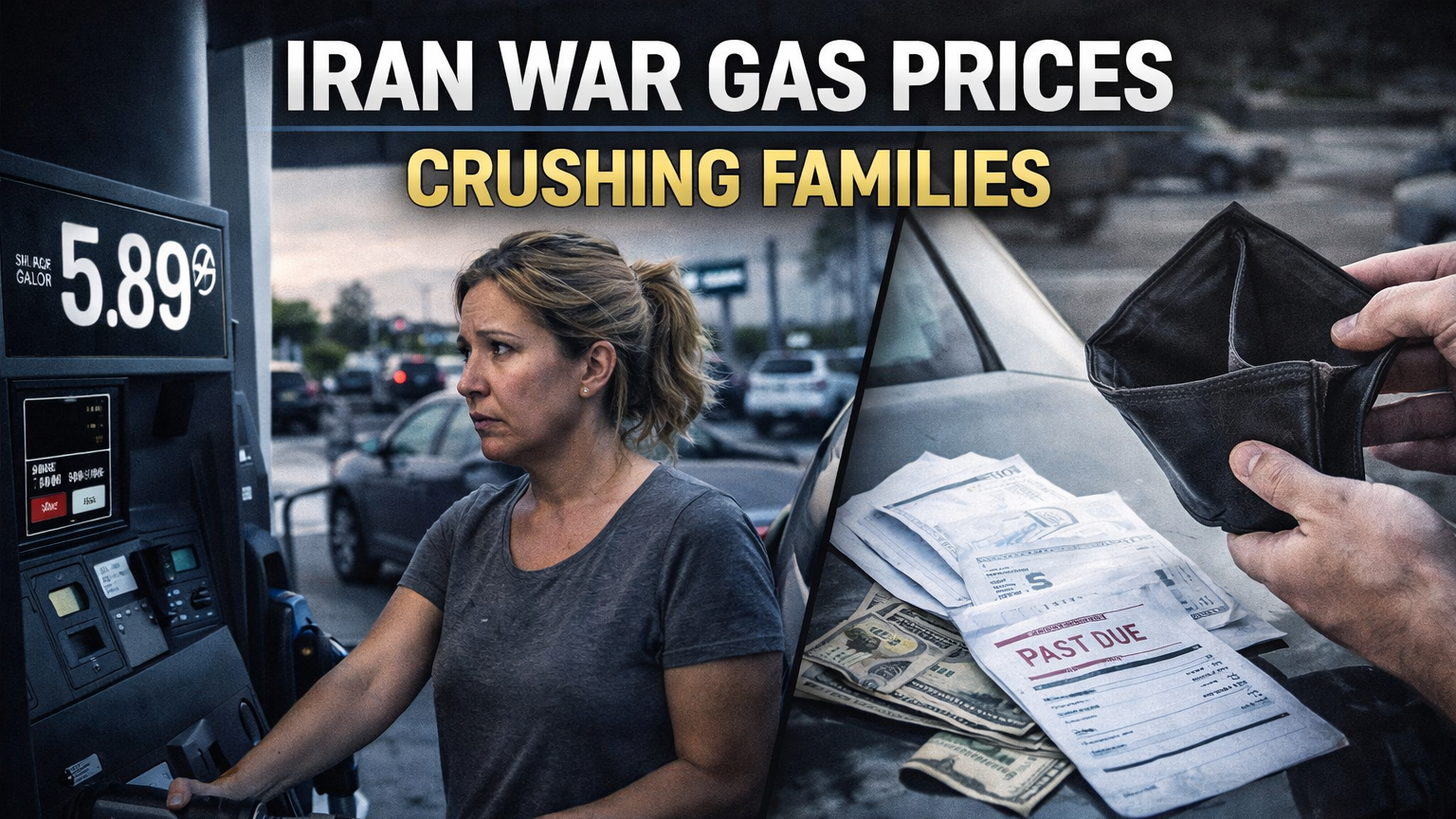
Luna Rosado, a single mother of three residing in Plainville, Connecticut, stands at a local gas station recalculating her household’s survival strategy. To commute to her two separate healthcare jobs and transport her children to school and extracurricular activities, she must fill her vehicle’s tank twice a week. Following the rapid escalation of the 2026 conflict between the United States, Israel, and Iran, her weekly fuel expenditure surged by $40, effectively erasing $160 a month from her already constrained budget. This sudden deficit is not a mere inconvenience; it dictates immediate, painful trade-offs. The surging costs forced her to abandon weekend gig-economy driving for Uber and Lyft, as the inflated price of gasoline entirely consumed her profit margins, cutting off a vital stream of supplemental income previously earmarked for utilities, telecommunications, and groceries.
This isolated scene at a New England gas station illustrates a profound systemic failure that reverberates across the nation. What is unfolding at American gas pumps in the spring of 2026 is a violent collision between geopolitical volatility and domestic financial fragility. Recent survey data from Ipsos reveals a startling macroeconomic reality: 48% of Americans report having absolutely no cash left over after paying their monthly bills. For nearly half of the population, the household budget is a strict zero-sum equation. When international supply chains buckle and essential commodities like gasoline spike in price, the capital required to cover the shortfall must be cannibalized from other critical areas of human survival. This dynamic exposes how vulnerable the American worker remains to foreign conflicts, constrained by an economic model that mandates vehicular travel but offers zero financial buffer against the volatility of global commodity markets.
This report exposes how the Iran war is crushing American family budgets through hidden gas price manipulation that benefits oil corporations while devastating working families.
Defining the Core Problem: How the Iran War Is Crushing American Family Budgets
The current crisis is fundamentally misunderstood when framed solely as a temporary, localized energy shock. It is, in fact, an acute cost-of-living crisis magnified by deep structural dependencies. In late February 2026, coordinated U.S.-Israeli military strikes against Iranian nuclear and military infrastructure prompted Tehran to effectively close the Strait of Hormuz. This narrow maritime chokepoint normally facilitates the transit of roughly 20 million barrels of petroleum per day—approximately 20% of global consumption—making its closure the largest supply disruption in the history of the oil industry. The International Energy Agency characterizes the resulting shock as the greatest global energy security challenge ever recorded, dwarfing the 4.5 million barrels per day disrupted during the 1973 Arab oil embargo.
The American public is increasingly frustrated by a perceived paradox: despite the U.S. shale revolution transforming the nation into a major energy producer and a modest net exporter, domestic gasoline prices remain violently tethered to Middle Eastern conflicts. This “net exporter paradox” functions on the reality of global market integration. Because crude oil is a globally traded fungible commodity, the sudden inability of Asian and European importers to access Persian Gulf supplies forces them to bid aggressively for alternative sources, including North American shale. This universal scramble puts immense upward pressure on prices worldwide, causing the international benchmark, Brent crude, to surge past $115 per barrel, while U.S. West Texas Intermediate pushed toward $120.
Furthermore, the physical limitations of domestic production mechanisms prevent immediate relief. While U.S. shale operators in the Permian Basin possess the theoretical capacity to scale production in response to price spikes, the logistical realities of drilling, completion, and pipeline transportation require lead times of six to twelve months. In the interim, the domestic economy functions similarly to a wholly dependent importer, suffering from global real activity contractions, surging crack spreads for diesel and jet fuel, and profound inflationary pressure. The problem is not merely a lack of oil; it is the structural inability of the American economic engine to insulate its working class from the immediate shockwaves of global energy warfare.
The Historical Context: How Systems Engineered Fragility
The acute vulnerabilities exposed in 2026 were engineered over decades through a convergence of urban planning paradigms, corporate consolidation, and geopolitical maneuvering. Historically, oil price shocks triggered by conflicts in the Middle East have reshaped global energy systems. The 1973 oil embargo and the 1979 Iranian Revolution quadrupled prices and initiated inflationary spirals that defined a generation. In response, nations across Northern Europe utilized these crises to fundamentally alter their infrastructure, investing heavily in public transit, district heating systems, and building insulation to permanently reduce their exposure to fossil fuel blackmail.
Conversely, the United States pursued a strategy of supply-side dominance rather than demand-side resilience. American urban planning aggressively favored highway expansion and suburban sprawl, systematically dismantling robust public transit networks. This created a deeply entrenched car dependency that locked countless households into paying for transportation they cannot realistically afford. By 2026, the average U.S. city operates merely 27 transit vehicles per 100,000 residents—an international embarrassment compared to world-class transit networks in cities like Paris or Oslo, which deploy over 130 vehicles per 100,000 residents.
Simultaneously, the global supply chain optimized for “just-in-time” delivery, stripping away the storage buffers that once insulated markets from sudden shocks. Today, retail gas stations typically maintain only a few days of inventory, meaning that when panic buying ensues—driven by media reports and the psychological “availability heuristic”—local distribution networks collapse instantly. This historical trajectory ensured that when the Strait of Hormuz closed in 2026, the American populace had no viable alternatives to driving, no buffer against immediate price transmission, and no choice but to absorb the financial devastation.
The Structural Mechanism: Rockets, Feathers, and Windfalls
To comprehend why the burden of the Iran conflict falls so disproportionately on the consumer, one must examine the hidden economic mechanisms governing retail fuel pricing. The phenomenon currently ravaging household budgets is known in economic literature as the “rocket and feather” hypothesis. This pricing asymmetry describes how retail gasoline prices shoot up rapidly like a rocket the moment global crude oil costs increase, yet they drift downward slowly like a feather when wholesale costs eventually stabilize or decline.
This dynamic is a classic symptom of market failure driven by an oligopolistic industry structure. The retail fuel market is dominated by major oil firms and massive supermarket conglomerates that engage in tacit collusion to protect industry-wide profit margins. Because automotive fuel is an absolute necessity for economic survival in a car-centric society, demand is highly price-inelastic; consumers must purchase gas to reach their workplaces regardless of the cost. Retailers exploit this inelasticity by passing on wholesale cost increases instantaneously, while deliberately delaying price reductions when crude markets cool, capturing the spread as excess profit. In the UK, investigations by the Competition and Markets Authority recently found that drivers were overcharged by millions due to this exact suppression of competition, a dynamic mirrored heavily in the U.S. market.
The institutional behavior of multinational energy corporations further exacerbates this inequity. While working families face financial ruin, the U.S. fossil fuel sector is projected to collect an additional $60 billion in windfall revenues in 2026 solely due to the conflict-driven price surge. This immense wealth transfer flows directly to shareholders and executives, exacerbating socioeconomic inequality. The staggering disconnect between consumer suffering and corporate profiteering has revived intense legislative efforts, such as the Big Oil Windfall Profits Tax Act. This legislation proposes a per-barrel excise tax on excess profits, with revenues returned directly to single tax filers earning under $75,000 in the form of quarterly rebates. However, the systemic influence of energy lobbyists continues to stall such redistributive measures, ensuring that the financial mechanics of war consistently enrich the few at the expense of the many.
Evidence and Data: The Zero-Sum Household Economy
The macroeconomic statistics surrounding the 2026 crisis obscure the localized devastation occurring within American households. An analysis of consumer expenditure data and financial wellness surveys reveals the precise anatomy of this economic shock.
The Disproportionate Burden of Fuel Costs
Energy burdens scale inversely with household income. As gasoline prices cross the $4.00 per gallon threshold—and surge past $5.00 in states like California—the percentage of income dedicated to sheer mobility becomes unsustainable for the working class.
| Income Bracket (Before Taxes) | Mean Annual Gasoline Expenditure (Baseline) | Share of Total Annual Expenditure | Impact of 40% Geopolitical Price Surge |
| Less than $15,000 | $1,224 | 3.8% | Catastrophic; forces utility/food defaults |
| $30,000 to $39,999 | $1,811 | 3.9% | Severe; eliminates emergency savings |
| $40,000 to $49,999 | $2,148 | 4.3% | Highest relative burden; acute daily stress |
| $100,000 to $149,999 | $3,335 | 3.7% | Moderate; requires minor lifestyle adjustments |
| $200,000 and more | $4,012 | 2.3% | Negligible impact on overall financial health |
Data derived from Bureau of Labor Statistics Consumer Expenditure Surveys.
As demonstrated, households earning between $40,000 and $49,999—a bracket that encompasses the median income for single mothers working full-time—dedicate the highest percentage of their budget (4.3%) to gasoline. When fuel costs jump by 30 to 40 percent in a single month, these families are the first to fracture under the economic pressure.
The Healthcare and Nutritional Trade-offs
Because the budget for half of all Americans is zero-sum, a spike in one essential category forces immediate, dangerous cuts in others. The West Health-Gallup Center on Healthcare in America found that approximately 82 million Americans have made at least one trade-off regarding daily living expenses to afford healthcare and basic needs.
| Financial Trade-off Made by Consumers | Percentage of Uninsured Adults | Percentage of Low-Income Adults (Bottom 10 States) |
| Borrowed money | 32% | 22% |
| Skipped a meal | 27% | 15% |
| Prolonged current prescription | 24% | 19% |
| Cut back on utilities | 23% | 11% |
| Drove less | 20% | 14% |
Data derived from West Health-Gallup Center survey on financial strain.
These metrics highlight the brutal reality of the 2026 energy shock. It is not merely a transportation issue; it is a public health crisis. When households are forced to stretch prescription medications, skip meals, or live in unheated homes to afford the gasoline required to drive to work, the systemic failure crosses from economic hardship into profound human suffering.
Real-World Case Studies: The Collapse of the Middle-Class Buffer
The structural mechanisms outlined above manifest in devastating ways for individuals at the intersection of various economic vulnerabilities. Single mothers, gig economy workers, and older adults on fixed incomes provide the clearest view of the crisis’s human toll.
Consider Heidi Dragneff, a Navy veteran and single mother of three teenagers living in Virginia Beach. Following the outbreak of the Iran war, the cost to fill her vehicle surged by 80 cents per gallon over two weeks, pushing her total fill-up cost to $60. This localized inflation arrived simultaneously with a $600 monthly rent increase and energy bills that had recently doubled. To absorb these cascading shocks, Dragneff was forced to halt all contributions to her 401(k) retirement account. She is effectively mortgaging her future survival to finance her family’s present mobility. Furthermore, a looming $400 monthly cut in child support threatens to entirely dismantle her fragile stability, and she remains trapped in her current apartment because she cannot generate the capital required for a security deposit on a cheaper unit.
Similarly, Taylour Grant, a single mother of four in Tampa, Florida, highlights the perilous intersection of energy inflation and the erosion of the social safety net. As gas prices climbed, Grant concurrently faced a nearly $200 monthly reduction in her food stamps due to newly implemented eligibility requirements for the Supplemental Nutrition Assistance Program (SNAP). With her nutritional safety net slashed and transit costs soaring, her budget possesses absolutely zero “wiggle room”.
The crisis also exposes the inherent exploitation within the modern gig economy. For years, platforms like Uber and DoorDash provided working-class Americans with a mechanism to out-earn inflation. However, the 2026 fuel spike inverted this equation. Single mothers who previously relied on gig work to supplement their primary incomes have been forced to drastically cut their driving hours. The increased cost of fuel entirely consumes their profit margins, transforming gig work from a financial lifeline into an economic liability. When structural inflation destroys the viability of supplemental labor, the working class is left with no tools for financial self-determination.
The Psychological Toll: Scarcity, Trust, and Social Stability
The relentless pressure of maintaining a zero-sum existence inflicts deep, often invisible psychological wounds that ripple outward to destabilize social cohesion. Financial stress is not merely an abstract anxiety; it is a catalyst for physiological deterioration. Persistent economic pressure is linked to heightened risks of cardiovascular disease, immune suppression, severe depression, and social isolation.
The concept of “energy poverty”—defined by the inability to afford adequate heating, cooling, or the energy required for basic transit—exerts a profound toll on mental health. A longitudinal study from Growing Up in Ireland demonstrated that households with young children experiencing energy poverty presented a 1.64 times greater odds of maternal depression. Fathers in similar households exhibited 1.59 times greater odds of depression. When parents are consumed by the sheer terror of insolvency, the resulting psychological trauma directly impairs child development and fractures family stability.
Furthermore, the 2026 crisis triggered a dangerous socio-psychological phenomenon known as the “crisis-scarcity feedback loop.” When geopolitical fear drives decision-making, rational economic frameworks collapse. Loss aversion psychology compels consumers to hoard resources, while vivid media coverage of the conflict triggers the availability heuristic, causing the public to drastically overestimate the probability of absolute shortages. This behavior translates into panic buying at the pump. When individuals observe their neighbors purchasing multiple fuel containers, social proof mechanisms validate their anxiety, creating a self-reinforcing cascade that depletes retail inventories within hours.
This panic is exacerbated by a severe trust deficit. When government officials assure the public that domestic energy supplies are secure, yet citizens watch prices surge from $3.00 to over $4.00 a gallon almost overnight, faith in institutional competence evaporates. This dwindling trust significantly damages community unity, paving the way for political radicalization as disillusioned citizens begin to view regulatory bodies and democratic institutions as either grossly incompetent or actively complicit in their exploitation.
Institutional Behavior: The Human Resources Dilemma and Remote Work
As the psychological and financial toll of the energy crisis bleeds into the workplace, corporate Human Resources departments find themselves navigating unprecedented territory. The dramatic spike in commuting costs has fundamentally altered the calculus of employment, clashing violently with executive efforts to enforce Return-to-Office (RTO) mandates.
With 77% of U.S. workers reporting acute stress over the economic climate, and younger generations crippled by debt, the expectation that employees will absorb surging gas prices to sit in an office is increasingly viewed as an antagonistic corporate policy. Data from the 2026 Flex Index and SurveyMonkey reveals that 29% of employees would look to leave their job if it became fully in-person, citing commute times and personal well-being as their primary concerns. Conversely, research from the Bureau of Labor Statistics indicates that a 1 percentage-point increase in remote work participation correlates with a 0.08 percentage-point increase in total factor productivity growth, highlighting that remote models are fundamentally more efficient.
Faced with the threat of mass turnover, forward-thinking HR departments are restructuring total rewards packages to address immediate financial burdens. Innovative responses include offering one-time gas rewards or recurring commute stipends. Surveys indicate that to meaningfully offset the crisis, full-time in-person employees require an average stipend of $349, while hybrid workers seek $414. Furthermore, unions such as SEIU Local 1000 have brought these grievances directly to the bargaining table, demanding 100% full-time telework options, accessible free parking, and daily commuter stipends for employees forced to navigate high-cost, car-dependent infrastructure.
However, many corporations refuse to adapt, adhering to anachronistic models of physical oversight. The International Energy Agency explicitly urged global businesses to reinstate work-from-home protocols as an emergency demand-reduction tool to ease pressure on the global fuel market. Yet, companies that persist with arbitrary RTO mandates while refusing to subsidize the inflated cost of the commute are effectively enforcing a silent pay cut on their workforce. This institutional behavior demonstrates a profound disconnect between executive policy and the lived reality of the American worker, further accelerating employee burnout and institutional mistrust.
Policy Design: Geopolitical Maneuvering and Regulatory Failure
The federal response to the 2026 energy shock illustrates the severe limitations of attempting to solve structural economic crises with reactive geopolitical levers. As the war in the Middle East threatened to unravel the global economy, the Trump administration scrambled to implement a multi-tiered mitigation strategy.
Domestically, the Department of War requested, and the administration granted, a rare 60-day waiver of the Jones Act. By temporarily allowing foreign-flagged vessels to transport oil and natural gas between U.S. ports, the administration aimed to alleviate localized supply bottlenecks and bypass the decimated tanker logistics stemming from the Strait of Hormuz closure. Concurrently, the Treasury Department took the extraordinary step of lifting sanctions on 140 million barrels of Iranian oil already at sea, and easing restrictions on Russian seaborne crude, prioritizing short-term price suppression over established foreign policy objectives.
Diplomatically, the administration utilized intermediaries in Pakistan to transmit a highly detailed 15-point peace proposal to Tehran. This framework demanded that Iran completely dismantle its nuclear capabilities, decommission facilities at Natanz, Isfahan, and Fordow, hand over its stockpile of 60% enriched uranium to the IAEA, and cease funding regional proxy forces. In exchange, the U.S. offered a full lifting of international sanctions, assistance with civilian nuclear projects like the Bushehr plant, and the removal of the UN “snapback” sanction threat. Most crucially for the global economy, the plan mandated that the Strait of Hormuz remain an open, free maritime zone.
While these maneuvers successfully introduced a measure of speculative relief into the oil futures market, they are fundamentally inadequate. They treat the symptom—high gas prices—rather than the disease: the systemic vulnerability of the U.S. economy to fossil fuel volatility. By relying entirely on securing the uninterrupted flow of foreign oil rather than aggressively reducing domestic demand through alternative infrastructure, U.S. policy ensures that the nation will remain perpetually hostage to the next geopolitical flashpoint.
A Comparative Perspective: The Nordic Buffer and Public Transit
To understand that the American paradigm of vehicular servitude is a policy choice rather than an inevitability, one must look toward Europe, particularly the Nordic models of taxation and infrastructure. When the 2026 crisis struck, the reactions of European and American citizens diverged drastically. Surveys indicated that 64% of Europeans were prepared to switch to public transport to mitigate the crisis and support environmental goals, compared to a mere 49% of Americans.
This discrepancy is not a matter of cultural preference; it is the direct result of infrastructure investment. Nations like Denmark, Sweden, and Norway operate under high tax-to-GDP ratios (45.2%, 41.4%, and 40.2%, respectively), utilizing broad-based consumption taxes and social security contributions to fund massive public goods, including world-class transit and robust social safety nets. The average American city requires a staggering $4.6 trillion investment—or $230 billion annually for 20 years—just to elevate its transit network to the baseline standards enjoyed by European capitals.
Furthermore, Nordic environmental policy actively insulates consumers from fossil fuel shocks. Norway employs a highly convex automobile taxation system that severely penalizes carbon emissions while granting total tax exemptions—including the waiver of value-added tax—for zero-emission battery electric vehicles (BEVs). Sweden utilizes a “feebate” system, subsidizing low-emission vehicles through penalties levied on high polluters. While American critics often point to the heavy tax burden of the Scandinavian model, the reality is that their citizens receive a tangible return on investment: immunity from the whims of Middle Eastern dictators and global oil conglomerates. The Nordic economies prove that stringent climate policies, high carbon pricing, and social welfare are not mutually exclusive with economic competitiveness; rather, they form a cohesive shield against the very crises currently crippling the American middle class.
Broader Implications: Stagflation, Inequality, and the Global Reckoning
The ripple effects of the 2026 gas pump crisis extend far beyond the immediate pain of the commute, threatening the foundational stability of the global macroeconomic order. The World Economic Forum’s Global Risks Report accurately forecasted this era of “multipolarity without multilateralism,” where geoeconomic confrontation and energy weaponization generate profound societal fragmentation.
The most immediate danger is the specter of stagflation—an economic nightmare characterized by stagnant growth, high unemployment, and rampant inflation. Because 90% of global exports are transported via shipping that relies on crude-derived fuels, the soaring cost of maritime transport transmits inflation directly into the price of food, fertilizer, and basic consumer goods. The conflict has already caused critical shortages in industrial inputs; the price of helium, essential for semiconductor manufacturing, doubled rapidly, threatening the technological supply chain. Central banks, caught between the mandate to curb inflation and the need to prevent a deep recession, find their traditional monetary tools rendered impotent by supply-driven shocks.
This macroeconomic turbulence acts as a massive accelerant for economic inequality. Wealthier demographics, capable of working remotely and absorbing inflated costs, remain relatively unscathed. Conversely, the working class, geographically bound to their physical labor and saddled with the highest relative energy burdens, faces systemic ruin. As household budgets collapse and trust in institutions evaporates, the political landscape becomes fiercely volatile. With midterm elections approaching, the inability of the ruling class to secure domestic affordability transforms energy policy into an existential political threat, paving the way for populist backlash and further democratic instability.
Conclusion: Challenging the Illusion of Resilience
The 2026 energy crisis initiated by the conflict in the Strait of Hormuz illuminates a catastrophic structural failure in the American economic design. The prevailing assumption that domestic shale production guarantees national security is a dangerous illusion. As long as the U.S. economy requires its citizens to consume a globally fungible, highly volatile commodity simply to participate in the workforce, the American family will remain collateral damage in foreign wars.
The profound human suffering witnessed at the gas pumps—the skipped meals, the delayed medical care, the exhaustion of single mothers working multiple jobs only to hand their earnings to multinational oil conglomerates—is not an accident of history. It is the predictable outcome of a system that prioritizes corporate windfalls and highway expansion over public transit, sustainable urban planning, and genuine energy independence.
Moving forward, policy must transcend the reactive band-aids of diplomatic pleading and strategic reserve manipulation. True security requires the structural decoupling of human mobility from the global oil market. It demands the implementation of windfall profit taxes to curb predatory exploitation, a historic mobilization of capital toward world-class public transit, and a commitment to protecting the zero-sum budgets of the working class. Until the architecture of American society is fundamentally re-engineered to provide alternatives to the automobile, the gas pump will remain a mechanism of exploitation, and true economic freedom will remain entirely out of reach for the majority of the population.


Leave a Reply