Elderly American patient and exhausted caregiver contrasted with private equity financial documents, debt charts and nursing-home assets

When Care Becomes an Asset: Private Equity in Eldercare

Private equity firms have expanded deeply into US eldercare through nursing homes, hospices and home health agencies. Research cited in the article links this financial model with debt pressure, workforce instability and troubling patient-care outcomes.

American working family facing federal debt pressure, AI-driven job disruption and a strained social safety net

Can Working Families Survive the Squeeze? Debt, AI & Safety Net

The American Opportunity Project brings governors and policy leaders together as rising federal debt, AI disruption and strained safety-net systems reshape working-family security. The initiative focuses on state-led solutions for workforce development, fiscal pressure and economic mobility.

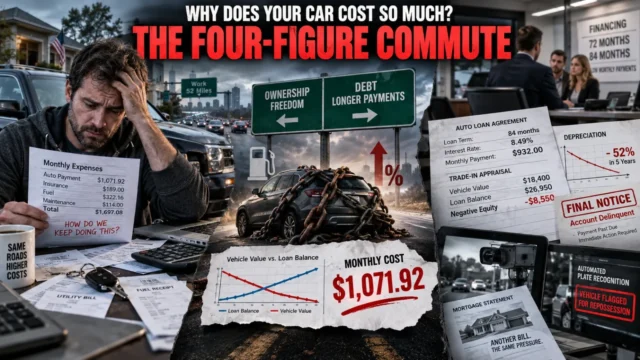
American commuter beside a modern vehicle with auto loan paperwork, payment figures and depreciation data illustrating rising US car ownership costs

Why Does Your Car Cost So Much? The Four-Figure Commute

The average cost of owning and operating a new vehicle reached $12,863 a year in 2026. Depreciation, high financing costs, negative equity and rising delinquencies are deepening the financial burden on American households.

American worker facing rising living costs, declining labor income and growing barriers to household wealth building

Why Does Hard Work Build Less Wealth? America’s Wealth Divide

The link between steady work and long-term wealth has weakened as labor income loses ground to capital, housing becomes less affordable, and job volatility increases. Urban Institute researchers argue that income support and asset-building policies must work together to restore economic security.

American middle-class family reviewing household expenses beside wage, productivity and income inequality data

Why Did Pay Fall Behind? The $30,000 Paycheck Penalty

Decades of uneven income growth have left middle-class households far behind the top one percent. The divide between productivity, worker compensation and living costs is now central to America’s affordability crisis.

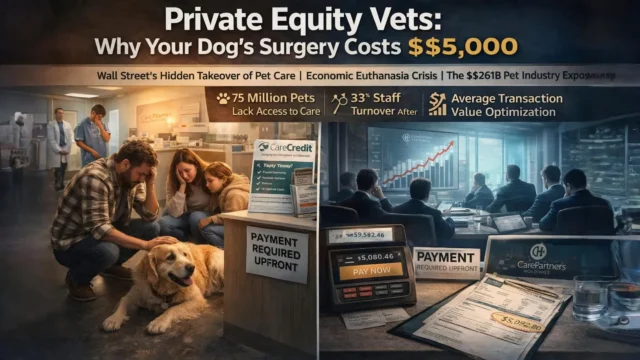
Emergency veterinary clinic waiting room with distraught family facing economic euthanasia decision, private equity corporate consolidation of local vet practices, $5000 surgery bill reality

Private Equity’s Veterinary Takeover: Why Your Dog’s Emergency Surgery Costs $5,000

Private equity firms control 75% of emergency veterinary practices, forcing families to pay $5,000 upfront for life-saving pet surgery or choose “economic euthanasia”—killing medically curable animals due to corporate payment policies. Mars Corporation owns 2,000+ clinics (Banfield, VCA, BluePearl) while maintaining the “illusion of independence,” keeping local names to hide Wall Street ownership. Independent practices experience 18.7% revenue decline within 6 years of corporate entry. Negative accrual compensation traps force veterinarians to upsell desperate clients to clear corporate-imposed debt. 87% of vets suffer burnout costing the industry $1-2 billion annually. By 2030, 75 million pets may lack access to care as corporate consolidation prices working families out of pet ownership entirely.