Young Utah worker reviewing homebuying savings while an employer benefits dashboard shows housing assistance and contribution details

When Your Boss Helps Buy Your Home? The Strings Matter

A Utah startup is pitching employer-funded homebuying help as a workplace benefit. The assistance can be valuable, but workers should understand what happens to employer contributions, referrals and savings if they leave their job.

Delivery driver at a Maine gas station facing high fuel prices while app-based work expenses rise

When Fuel Eats Your Paycheck: Delivery Drivers Squeezed

Maine gas prices reached $4.41 a gallon as delivery, rideshare and courier workers reported rising fuel costs cutting deeply into earnings. The pressure shows how vehicle expenses can turn a fuel shock into an immediate wage squeeze.

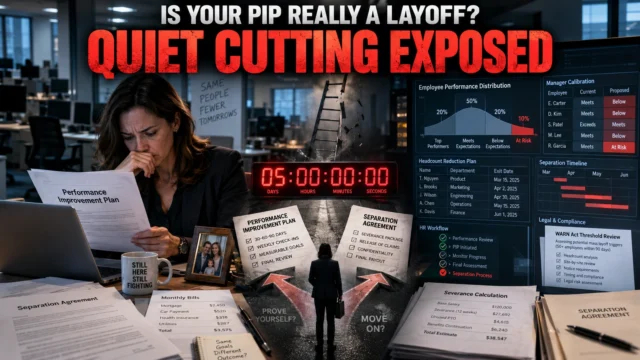
Corporate employee facing a performance improvement plan while ranking dashboards and separation documents appear in the background

Is Your PIP Really a Layoff? Quiet Cutting Exposed

Corporate performance systems are increasingly being scrutinized as potential tools for managed exits. The investigation examines compressed PIPs, forced rankings, severance incentives and quiet cutting.

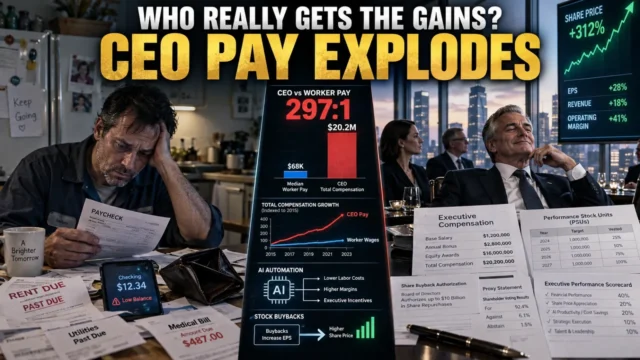
American worker contrasted with corporate executive compensation data, stock charts and equity awards illustrating CEO pay inequality

Who Really Gets the Gains? CEO Pay Explodes

CEO compensation is increasingly driven by equity awards rather than salary, widening the gulf between executives and typical workers. Stock buybacks, megagrants and emerging AI incentives are intensifying scrutiny of how corporate wealth is distributed.

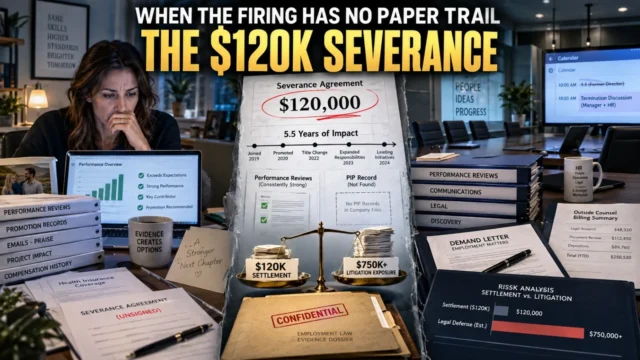
Terminated technology startup employee reviewing performance records and severance documents while corporate HR and legal evidence appear in the background

When the Firing Has No Paper Trail: The $120K Severance

A long-tenured startup employee secured a $120,000 severance package after an abrupt termination. The case shows how performance records, legal counsel and documented risk can reshape severance negotiations.

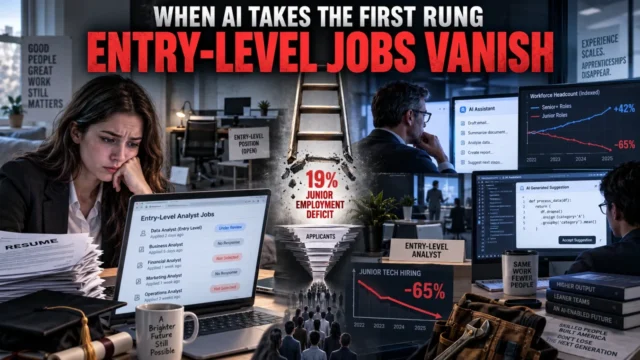
Young graduate facing shrinking entry-level job opportunities as AI reshapes corporate hiring and increases demand for experienced workers

When AI Takes the First Rung: Entry-Level Jobs Vanish

Payroll and global employment data show AI adoption is reshaping the career ladder, with junior opportunities contracting while demand for experienced workers rises. Young workers are increasingly confronting a labor market that expects senior-level judgment before they have had the chance to build it.

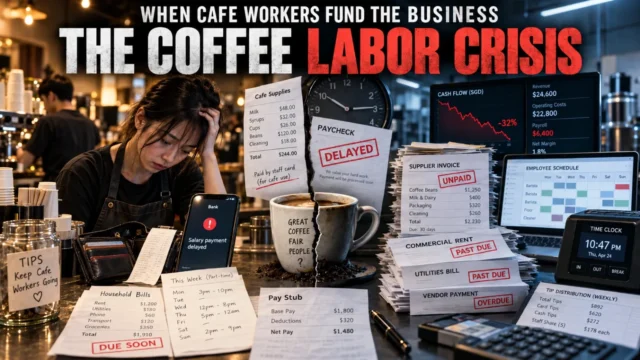
Generic cafe worker reviewing bills and supplies beside a specialty coffee counter, representing Haus Coffee labor issues and wage pressure

When Cafe Workers Fund the Business: The Coffee Labor Crisis

Haus Coffee’s owner admitted repeated late salary payments, delayed vendor payments and failures that left employees paying for cafe supplies themselves. The case highlights broader labor, scheduling and wage-theft pressures across specialty coffee.

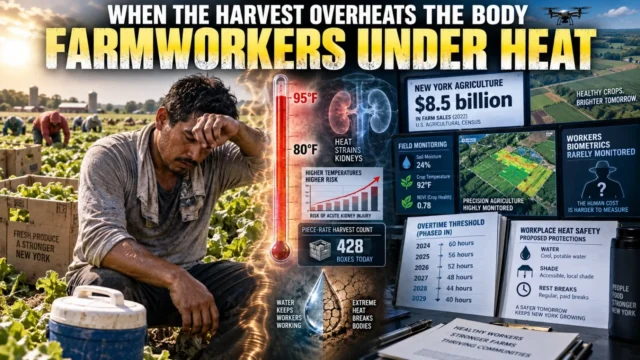
Farmworker harvesting crops in extreme summer heat with water, farm technology and heat-safety evidence in the background

When the Harvest Overheats the Body: Farmworkers Under Heat

Extreme heat, strenuous field labor and piece-rate incentives can place farmworkers at serious risk of heat illness and acute kidney injury. New York’s agricultural economy is also confronting debates over rest breaks, overtime rules and proposed heat protections.

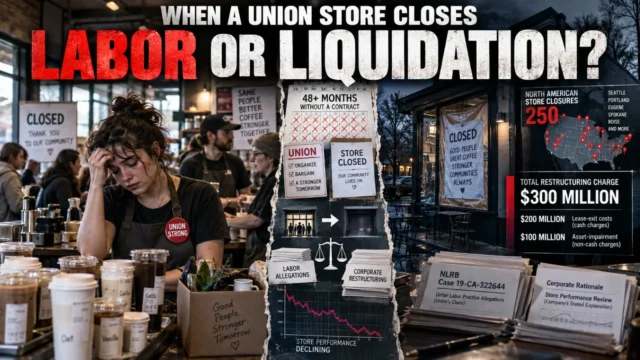
Unionized Starbucks workers and a closing coffeehouse symbolize the Oregon Starbucks closure dispute over bargaining, restructuring and worker rights

When a Union Store Closes: Labor or Liquidation?

The closure of Starbucks’ unionized Willamette Street store in Eugene intensifies scrutiny of bargaining delays, restructuring and retaliation allegations. Workers face displacement after years without a finalized labor agreement.

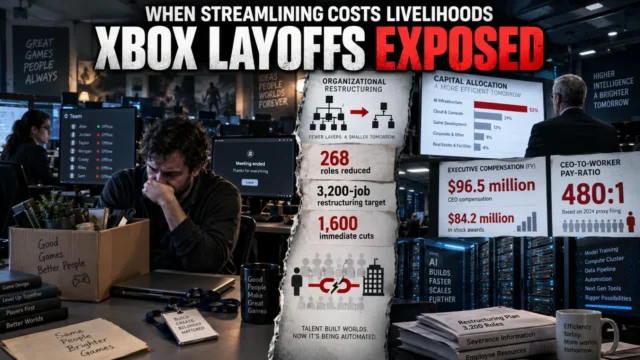
Game developer facing layoff uncertainty beside corporate restructuring dashboards and AI infrastructure imagery

When Streamlining Costs Livelihoods: Xbox Layoffs Exposed

Xbox’s latest restructuring highlights how corporate language can soften the human reality of layoffs. The analysis examines studio closures, survivor syndrome, executive compensation and Microsoft’s broader AI-driven capital shift.

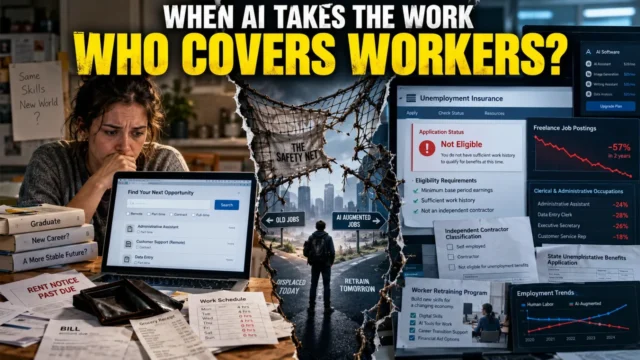
Displaced American worker facing financial pressure beside unemployment insurance documents and AI-related labor market data

When AI Takes the Work: Who Covers Workers?

AI-driven labor-market disruption is exposing long-standing gaps in US unemployment insurance, particularly for gig workers, part-time workers and new entrants. The coverage gap can leave displaced workers with little financial runway to retrain or search for suitable employment.

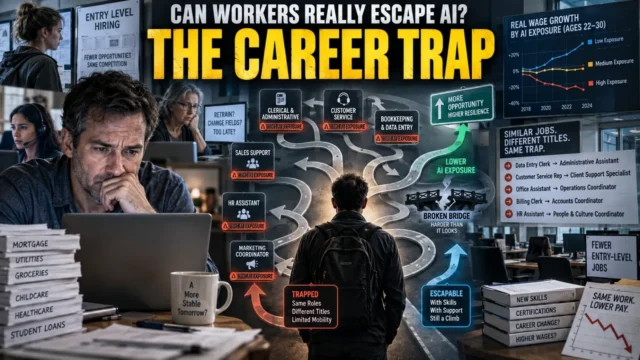
American workers navigating career transitions while AI automation threatens administrative and bridge occupations

Can Workers Really Escape AI? The Career Trap

New worker-mobility research suggests AI exposure alone does not reveal who can realistically escape automation risk. Career networks, bridge occupations, demographics and wage losses may determine who becomes trapped.

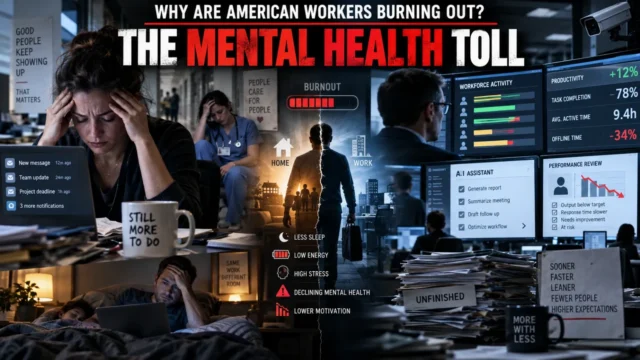
Stressed American employee at a workstation contrasted with workplace monitoring dashboards and artificial intelligence systems

Why Are American Workers Burning Out? The Mental Health Toll

American workers are facing severe burnout, chronic stress, electronic monitoring and growing anxiety over artificial intelligence. Global and U.S. health frameworks increasingly argue that employers must address the workplace conditions driving psychological harm.

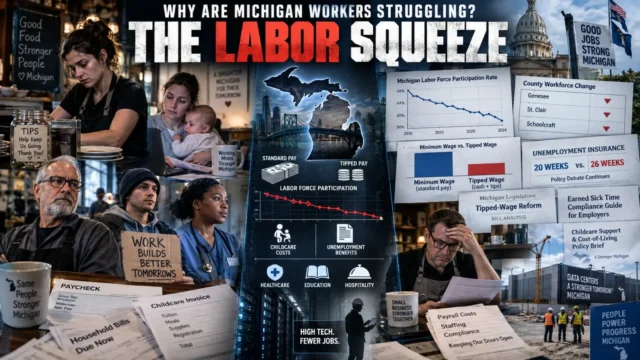
Michigan workers, restaurant staff and families representing debates over wages, childcare costs, employment and labor protections

Why Are Michigan Workers Struggling? The Labor Squeeze

Michigan’s labor market combines shrinking participation, expensive childcare, wage disparities and contested workplace reforms. This analysis examines the competing worker, policy and small-business perspectives shaping the state’s economic future.

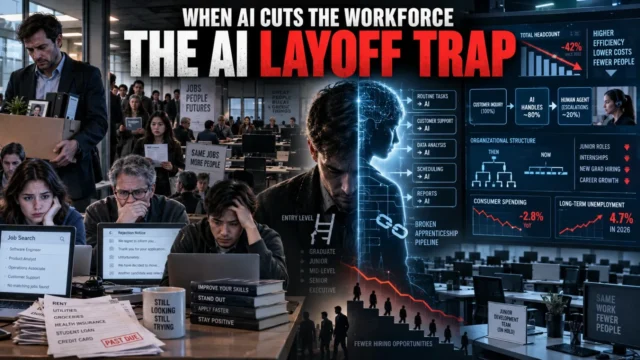
Displaced technology worker facing AI-driven restructuring, shrinking hiring opportunities and corporate automation pressures in 2026

When AI Cuts the Workforce: The AI Layoff Trap

The 2026 wave of AI-driven restructuring is cutting white-collar jobs, weakening junior hiring and intensifying competition for comparable work. Economic research and Klarna’s automation reversal reveal how aggressive cost-cutting can also damage demand, service quality and long-term talent pipelines.

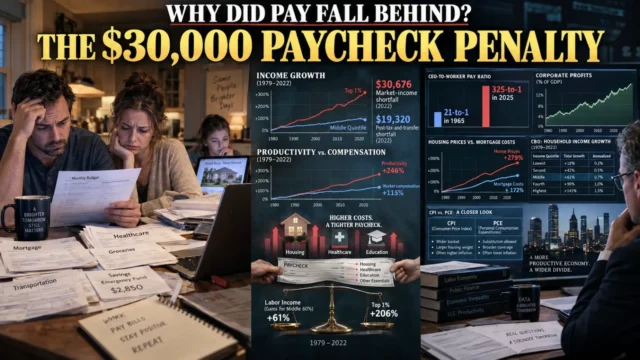
American middle-class family reviewing household expenses beside wage, productivity and income inequality data

Why Did Pay Fall Behind? The $30,000 Paycheck Penalty

Decades of uneven income growth have left middle-class households far behind the top one percent. The divide between productivity, worker compensation and living costs is now central to America’s affordability crisis.

Gig workers facing algorithmic management under ILO Convention 193

Global rights for GIG workers: US votes NO

ILO Convention 193 creates a binding international framework for labor rights in the platform economy. The United States voted against the treaty as it advances protections on classification, algorithms, and worker rights.

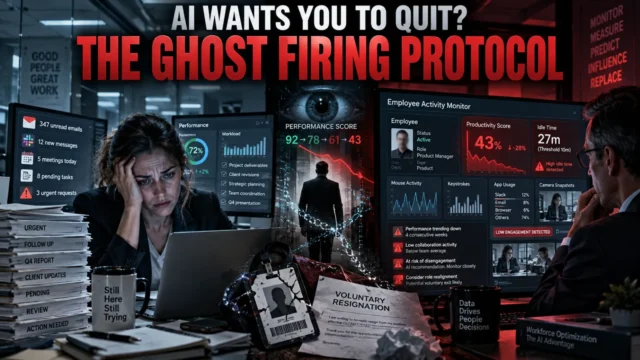
AI ghost firing and workplace surveillance pushing an exhausted American employee toward resignation

The “Ghost Firing” Protocol: How AI-Driven Management Can Push Employees to Quit

Your boss may never call you into a room and fire you. The algorithm may do something quieter. Impossible targets appear. Every idle minute becomes a metric. Meaningful projects disappear. Surveillance intensifies, performance scores deteriorate, and eventually quitting feels easier than staying. This investigation examines the emerging idea of “ghost firing”—the use of AI-driven management, workplace monitoring and psychological pressure to create conditions that can push employees out without a conventional layoff.

White-collar professional worker at computer looking stressed about AI job displacement, office setting showing career uncertainty and pay cuts

How AI Is Quietly Destroying White-Collar Careers: The Hidden Pay Cuts and Job Degradation Workers Face

AI isn’t replacing white-collar jobs instantly—it’s degrading them through brutal pay cuts and deskilling. Professional writer Jacqueline Bowman saw her salary slashed 50% after being demoted to “AI editor,” spending twice the time cleaning up algorithmic errors. Journalist Mateusz Demski was fired and replaced by synthetic AI avatars. This is “AI workslop”—a purgatory where knowledge workers become digital janitors. Companies grow revenue 15% while freezing headcount, eliminating entry-level positions that built the middle class. The real crisis isn’t mass unemployment tomorrow—it’s the structural erosion of professional careers happening right now, creating a “silicon ceiling” that traps workers in precarious, low-paid AI supervision roles while executives enrich shareholders.