
The Anatomy of a Corporate Ambush
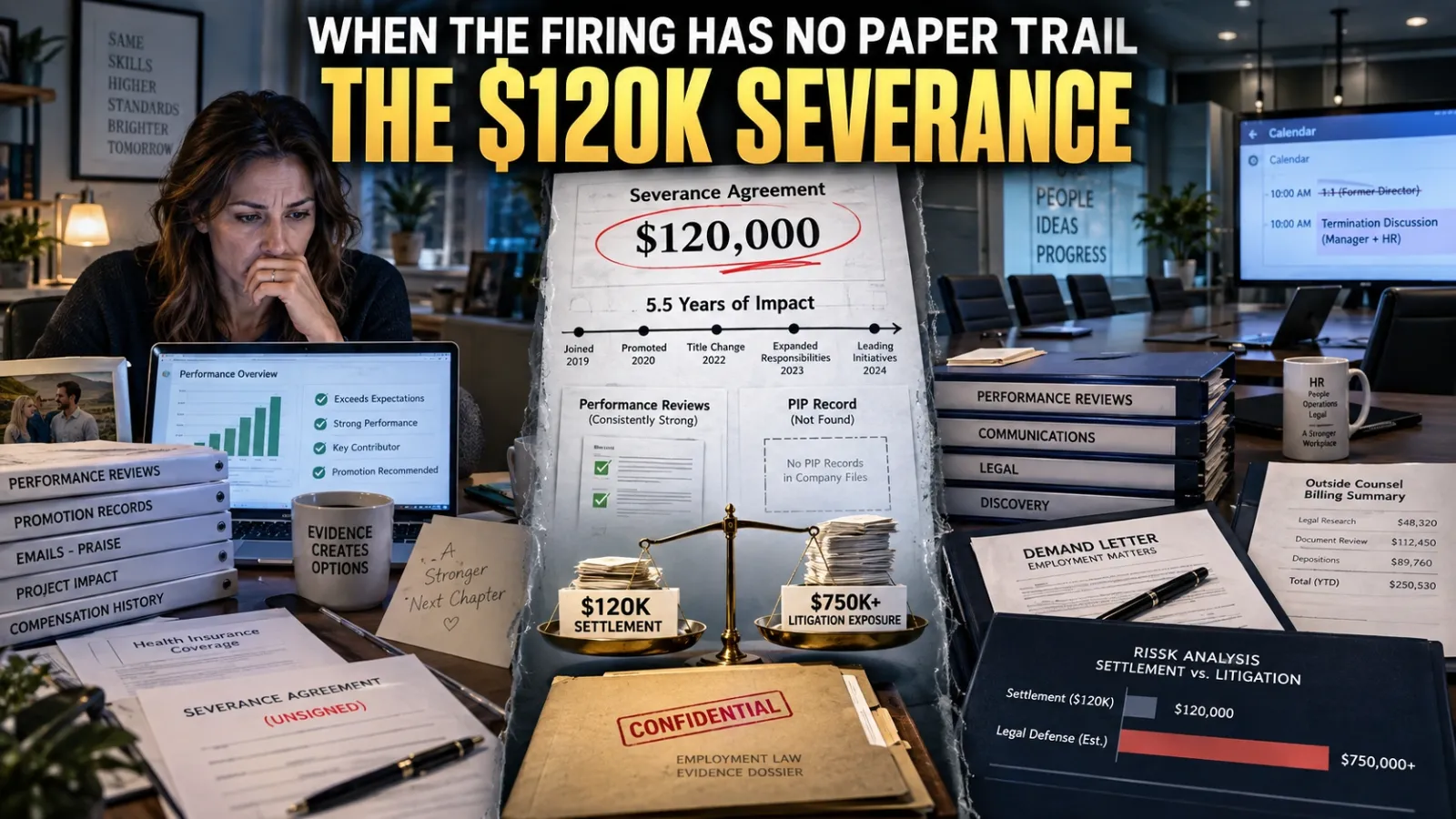
To understand the mechanics of a modern severance victory, one must first examine the anatomy of the ambush that preceded it. According to the worker’s detailed account, his five-and-a-half-year tenure was characterized by exactly the type of behavior that companies claim to reward. He was consistently told he was doing well, rewarded with title bumps, and handed increasing operational responsibilities. He felt a deep sense of security, believing the repeated assurances from leadership that he was a highly valued member of the organization.
However, the internal culture of his employer—a technology startup—had recently begun to curdle into something unrecognizable. The employee noted that over the previous year, the company had become “scummy and gross” following a complete C-level executive overhaul. This leadership change was accompanied by aggressive shifts in corporate values and the heavy, sudden integration of artificial intelligence into the company’s core operations. These organizational shifts are classic precursor signals to mass terminations, as new executive teams frequently slash overhead and pivot product strategies regardless of institutional knowledge.
The execution of the firing was clinical, deeply impersonal, and designed to disorient the target. The employee’s calendar was manipulated so that a meeting originally set with a director was suddenly taken over by a manager and HR. This bait-and-switch tactic is specifically utilized to prevent an employee from preparing a defense, downloading performance metrics, or gathering materials prior to the call.
The psychological toll of such an ambush on ordinary families is profound and immediate. Multiple colleagues reached out to the terminated employee, expressing shock given his heavy workload and consistent output. These conversations revealed that this exact ambush approach had been quietly weaponized against several other recent casualties at the firm. The cruelty of the timing—cutting off family healthcare immediately after a wedding—highlights the stark disconnect between corporate “family” rhetoric and the harsh realities of the balance sheet.
Yet, the company made a critical, highly expensive miscalculation in its termination protocol. In their rush to execute a frictionless reduction in headcount, they bypassed the standard corporate safeguard of implementing a formal performance improvement plan. By firing a high-performing, long-tenured employee without a documented history of failure, the startup left itself legally exposed. This unforced error handed the employee the exact leverage required to orchestrate a massive financial counter-offensive.
The Illusion of At-Will Invincibility
In the United States, employment is fundamentally governed by the “at-will” legal doctrine. This framework allows both the employer and the employee to sever the working relationship at any time, for any legal reason, or for no reason at all. Because of this foundational doctrine, there are no federal or state laws that automatically entitle a terminated employee to any severance pay whatsoever. Many corporate leadership teams hide behind this doctrine, assuming it grants them absolute immunity from the consequences of sudden, unprovoked terminations.
However, experienced corporate human resources departments have long understood that at-will employment is not a bulletproof shield against expensive litigation. To mitigate the risk of wrongful termination lawsuits, discrimination claims, or retaliation charges, competent HR departments rely heavily on the Performance Improvement Plan (PIP). On its surface, a PIP is often framed as a structured, supportive development plan to help a struggling employee succeed. In reality, it is a highly choreographed legal mechanism designed to build an airtight paper trail proving that the employee was fired “for cause” due to measurable deficiencies.
When a company suddenly fires a high-performing employee without a PIP, without written warnings, and without any documented history of poor performance, they create a massive legal vulnerability. A sudden termination devoid of a paper trail raises immediate, uncomfortable questions for a judge or jury. If the employee was not fired for performance, a lawyer will ask if the termination was actually rooted in age discrimination, retaliation for raising compliance concerns, or an attempt to silence a whistleblower.
Furthermore, the company risks violating an “implied contract” created by years of positive performance reviews. The implied contract exception is a recognized legal concept where informal assurances—such as consistent raises, promotions, and verbal guarantees of job security—can occasionally be treated as legally binding. While notoriously difficult to prove in court, the mere threat of an implied contract claim, coupled with a lack of negative performance documentation, places the employer in a highly defensive posture.
In this specific case, the startup’s decision to bypass the PIP process and execute a mid-quarter ambush backfired entirely. The leadership team failed to build a dossier against the employee to justify the firing. They were entirely unaware that the employee had spent the last several months building a dossier against them.
Building the Severance Dossier
The concept of a “severance dossier” represents a massive paradigm shift in how modern workers approach their employment and eventual separation. Recognizing that HR departments exist primarily to protect the company from liability, employees are increasingly acting as their own legal advocates. They are doing this by meticulously and quietly documenting their corporate existence long before a termination meeting is ever scheduled.
Building a dossier requires proactive compilation of evidence, rooted in the understanding that emotional pleas do not win severance negotiations. In a legal standoff, facts, dates, saved communications, and documented metrics are the only currencies that matter. Employees are now advised to quietly forward key metrics to personal devices or maintain physical copies of their achievements, ensuring they are not locked out of their own performance history when their corporate access is abruptly severed.
A highly weaponized severance dossier typically includes several core components of performance validation. First, it contains every formal performance review, self-evaluation, and finalized rating score the employee has ever received. Second, it includes written praise and metrics, such as emails from directors praising specific project deliveries, messages from executives acknowledging hard work, and dashboards proving the employee exceeded key performance indicators. Third, it establishes a clear timeline of role expansion, documenting increased responsibilities, title bumps, and salary raises that contradict any sudden claims of incompetence.
Beyond proving competence, a sophisticated dossier also documents employer malfeasance. This includes evidence of shifting goalposts, such as records showing sudden, undocumented changes in expectations, or impossible deadlines assigned shortly before termination. These tactics are often recognized by employment lawyers as signs of “constructive dismissal” or bad-faith management designed to force an employee to quit.
The most explosive element of the dossier, however, is the audit trail. This component includes hard evidence of the company’s internal operations that may border on regulatory non-compliance, unethical behavior, or financial mismanagement. In the case of this startup, the employee noted the reckless and potentially non-compliant use of artificial intelligence following the executive overhaul. When an employee possesses an audit dossier, it suggests they have visibility into systemic corporate practices that the new C-suite desperately wants to keep hidden from public or regulatory scrutiny.
The Economics of Legal Friction
When an employee is terminated, the company’s initial severance offer—if one is presented at all—is a highly calculated lowball. It is fundamentally a “take it or leave it” proposition designed to secure a signed release of all legal claims for the lowest possible price. Companies rely heavily on the panic, emotional trauma, and financial desperation of the fired employee to ensure rapid compliance and a quick signature.
However, the power dynamic shifts violently when the employee refuses to sign immediately and instead introduces an employment attorney armed with a comprehensive dossier. A lawyer transforms the negotiation from a desperate plea for fairness into a cold, calculated corporate risk analysis. Employers do not pay enhanced severance out of a sudden burst of generosity; they pay it to buy peace and manage institutional risk.
The primary tool in this phase of the conflict is the legal demand letter. A strategically crafted demand letter does not threaten litigation wildly or rely on emotional hyperbole. Instead, it calmly juxtaposes the employee’s five years of stellar performance against the ambush termination, explicitly highlighting the lack of a PIP or justifiable cause. It then introduces the legal vulnerabilities the company has exposed itself to, establishing a credible threat of a protracted legal battle.
The true leverage in these negotiations lies in the staggering cost of corporate legal defense. Employment lawyers know that companies pay premiums to avoid uncertainty and public exposure. Defending even a frivolous employment lawsuit can easily cost a corporation tens to hundreds of thousands of dollars in outside counsel fees, endless discovery processes, and wasted executive time.
Furthermore, during the discovery phase of a civil lawsuit, the company’s internal emails, direct messages, and operational practices become subject to legal subpoena. For a startup undergoing a chaotic C-suite transition and implementing legally ambiguous AI systems, the prospect of an external legal team digging through their internal communications is terrifying.
By presenting the audit dossier within the context of a demand letter, the employee’s legal counsel effectively corners the employer. The employer is forced to weigh the cost of the requested severance against the devastating potential costs of litigation, discovery, and reputational damage. When framed as a risk management decision, paying a premium to quietly settle the dispute becomes the most fiscally responsible choice for the company.
Benchmarking the Price of Peace
To understand just how significant a $120,000 severance victory is for a mid-level employee with five years of tenure, one must look at the standard economic benchmarking of corporate exits. Data provides the clearest picture of how unusual and triumphant this specific negotiation was for the worker.
According to the 2025/2026 Severance and Salary Benchmarking Report by executive coaching firm Challenger, Gray & Christmas, the average severance package across all US industries sits at 19.3 weeks of pay. This number represents a notable increase from previous years, driven by companies attempting to protect their employer brands during high-profile tech and media layoffs. However, the most common baseline formula utilized by corporate America remains stubbornly low, generally offering one to two weeks of base salary per year of service.
For a standard mid-level US employee with five years of tenure in 2026, a typical gross severance package ranges between $15,000 and $70,000. This range depends heavily on the specific industry, the employee’s base salary, and the company’s size. Securing a $120,000 payout for merely five years of service is a massive statistical outlier that points directly to the successful application of severe legal leverage.
| Industry Sector | Average Severance Duration (Weeks) | Typical Formula & Market Notes |
|---|---|---|
| Chemicals | 35.3 weeks | Capital-intensive, long tenures, structured separation policies. |
| Media | 28.1 weeks | High emphasis on brand protection and alumni relations. |
| Aerospace & Aviation | 23.2 weeks | Specialized skills, high retention priorities to prevent intellectual property loss. |
| Banking & Finance | 22.2 weeks | High compensation norms, deferred equity vesting, intense regulatory risks. |
| Healthcare | 21.1 weeks | High recruitment costs for clinical and administrative roles, post-pandemic retention efforts. |
| Technology | 11.2 – 12.0 weeks | Bifurcated market: Big Tech offers generous packages (16 weeks + tenure), while smaller startups offer minimal/zero severance. |
| Retail | 10.0 weeks | High turnover, thinner margins, hourly workers rarely receive any packages. |
In the technology sector, where this employee operated, the landscape is deeply bifurcated and often hostile. While massive conglomerates like Google and Meta may offer baselines of 14 to 16 weeks plus tenure multipliers, smaller tech companies and startups frequently offer absolute minimums. It is not uncommon for startups to attempt to push employees out with just two weeks of pay, or nothing at all if they believe the employee lacks the resources to fight back.
By securing $120,000, this employee effectively bypassed the standard “one week per year” formula entirely. He extracted a premium that likely equates to six months to a full year of total compensation. This level of payout is usually reserved strictly for C-suite executives, who average 30 to 50 weeks of severance, or is the result of a negotiated settlement where the employer faces severe, credible legal or regulatory threats.
The benchmarking data also reveals stark demographic disparities that savvy employment lawyers routinely exploit during negotiations. For instance, the gender pay gap in severance remains roughly 23% across industries, with women receiving 4.6% less on average than male counterparts when adjusted for level and base pay. While women outpace men in severance packages in sectors like education (+75%) and chemicals (+27.6%), male-dominated industries like technology continue to show gaps favoring men. When companies fail to benchmark their severance equitably, they expose themselves to discrimination claims, providing further ammunition for a dossier-wielding employee.
Whistleblowers, the SEC, and the Rule 21F-17 Crackdown
The most potent element of the modern severance dossier—and the most likely reason this specific settlement reached the exceptional figure of $120,000—is the terrifying specter of the whistleblower. Regulatory agencies across the United States have drastically increased their protections and financial incentives for corporate whistleblowers, effectively deputizing employees to police their own companies.
The Securities and Exchange Commission (SEC) has been particularly aggressive in this arena. The agency has rigorously enforced Rule 21F-17, a regulation born from the Dodd-Frank Wall Street Reform and Consumer Protection Act. This rule explicitly prohibits companies from taking any action to impede a whistleblower from communicating with the SEC about possible violations of securities law.
Historically, companies used severance agreements as absolute gag orders. They would include sweeping confidentiality clauses, massive non-disparagement provisions, and language explicitly forcing the employee to waive any right to monetary recovery from subsequent government investigations. The SEC has spent the last decade hunting down these exact clauses.
In high-profile enforcement actions against major entities like KBR, BlueLinx, and BlackRock, the SEC levied massive fines simply because the boilerplate language in their severance agreements could theoretically chill an employee from reporting fraud. For example, BlueLinx was heavily penalized for severance agreements that prohibited employees from sharing confidential information unless compelled by law, and required them to notify the company before doing so. Similarly, NeuStar and SandRidge faced SEC wrath for non-disparagement clauses that expressly prohibited former employees from communicating with government agencies.
If a modern severance agreement states that an employee cannot disparage the company, or must notify the general counsel before speaking to a regulator, that agreement is likely in direct violation of federal law.
For the terminated startup employee, the existence of an “audit dossier” implies the documentation of internal malfeasance. In the modern tech landscape, “scummy” behavior often translates to data privacy violations, the misrepresentation of AI capabilities to investors, or financial irregularities during a chaotic C-level transition. If the employee’s legal counsel even hinted that the dossier contained information relevant to regulatory bodies, the company’s risk profile expanded exponentially.
A company cannot legally use a severance agreement to prevent an employee from reporting a crime or regulatory violation. Therefore, to neutralize a potential whistleblower, the company must offer a severance package so overwhelmingly generous that the employee voluntarily chooses to walk away and focus on their new life. They must be paid enough to forego the stress of embarking on a years-long crusade alongside federal investigators. The $120,000 was the premium paid for voluntary, satisfied silence.
Beyond Cash: Health, Equity, and Human Dignity
While the headline figure of $120,000 is striking, expert severance negotiations rarely focus solely on the top-line cash number. A meticulously negotiated exit encompasses a holistic restructuring of the employee’s financial and professional transition. When armed with a dossier, employees can unlock highly valuable non-monetary concessions that companies are frequently more willing to grant than pure cash payouts.
The loss of healthcare is often the most terrifying aspect of an ambush firing. The terminated employee noted the immediate, agonizing impact of the firing on his personal life, highlighting that his new wife lost her coverage instantly. In the US, the loss of employer-sponsored health insurance is a catastrophic financial event. Under COBRA laws, employees can maintain their exact insurance plan, but they must pay the full premium themselves, plus an administrative fee.
In 2026, average group rates for COBRA approach $790 per month for a single individual and a staggering $2,290 per month for a family. A skilled negotiator leverages the dossier to force the employer to subsidize COBRA premiums for three to twelve months. This represents tens of thousands of dollars in retained value for the family, allowing them to bridge the gap to a new job without facing medical bankruptcy.
Equity acceleration is another critical battleground. In the startup ecosystem, base salary is often only a fraction of an employee’s total compensation. Much of the wealth is locked in unvested Incentive Stock Options (ISOs) or Restricted Stock Units (RSUs) that vest over a multi-year period. A standard mid-quarter termination generally results in the immediate forfeiture of this unvested equity and the loss of the annual prorated bonus. However, a severance victory often includes the acceleration of equity vesting schedules, or the extension of the exercise window for options from the standard 90 days to several years, preserving the worker’s long-term wealth.
Finally, employees fight for mutual non-disparagement clauses. Companies desperately want employees to sign non-disparagement agreements to protect their corporate brand identity. In a leverage situation, the employee will demand that this clause be mutual. This legally binds the company’s executives and HR representatives from speaking negatively about the employee to future employers, background checkers, or industry peers, effectively safeguarding the employee’s future earning potential and professional dignity.
The Hidden Costs of a Botched Layoff
The brutal methodology of the ambush firing highlights a profound operational and financial blind spot in corporate leadership. When executives mandate sudden, clinical layoffs to save money, they frequently ignore the catastrophic secondary costs incurred by a terrified, disillusioned surviving workforce.
Data from Challenger, Gray & Christmas reveals that the financial benefits of an aggressive headcount reduction are often entirely wiped out by the hidden costs of poor execution. In a modeled scenario of a 1,200-person company executing a 5% reduction (60 employees), providing a standard 12 weeks of severance and healthcare costs the company roughly $1 million. On paper, this generates a gross Year 1 savings of $5.1 million in reduced payroll.
However, when terminations are handled ruthlessly—such as ambushing a beloved, high-performing five-year veteran—the psychological contract with the remaining workforce shatters. The “survivors” immediately update their resumes, leading to a spike in voluntary turnover among the company’s top talent.
The Challenger model projects that the resulting incremental voluntary turnover costs the company approximately $1.81 million in recruitment, onboarding, and lost institutional knowledge. Furthermore, the lost productivity from distracted, demoralized employees drains another $1.59 million from the bottom line. When combined with the inevitable legal friction—such as the $120,000 paid to silence a single dossier-wielding employee—the projected Year 1 cost of a poorly handled reduction spirals to nearly $4.78 million. This effectively neutralizes the intended $5.1 million in savings, rendering the entire restructuring exercise financially useless.
The most successful companies view generous, benchmark-aware severance not as a sunk cost, but as an operational insurance policy. A humane transition protects the employer brand, maintains the productivity of the surviving workforce, and, crucially, prevents disgruntled employees from weaponizing their institutional knowledge in a court of law.
What Happens Next
The era of blind corporate loyalty is effectively dead, replaced by a climate of transactional hyper-vigilance. As artificial intelligence continues to accelerate organizational restructuring and algorithmic management dictates workforce optimization, the human reaction will increasingly be one of defensive preparation.
In the immediate future, we can expect a normalization of the “severance dossier.” Ordinary workers, observing stories of five-year veterans tossed aside in hijacked virtual meetings, will begin operating under the assumption that their termination is always imminent. Employees will increasingly utilize personal, secure archives to backup positive performance reviews, save metrics of their success, and document ethically questionable corporate pivots. The corporate paper trail, once the exclusive domain of HR departments looking to build cause for termination, has been fully democratized.
Simultaneously, state and federal regulators will continue to scrutinize the mechanisms companies use to silence their former workforce. The ongoing crackdown by the SEC on illegal non-disparagement clauses, coupled with the National Labor Relations Board’s (NLRB) recent rulings restricting the scope of broad confidentiality agreements, means that employers are rapidly losing their ability to easily sweep corporate malfeasance under the rug.
For corporate America, the $120,000 lesson is exceptionally clear. The at-will employment doctrine may allow a company to fire a high-performing employee without warning, but it does not protect the company from the severe financial consequences of that decision. When a company acts without humanity, due process, or legal foresight, it invites a reckoning. In an age where every email is archived and every metric is trackable, the workforce is finally learning how to use the company’s own paper trail against them.
Sources (20)
- twistedsifter.com — He was axed mid quarter after 5 years of stellar performance then turned his leg
- reddit.com — Over 55 years fired without warning
- twistedsifter.com — He was axed mid quarter after 5 years of stellar performance then turned his leg
- simpleseverance.co — Average severance package
- postlayoffplan.com — Average severance package 2026 benchmarks
- challengergray.com — Industry breakdown whos paying the most in severance and why
- beckershospitalreview.com — Report what does a competitive severance package look like
- challengergray.com — The return on investment of outplacement a data backed breakdown
- challengergray.com — Benchmarking severance in 2025 what competitive really looks like
- challengergray.com — The gender severance gap progress but not parity
- mcmackinlaw.ca — Severance package negotiation
- ruggleslawfirm.com — Fired offered severance lawyer negotiation
- ullaw.ca — How to negotiate severance package
- simpleseverance.co — Severance negotiation email templates
- pillsburylaw.com — Sec continues crackdown on employer whistleblower restrictions
- katten.com — SEC Whistleblower Protection Recent Cautionary Tales and New Best Practices
- sanfordheisler.com — Negotiating an executive severance package in the shadow of a whistleblower clai
- mylawcle.com
- findlaw.com — Implied employment contracts and wrongful termination
- cmlaw.com — Implied contract and wrongful termination




Leave a Reply