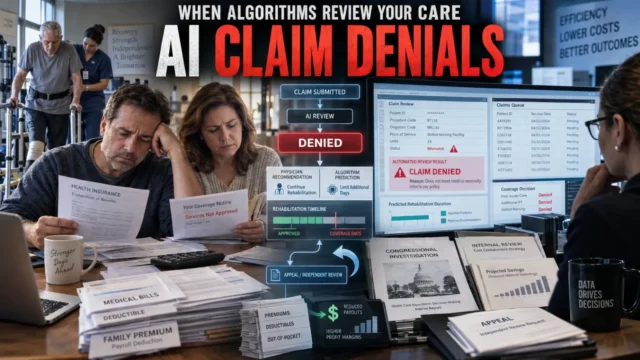
American patient facing medical bills beside a health insurance claims review dashboard representing AI-driven healthcare claim decisions

When Algorithms Review Your Care: AI Claim Denials

Artificial intelligence is increasingly shaping how US health insurers review claims and post-acute care. Lawsuits, congressional scrutiny and rising household costs are intensifying debate over automated healthcare decisions.
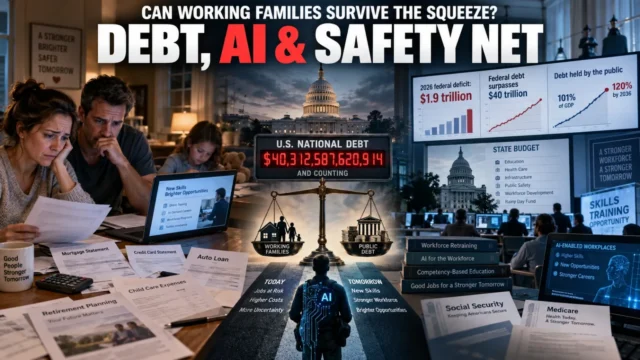
American working family facing federal debt pressure, AI-driven job disruption and a strained social safety net

Can Working Families Survive the Squeeze? Debt, AI & Safety Net

The American Opportunity Project brings governors and policy leaders together as rising federal debt, AI disruption and strained safety-net systems reshape working-family security. The initiative focuses on state-led solutions for workforce development, fiscal pressure and economic mobility.

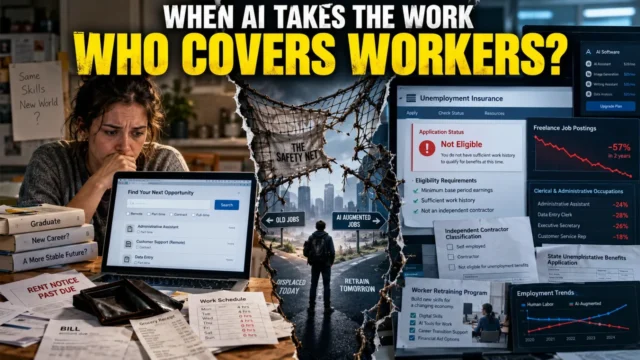
Displaced American worker facing financial pressure beside unemployment insurance documents and AI-related labor market data

When AI Takes the Work: Who Covers Workers?

AI-driven labor-market disruption is exposing long-standing gaps in US unemployment insurance, particularly for gig workers, part-time workers and new entrants. The coverage gap can leave displaced workers with little financial runway to retrain or search for suitable employment.

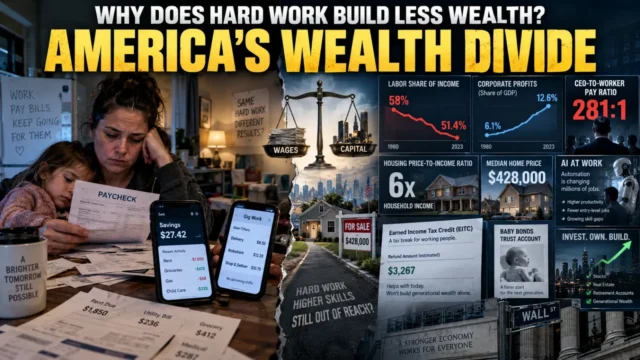
American worker facing rising living costs, declining labor income and growing barriers to household wealth building

Why Does Hard Work Build Less Wealth? America’s Wealth Divide

The link between steady work and long-term wealth has weakened as labor income loses ground to capital, housing becomes less affordable, and job volatility increases. Urban Institute researchers argue that income support and asset-building policies must work together to restore economic security.

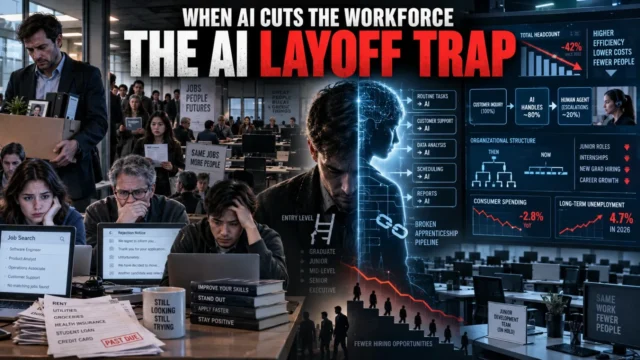
Displaced technology worker facing AI-driven restructuring, shrinking hiring opportunities and corporate automation pressures in 2026

When AI Cuts the Workforce: The AI Layoff Trap

The 2026 wave of AI-driven restructuring is cutting white-collar jobs, weakening junior hiring and intensifying competition for comparable work. Economic research and Klarna’s automation reversal reveal how aggressive cost-cutting can also damage demand, service quality and long-term talent pipelines.