
The Anatomy of a Designed Failure
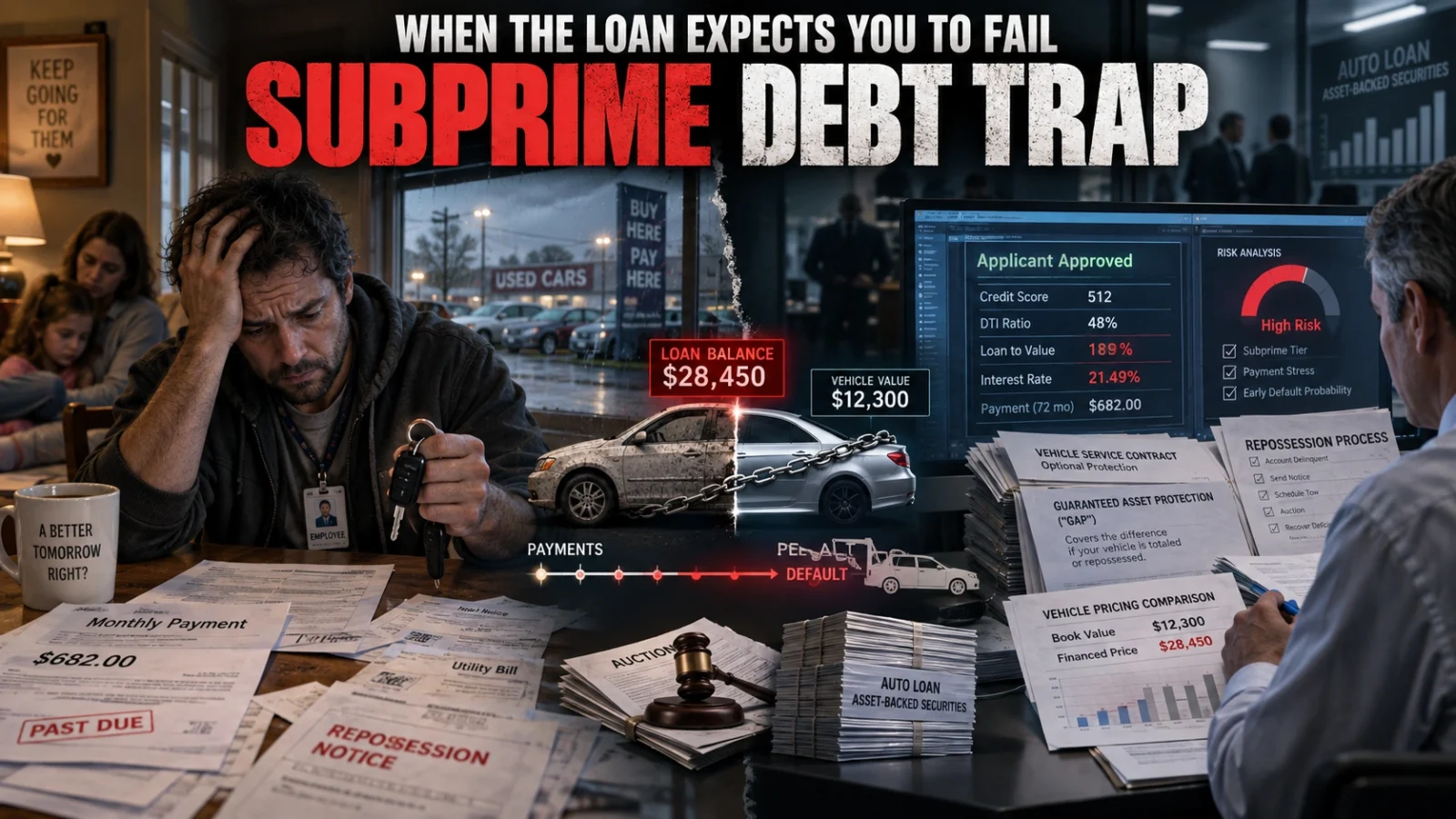
The traditional premise of automotive lending relies on a mutual expectation of success, where the borrower repays the principal with interest and both parties walk away satisfied. However, the multistate coalition alleged that Credit Acceptance engineered a completely different business model that thrived regardless of whether the consumer could actually afford the loan. According to the attorneys general, the lender deliberately targeted low-income borrowers with limited or impaired credit histories. These financing solutions were allegedly structured with such aggressive terms that borrower failure was not just a possibility, but a mathematically anticipated outcome.
Automobile dealerships catering to this demographic often operate as specialized subprime hubs. Under the Credit Acceptance framework, dealerships utilized the company’s proprietary Credit Approval Processing System to secure rapid funding approvals. The state investigations alleged that this system permitted and even encouraged dealers to push consumers into unaffordable agreements based on inflated vehicle values. Borrowers frequently faced exorbitant interest rates that routinely consumed a disproportionate share of their monthly income, leaving little room for basic living expenses.
The structural mechanics of these subprime loans were heavily skewed by aggressively inflated loan-to-value ratios. Dealerships allegedly packed the auto contracts with highly profitable, often unwanted add-on products such as Vehicle Service Contracts and Guaranteed Asset Protection insurance. These additions were frequently rolled into the principal of the loan, subjecting them to the same massive interest rates and artificially inflating the total debt.
Because the loan amounts drastically exceeded the underlying asset’s worth, borrowers were plunged into immediate negative equity the moment they drove off the lot. When consumers inevitably struggled to maintain payments amidst economic shocks, they found it impossible to sell or trade in the vehicle to escape the debt. The New York Attorney General’s complaint estimated that nearly half of all borrowers subjected to these practices ultimately faced vehicle repossession, underscoring the severe human cost of the business model.
Algorithmic Extraction and the Proprietary Score
At the heart of the controversy is a proprietary technological mechanism known internally as the “Credit Acceptance Score.” Unlike traditional credit scores that primarily assess a consumer’s likelihood of making on-time payments, this internal algorithm was allegedly designed to predict the total percentage of the loan the company could ultimately extract from all available sources. The state attorneys general argued that this algorithmic modeling served as a tool for pricing in catastrophe rather than avoiding it.
The predictive models allegedly forecast that many consumers would default quickly, often before even paying down the initial principal of the loan. Yet, rather than denying these excessively risky applications, Credit Acceptance approved them by mathematically offsetting the anticipated defaults against aggressive back-end collection tactics. The algorithm reportedly factored in future revenues derived from vehicle repossessions, auction sales, and the eventual garnishment of the borrower’s wages.
This deployment of data analytics and predictive modeling represents a controversial evolution in consumer finance technology. By leveraging vast data sets, the lender could allegedly isolate the exact threshold where a doomed loan remained profitable for the corporate balance sheet. Consumer advocates argue this flips the concept of underwriting on its head, weaponizing risk assessment to harvest wealth from the most vulnerable demographic tiers.
Credit Acceptance has consistently defended its proprietary systems, its broader business practices, and its compliance with the law. In a public message regarding the settlement, Chief Executive Officer Vinayak Hegde stated that the company remains dedicated to its mission of providing reliable transportation to consumers who have limited financing options. The company emphasized that the settlement contains no admission of fault, noting that its models comply with applicable regulations and that the agreement simply provides operational certainty for the business and its shareholders.
Federal Deregulation and the State Counter-Offensive
The regulatory journey culminating in this $700 million settlement highlights a stark divergence between federal and state approaches to consumer protection. The legal battle originally began in January 2023, when the Consumer Financial Protection Bureau partnered with the New York Attorney General to jointly sue Credit Acceptance in federal court. The lawsuit initially represented a formidable regulatory alliance, signaling a strict, zero-tolerance federal approach toward predatory auto lending.
However, the political and regulatory landscape shifted drastically in early 2025 following a change in federal administration and subsequent policy realignments. Amid a massive deregulatory blitz aimed at dismantling the federal agency’s enforcement capabilities, the Consumer Financial Protection Bureau’s budget was dramatically reduced, and a halt was ordered on the routine supervision of non-bank financial firms. Dozens of major enforcement actions were abruptly dismissed as federal leadership adopted a distinctly industry-friendly posture.
On April 24, 2025, the federal bureau filed a consent motion to withdraw as a plaintiff in the Credit Acceptance lawsuit, abandoning the case with prejudice and leaving New York to fight the legal battle alone. The withdrawal was celebrated by industry lobbying groups like the American Financial Services Association, which argued that aggressive federal litigation threatened to dry up credit access for low-income consumers. For consumer advocates, however, the federal retreat signaled an open season on subprime borrowers and a total collapse of national oversight.
In the face of federal abdication, state attorneys general aggressively filled the enforcement void to protect their local constituents. New York Attorney General Letitia James pressed forward, ultimately building a bipartisan coalition of 39 states and the District of Columbia to sustain the legal pressure. This collective state action leveraged the sheer scale of the multistate alliance to force Credit Acceptance to the negotiating table, proving that coordinated local governance could successfully regulate national financial markets.
Securitizing the Trap on Wall Street
To understand why subprime auto lending proliferated despite massive consumer default rates, one must look past the dealership lot and into the mechanics of Wall Street. Lenders like Credit Acceptance rarely keep these risky loans on their own balance sheets for their full term. Instead, the debts are bundled together into massive financial pools and sold to institutional investors as Asset-Backed Securities.
The securitization process transforms thousands of individual, high-risk car loans into tradable, yield-generating corporate bonds. In 2025 alone, total auto asset-backed security issuance in the United States reached over $123 billion, fueled by a voracious institutional appetite for high-yield fixed-income assets. State prosecutors alleged that Credit Acceptance heavily relied on this secondary market, successfully selling bundled loans to investors while falsely claiming the underlying assets were legally compliant.
The financial performance of these securities reveals a deeply fractured consumer economy that punishes the working class while insulating institutional capital. While prime auto loans—those issued to borrowers with strong credit—maintained stable delinquency rates, the subprime sector deteriorated rapidly. By late 2025 and early 2026, the economic pressure of inflation, wage stagnation, and staggering vehicle prices triggered a wave of defaults across the subprime market.
In January 2026, the overall subprime auto delinquency rate hit 6.9 percent, shattering a 32-year historical record that surpassed even the darkest days of the Great Recession. More alarmingly, the 30-day delinquency rate for subprime auto asset-backed securities spiked to an astonishing 16 percent, compared to just 1.9 percent for prime auto loans. Despite these flashing economic warning signs, the securitization market’s structural design protects institutional investors through a system of overcollateralization, ensuring Wall Street gets paid even when the underlying borrowers are losing their vehicles.
The Dealership Cascade and Price Manipulation
The predatory trap often snaps shut directly at the dealership desk, where complex paperwork and high-pressure sales tactics overwhelm anxious consumers. Subprime buyers generally arrive at dealerships with severely limited options, having already been rejected by traditional banks or credit unions. This inherent lack of leverage makes them uniquely vulnerable to the “cascade” of documentation, where financing terms and expensive add-on products are obfuscated in the final hours of a sale.
A central allegation in the multistate investigation was that Credit Acceptance actively enabled and encouraged its dealer network to pack auto contracts with these ancillary products without the consumer’s informed consent. Products like Vehicle Service Contracts and Guaranteed Asset Protection coverage technically offer a layer of mechanical or financial protection. However, when sold at massive markups and financed at 38 percent interest, they act as lead weights dragging the borrower toward inevitable default.
Furthermore, dealerships allegedly manipulated the core pricing of the vehicles themselves to compensate for the lender’s internal fee structures. Because Credit Acceptance structured its dealer payouts based on expected collections and deep discount fees, dealers frequently inflated the sticker price of the car for subprime buyers. This dual pricing system meant that a cash buyer or a prime borrower would effectively pay significantly less for the exact same vehicle than a desperate subprime borrower.
The new consent order directly attacks this dealership ecosystem with sweeping regulatory requirements. Going forward, Credit Acceptance is legally mandated to implement a strict vehicle price cap for any buyer with a credit score below 600, barring dealerships from financing vehicles sold at more than 109 percent of their highest retail book value. Additionally, the lender must force dealers to provide distinct, pre-purchase disclosures showing the exact monthly payment difference with and without optional add-on products.
The Human Toll of Transportation Deprivation
In the United States, reliable transportation is rarely a luxury; it is a fundamental prerequisite for basic economic survival. Outside of a few major metropolitan hubs with robust public transit infrastructure, holding a job, accessing healthcare, and managing a household are functionally impossible without a personal vehicle. Subprime lenders are acutely aware of this inelastic demand, which grants them immense pricing power over desperate consumers who have no alternative means of mobility.
When a subprime auto loan fails, the human consequences spiral far beyond a simple breach of a financial contract. A vehicle repossession frequently triggers an immediate loss of employment, as the borrower can no longer reasonably commute to their workplace. This sudden and catastrophic drop in household income exacerbates the financial crisis, pushing families toward eviction, utility shutoffs, and deep food insecurity.
Perhaps the most devastating aspect of the subprime trap is the enforcement of the deficiency balance. Even after a vehicle is repossessed and auctioned off by the lender, the borrower remains legally responsible for the remaining loan balance minus the auction proceeds. Because the initial loans were artificially inflated with dealer add-ons and exorbitant interest rates, auctioning a rapidly depreciating used car rarely covers the remaining principal.
Consequently, thousands of consumers found themselves aggressively pursued by debt collectors for cars they no longer possessed. Lenders routinely file lawsuits to secure legal judgments against these borrowers, culminating in the garnishment of whatever meager wages the consumer manages to earn. For the 55,000 borrowers identified in the Credit Acceptance settlement, this inescapable cycle of phantom debt is precisely what the state attorneys general sought to dismantle.
Settlement Mechanics and the Mathematics of Relief
The sheer scale of the $694 million relief package reflects the systemic severity of the alleged abuses uncovered during the multi-year investigation. While the headline number is staggering, the settlement’s specific mechanics are carefully designed to target the most profoundly impacted borrowers across the nation. The financial restitution is strictly partitioned to address different phases of the default cycle, ensuring that both those who lost their vehicles and those teetering on the edge of repossession receive tangible relief.
| Relief Category | Allocated Amount | Target Consumer Group |
|---|---|---|
| Debt Forgiveness (Repossessed) | $388 Million | Borrowers whose vehicles were repossessed or surrendered within 18 months of loan origination. |
| Debt Forgiveness (Kept Vehicles) | $246 Million | Qualifying borrowers who retained their vehicles; all remaining balances waived and liens fully released. |
| Cash Restitution Fund | $60 Million | Direct cash payments to consumers harmed by particularly risky loans, managed by an independent administrator. |
| State Penalties and Investigation | $15.5 Million | Reimburses participating state attorneys general for the extensive costs of the investigation. |
The debt forgiveness provisions apply specifically to subprime loans originated between November 1, 2015, and November 30, 2025. To qualify for automatic erasure, the borrower must have carried a proprietary Credit Acceptance Score below 56 and a payment-to-income ratio exceeding 13 percent at the time of origination. For the consumer group receiving the $246 million in lien releases, the settlement represents an outright, life-changing victory: the complete erasure of the debt and the unencumbered ownership of their vehicle.
Crucially, the settlement imposes a stringent seven-year regime of operational reforms that will fundamentally alter how the company conducts business. Credit Acceptance is strictly prohibited from utilizing starter-interrupt devices to disable vehicles remotely, a controversial practice previously used to force immediate payment. The company must also rigorously verify borrower income and cap the length of used-car loans at 75 months, halting the predatory industry trend of stretching loan terms to lower monthly payments while compounding total interest.
Credit Acceptance’s executive leadership maintains that these mandated changes largely reflect practices the company had already voluntarily put in place. In financial filings submitted to the Securities and Exchange Commission on September 17, 2026, the company assured its institutional investors that the settlement requires no admission of liability and will not materially affect its business model. The stock market seemingly agreed with this optimistic corporate assessment, with the company’s shares dipping only a nominal 1.4 percent following the announcement of the historic penalty.
What Happens Next
For the consumers swept up in this sweeping settlement, relief is designed to be both imminent and entirely automatic. The legal consent order mandates an effective date of November 2, 2026, by which time Credit Acceptance must internally apply the debt forgiveness to all eligible accounts. Borrowers are not required to fill out complex claim forms, hire legal representation, or navigate bureaucratic red tape; the company will directly notify eligible accounts via mail, email, or text message no later than February 1, 2027.
Furthermore, Credit Acceptance is legally bound to immediately halt all collection actions against the designated borrowers. The company must request the deletion of the affected tradelines from the three major credit bureaus, allowing consumers to begin rebuilding their credit scores without the weight of a catastrophic default. The lender is also permanently barred from selling the forgiven debt to third-party collectors, ensuring the financial nightmare is permanently closed.
Looking toward the future, the settlement establishes an unprecedented regulatory “off-ramp” for high-risk borrowers moving forward. For a period of five years beginning in late 2026, if a highly vulnerable borrower takes out a loan and defaults within the first 12 to 18 months resulting in a repossession, Credit Acceptance is legally forced to forgive 95 percent of the remaining deficiency balance. This specific clause fundamentally alters the mathematics of subprime lending, legally severing the pipeline that previously turned early defaults into profitable, long-term wage garnishment.
However, systemic macroeconomic challenges remain deeply entrenched in the automotive finance sector. Credit Acceptance has noted that fewer than 3 percent of its currently open accounts are eligible for this specific debt forgiveness, meaning the vast majority of its subprime customers must continue making their payments. With national auto loan debt sitting as the second-largest category of consumer debt at over $1.7 trillion, the broader affordability crisis is far from resolved.
As federal regulators remain largely sidelined in the current political environment, state attorneys general have demonstrated a powerful blueprint for enforcing consumer protection through aggressive coalition litigation. Yet, until structural economic factors—such as inflated vehicle prices, persistent inflation, and depressed wage growth—are meaningfully addressed, the fundamental necessity of a car will continue to push desperate Americans toward predatory financial products. The $700 million reckoning for Credit Acceptance represents a monumental victory for 55,000 borrowers, but for millions of others navigating the subprime trap, the engine is still running.


Leave a Reply