The Trillion-Dollar Toll of Toxic Work
The scale of the workplace mental health crisis is staggering, with the WHO estimating that 15 percent of working-age adults globally live with a mental disorder at any given time. Mental health is defined as more than just the absence of a condition; it is a state of well-being that enables people to cope with stress, realize their abilities, and contribute meaningfully to their communities. Without effective organizational support, psychosocial hazards severely impair a person’s capacity to function, stripping away their confidence and disrupting positive relationships. Globally, an estimated 12 billion working days—the equivalent of 50 million years of human labor—are lost every single year to depression and anxiety alone.
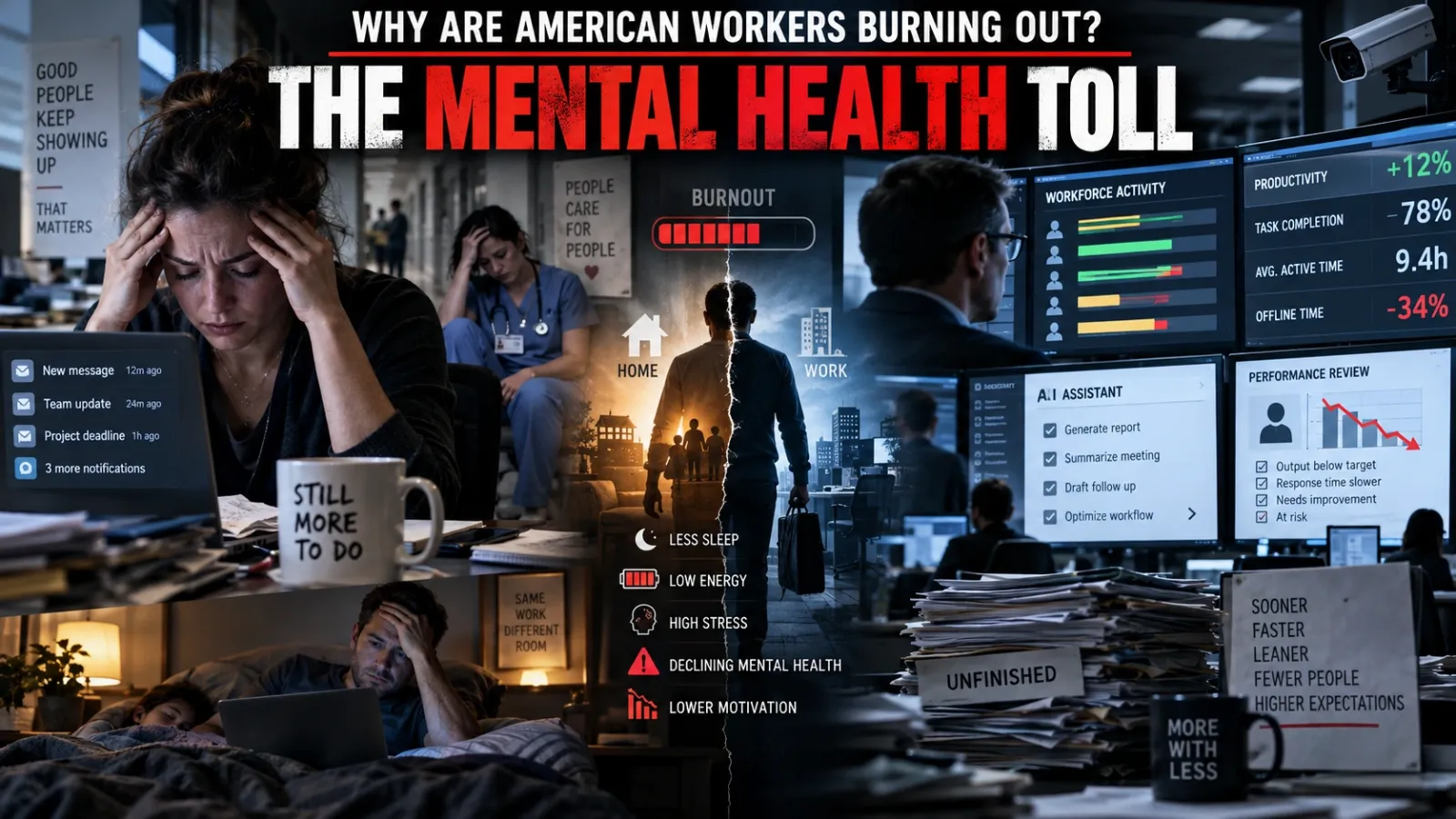
This epidemic of exhaustion extracts a catastrophic cost of $1 trillion annually from the global economy, driven predominantly by lost productivity and absenteeism. In the United States, recent data from the American Psychological Association (APA) and industry analysts paints a dire picture of a workforce pushed beyond its absolute limits. Approximately 67 percent of American workers experienced at least one burnout-associated symptom—such as emotional exhaustion or reduced motivation—in a single month. Furthermore, 55 percent of workers report currently experiencing burnout, representing a grim six-year high, while 72 percent report carrying moderate-to-high stress.
| Stress and Burnout Indicator | Percentage of U.S. Workers Affected |
|---|---|
| Experienced at least one burnout symptom in past month | 67% |
| Currently experiencing active burnout | 55% |
| Report moderate-to-high baseline stress | 72% |
| Gen Z workers reporting burnout | 74% |
| Report workplace conditions adversely impacted well-being | 84% |
Table 1: Prevalence of stress and burnout indicators among the American workforce. Data aggregates recent findings from APA and National Safety Council surveys. |
The financial fallout for American businesses is equally severe, with burnout costing roughly $5 million a year for every 1,000 employees. This financial bleed occurs through two primary mechanisms: absenteeism, where employees are too unwell to work, and presenteeism, where employees physically show up but are cognitively and emotionally disengaged. Across all sectors, nearly 47 percent of employees display presenteeism, severely compromising operational efficiency. High-stress workers effectively lose about half of their productive output, fundamentally undermining the outdated corporate logic that heavier workloads inherently yield higher financial returns.
The human consequences of this dynamic extend far beyond corporate balance sheets, infiltrating the daily lives and long-term physical health of families. Workers experiencing chronic occupational stress face significantly higher risks for cardiovascular disease, chronic insomnia, and early mortality. The sheer exhaustion follows employees home, severely diminishing their capacity to engage in their communities or support their loved ones. More than a quarter of employees report a complete inability to switch off and relax in their personal time, highlighting the total collapse of the boundary between professional obligations and private life.
The Global Mandate Meets American Reality
The WHO and ILO policy brief issued in 2022 marked a paradigm shift in how the global community views occupational health, framing psychological safety as a non-negotiable human right. The guidelines explicitly established that decent work can be a highly protective factor for mental health, providing routine, purpose, a livelihood, and community inclusion. Conversely, harmful working conditions—such as severe understaffing, inflexible hours, lack of control over job design, and authoritarian supervision—actively destroy mental well-being. The WHO emphasized that preventing work-related mental health conditions requires fundamentally redesigning the organizational structures that create these psychosocial risks in the first place.
Despite this clear global directive, governments have historically failed to invest in the necessary infrastructure to protect workers. In 2020, governments worldwide spent an average of just 2 percent of their health budgets on mental health, with lower-middle-income countries investing less than 1 percent. This systemic underfunding left workers entirely dependent on the goodwill of their employers, who often favored superficial wellness perks over meaningful organizational reform. The WHO guidelines challenged this dynamic, explicitly calling for compliance with labor laws and integrating mental health directly into the responsibilities of national labor inspectorates.
In the United States, this global awakening mirrored the release of the U.S. Surgeon General’s Framework for Workplace Mental Health and Well-Being. Centered on the worker’s voice and equity, the framework established “Protection from Harm” as the foundational pillar for any healthy workplace. The Surgeon General explicitly defined safety not just as the absence of physical injury, but as the active protection of workers from psychological harm, bullying, and systemic harassment. This federal framework demanded that employers prioritize adequate rest, noting that long work hours drastically raise the risk of anxiety, depression, and dangerous workplace mistakes.
The alignment of the WHO guidelines and the Surgeon General’s framework represents a critical transition from blaming the individual to holding the organization accountable. For decades, employers relied heavily on resilience training or mindfulness apps, effectively asking employees to meditate their way out of structurally toxic environments. The new consensus dictates that interventions must target the root causes of distress, prioritizing the elimination of hazards—such as excessive workloads or toxic management—before resorting to individual-level coping strategies. This shift requires a fundamental redistribution of workplace power, prioritizing basic human needs over relentless corporate optimization.
The Algorithmic Boss and the Surveillance State
As public health officials advocate for psychological safety, the rapid integration of artificial intelligence and algorithmic management has introduced a terrifying new psychosocial hazard. APA survey data reveals that slightly more than half of all American workers (51 percent) are aware that their employer uses technology to monitor them electronically. This surveillance is not confined to remote office workers; it is equally prevalent across manual labor and customer service sectors. For these workers, the constant, unblinking gaze of an algorithmic boss fundamentally destroys trust and strips away their sense of professional autonomy.
The psychological impact of electronic monitoring is both measurable and severe, acting as a direct catalyst for occupational burnout. Data indicates that 56 percent of workers who experience employer monitoring feel tense or stressed out at work, compared to just 40 percent of those who are not monitored. Monitored workers report significantly higher rates of emotional exhaustion, feelings of ineffectiveness, and a desire to isolate themselves from their colleagues. When workers feel they are treated as pure data points rather than human beings, their commitment to the organization plummets, and the unspoken agreement of mutual respect is irreparably broken.
| Psychological Impact Indicator | Workers Monitored by AI/Tech | Workers Not Monitored |
|---|---|---|
| Feel tense or stressed on a typical workday | 51% | 38% |
| Experience feelings of emotional exhaustion | 39% | 22% |
| Feel micromanaged by their employer | 51% | 33% |
| Desire to keep to themselves at work | 30% | 19% |
| Intent to look for a new job within 12 months | 42% | 23% |
Table 2: The psychological toll of electronic workplace surveillance. Data demonstrates the stark contrast in well-being and retention between monitored and unmonitored employees. |
Labor organizations have recognized this technological overreach as an existential threat to the American workforce. The AFL-CIO has launched aggressive initiatives demanding human oversight in employment decisions and strict limitations on invasive worker surveillance. Union leaders argue that algorithmic management creates dangerous information asymmetries, where employers hold vast amounts of behavioral data while workers are left entirely in the dark regarding how their performance is judged. Protecting workers from these digital hazards has become the modern frontier of labor rights, demanding collective action to prevent the complete destruction of workplace privacy.
Furthermore, the implementation of surveillance technologies frequently ignores the core principles of human-centered work design outlined by the WHO. Rather than involving workers in the design and deployment of these systems, monitoring is often imposed as a punitive measure to extract maximum labor efficiency. Psychologists note that when data from monitoring is used to punish people or justify treating them like machines, it limits an employee’s autonomy and creates deep fears of job insecurity. This environment of constant scrutiny actively undermines the Surgeon General’s requirement that workers feel they truly matter to their organization.
The Threat of Artificial Intelligence on Worker Psyche
Beyond the immediate stress of electronic surveillance, the broader deployment of artificial intelligence is driving deep, existential anxiety regarding job security. APA research shows that nearly four out of ten U.S. workers (38 percent) are worried that AI may make some, or all, of their job duties obsolete in the near future. This fear of the unknown is directly correlated with psychological distress, occupational stress, and long-term strain, as workers grapple with a profound loss of control over their economic futures. The anxiety surrounding AI replacement is not merely theoretical; it manifests in measurable declines in daily motivation and workplace engagement.
This technological anxiety disproportionately impacts specific demographic groups, exacerbating existing workplace inequities. Worry about AI obsolescence is significantly more prevalent among workers under age 58, who face decades of future career uncertainty compared to those nearing retirement. Furthermore, people of color report higher levels of concern regarding AI’s effect on their jobs than their White counterparts. These demographics acutely understand that algorithmic systems frequently perpetuate historical biases, leading to fears of algorithmic discrimination in hiring, firing, and performance evaluations.
The sheer cognitive load required to adapt to rapidly changing AI systems is also accelerating employee burnout. Industry data reveals that active AI users carry a burnout risk 4.5 times higher than their non-using peers. While AI is frequently marketed as a tool to streamline workflows and reduce repetitive tasks, the reality for many workers is an intensification of their workload. As AI accelerates the pace of basic tasks, employees are often expected to dramatically increase their output, leaving no margin for cognitive recovery or deep, focused thought.
To mitigate this distress, public health frameworks suggest that transparency and employee participation are vital. Providing clear, honest information about the intended use of AI and allowing employee input into technological transitions can significantly alleviate feelings of helplessness and isolation. When employers deploy AI as a tool to empower workers rather than a mechanism to replace or surveil them, the psychological friction is reduced. However, until robust regulations are established to ensure these technologies are governed by human-centric principles, AI will remain a potent psychosocial hazard in the American economy.
Frontline Collapse: Healthcare and Education
Nowhere is the failure to protect worker mental health more glaringly obvious than in the caregiving and frontline sectors. Healthcare workers, who operate in high-stakes, life-or-death environments, have seen their psychological and physical safety deteriorate to alarming levels. Bureau of Labor Statistics (BLS) data indicates that the healthcare and social services sector recently reported 553,800 nonfatal injury and illness cases, outpacing traditionally dangerous industries like construction and manufacturing. The trauma of essential work, compounded by systemic understaffing and relentless administrative overload, has pushed these professionals to the brink of total systemic collapse.
The violence directed at healthcare workers further illustrates the complete breakdown of workplace safety. More than 44 percent of registered nurses report having experienced physical violence on the job, while over 80 percent of emergency physicians believe the rate of violence in their departments has escalated. This constant exposure to physical and emotional trauma drives staggering rates of burnout; nearly 20 percent of U.S. health workers report feeling burned out “very often,” up significantly from previous years. When the people tasked with healing the public are themselves broken by their working conditions, the entire national healthcare infrastructure is placed at severe risk.
| Sub-Sector (Healthcare and Social Assistance) | Incidence Rate (per 100 full-time workers) |
|---|---|
| Ambulance services | 7.4 |
| Nursing care facilities (skilled nursing) | 6.9 |
| Continuing care and assisted living facilities | 6.5 |
| Psychiatric and substance abuse hospitals | 6.3 |
| General medical and surgical hospitals | 5.1 |
Table 3: Incidence rates of nonfatal occupational injuries and illnesses in healthcare sub-sectors. The data highlights the extreme physical and psychological risks faced by frontline caregivers. |
The American education sector is mirroring this catastrophic decline, with K-12 workers consistently reporting the highest burnout rates of any U.S. industry. Recent polling shows that 44 percent of K-12 workers always or very often feel burned out at work, a figure that jumps to an astonishing 52 percent for teachers specifically. Female teachers bear an even heavier emotional burden, with 55 percent reporting chronic, unmanageable burnout. This mass demoralization of educators directly impacts the quality of public education, driving turnover rates that destabilize schools and surrounding communities.
The turnover rates driven by this extreme stress are hollowing out institutions that form the bedrock of civil society. In parts of the education sector, turnover rates reached as high as 70 percent following the peak of the pandemic disruptions. High-stress workers who attempt to remain on the job face cognitive impairments that limit their effectiveness, demonstrating that society cannot extract infinite emotional labor without providing adequate systemic support. The collapse of these frontline sectors serves as a grim, real-time warning of what happens when occupational health is treated as a disposable, inexhaustible commodity.
The Inequity of Exhaustion: Race, Wage, and Toxicity
The burden of toxic workplaces is not distributed equally across the American economy; it falls disproportionately on historically marginalized and low-wage workers. Demographic data reveals that Black and Hispanic workers are significantly more likely to report feeling a lack of support from their employers (39 percent and 34 percent, respectively) compared to their White counterparts. Similarly, LGBTQ+ workers report higher levels of perceived isolation and a lack of support due to their identity. These disparities highlight how systemic discrimination, implicit bias, and microaggressions compound the daily stresses of the workplace, creating uniquely hostile environments for minority groups.
Low-wage workers face a distinct set of compounding physical and psychological hazards that trap them in cycles of chronic stress. Individuals with less formal education are frequently forced into positions characterized by low levels of control, chronic job insecurity, and inadequate compensation. These roles are also more likely to be physically demanding, involve exposure to environmental toxins, and require highly unpredictable scheduling that disrupts family life. The severe lack of autonomy in these positions is a primary driver of psychological distress, as workers are subjected to heavy demands without the authority or resources to manage them effectively.
The constant threat of unemployment and job insecurity serves as a grinding, inescapable stressor for marginalized populations. Being out of work, or fearing the imminent loss of a job, is a known risk factor for severe depression, anxiety, demoralization, and even suicide attempts. Unemployed and precariously employed individuals suffer from significantly elevated rates of high blood pressure, stroke, and cardiovascular disease, illustrating the profound physical toll of economic instability. For those living paycheck to paycheck, the inability to push back against toxic working conditions is rooted in the terrifying reality of financial ruin.
These structural inequalities underscore the absolute necessity of the Surgeon General’s emphasis on worker voice and systemic equity. Addressing workplace mental health requires actively dismantling the traditional hierarchies that allow managers to exploit vulnerable demographics with impunity. A truly healthy workplace cannot exist if only upper management feels secure, while front-line, in-person workers—who are more likely to report their workplace as toxic—endure chronic harassment, extreme fatigue, and economic coercion. Equity is not an abstract corporate public relations term; it is a fundamental, non-negotiable prerequisite for occupational health.
NIOSH, OSHA, and the Redefinition of Safety
In response to the escalating mental health crisis, federal agencies are fundamentally redefining what constitutes a safe work environment under U.S. law. The National Institute for Occupational Safety and Health (NIOSH) has pioneered the Total Worker Health (TWH) approach, a holistic model that integrates traditional physical safety protections with the active promotion of overall well-being. The TWH framework recognizes that it is scientifically impossible to draw artificial boundaries between a worker’s professional duties and their personal health. By evaluating psychosocial risks alongside chemical or mechanical hazards, NIOSH is attempting to modernize occupational health for the complex realities of the twenty-first century.
The TWH approach relies on a specific hierarchy of controls to mitigate workplace hazards, challenging employers to look beyond superficial wellness perks. The most effective intervention is always the total elimination of working conditions that threaten mental and physical well-being. When hazards like shift work or high-stakes crisis environments cannot be entirely eliminated, employers must utilize administrative controls, such as redesigning work processes or strictly limiting consecutive working hours. This systems-level thinking forces employers to take responsibility for the environments they create, rather than simply offering Employee Assistance Programs (EAPs) to workers they have already broken.
This shifting definition of safety carries profound legal implications under the purview of the Occupational Safety and Health Administration (OSHA). Section 5(a)(1) of the Occupational Safety and Health Act, known as the General Duty Clause, requires employers to provide a workplace free from recognized hazards that are causing or are likely to cause death or serious physical harm. As public health bodies explicitly identify severe occupational stress, burnout, and systemic harassment as recognized hazards that cause physical and psychological injury, the theoretical legal liabilities for toxic employers are expanding. While legal and editorial caution dictates noting that OSHA has not yet fully weaponized this clause for general stress claims, employment law experts acknowledge the regulatory framework for holding employers accountable for psychological damage is undeniably strengthening.
Workers are also increasingly leveraging the National Labor Relations Act (NLRA) to organize around workplace stress and mental health issues. When employees collectively demand better hours, protection from abusive customers, or strict limits on algorithmic surveillance, they are engaging in legally protected concerted activity. The convergence of NIOSH guidelines, potential OSHA General Duty Clause applications, and aggressive labor organizing indicates a massive cultural shift. Ignoring employee mental health is rapidly transitioning from a moral failing to a significant legal, regulatory, and financial liability.
Moving Beyond Performative Wellness
To meaningfully address the mental health crisis, organizations must abandon performative wellness initiatives and embrace structural engineering. The WHO strongly recommends implementing organizational interventions that directly assess, and then mitigate or remove, workplace risks to mental health. This includes participatory approaches to job design, where workers are actively involved in determining their workloads, deadlines, and daily operational protocols. Allowing employees to have a voice in how their work is executed fundamentally restores the autonomy that micromanagement and algorithmic surveillance destroy.
Workload modification is arguably the most critical lever for preventing occupational burnout. Over 35 percent of workers name a heavy or excessive workload as the single biggest driver of their workplace stress, eclipsing all other factors. Organizations must commit to safe staffing levels, achievable targets, and realistic deadlines that do not require constant heroic effort. Furthermore, employers must respect the boundaries between work and non-work time, actively discouraging the expectation of constant digital connectivity. A culture that encourages taking breaks, utilizing paid time off without penalty, and holding meeting-free days is essential for allowing the human nervous system to recover.
Managerial training is another vital component of engineering a sane, functional workplace. The WHO emphasizes that managers must be thoroughly trained to support their workers’ mental health, improving their knowledge, attitudes, and behaviors toward psychological distress. Currently, there is a massive disclosure and action gap; among burned-out workers who brave the stigma to disclose their struggles to a manager, 42 percent report that their manager took absolutely no action. Closing this gap requires organizations to hold leadership accountable not just for output metrics, but for the psychological safety and retention rates of their teams.
Finally, employers must aggressively dismantle the stigma surrounding mental health disclosures by proving that seeking help will not stall a career. Nearly two in five U.S. workers fear their career would suffer if they raised mental health concerns at work. Organizations must implement reasonable accommodations for workers with mental health conditions, such as flexible hours, modified assignments, or extra time to complete tasks, in line with international human rights principles. From a purely financial perspective, these interventions make sense; the WHO estimates that for every $1 invested in ordinary mental health concerns, employers see a $4 return in productivity gains. Cultivating an environment where vulnerability is met with structural support rather than punitive action is the only sustainable path forward.
What Happens Next
As the modern workplace continues to evolve, the collision between relentless productivity demands and the limits of human endurance will force an inevitable cultural and legislative reckoning. The WHO and ILO guidelines have established a powerful international precedent, providing labor unions, public health officials, and policymakers with the empirical backing needed to demand systemic change. In the United States, we can expect to see increased legislative momentum aimed at restricting algorithmic management, capping digital surveillance, and establishing clear boundaries for off-hours communication, championed by organizations like the AFL-CIO.
Simultaneously, the harsh economic reality of the mental health crisis will force corporate behavior to shift out of sheer necessity. As the compounding costs of burnout, absenteeism, and mass turnover continue to erode profit margins, even the most traditional employers will be forced to recognize that psychological safety is a core business imperative. The organizations that thrive in the coming decade will be those that view Total Worker Health not as a burdensome compliance checklist, but as the foundational architecture of a sustainable, resilient enterprise. Ultimately, the global effort to protect mental health at work is no longer just a medical initiative; it is a fight to reclaim the fundamental dignity of human labor in the twenty-first century.
Sources (63)
- who.int — Mental health at work
- ncbi.nlm.nih.gov — NBK586384
- who.int — Mental health in the workplace
- iris.who.int — Content
- who.int
- ilo.org — Wcms 856976
- who.int
- who.int
- who.int — 28 09 2022 who and ilo call for new measures to tackle mental health issues at w
- researchgate.net — 371342439 Mental health at work WHO guidelines
- hhs.gov — Index
- zerosuicide.edc.org — Us surgeon generals framework workplace mental health well being
- breeze.pm — Employee burnout statistics
- apa.org — Employee electronic monitoring
- apa.org — 2023 workplace health well being
- apa.org — 2023 work america ai monitoring
- psychology.com — Stress statistics
- webmdhealthservices.com — Workplace mental health statistics by industry
- pmc.ncbi.nlm.nih.gov — PMC10916729
- tandfonline.com — 01608061.2022.2146256
- ehsleaders.org — Understanding nioshs total worker health approach
- cdc.gov — Index
- pmc.ncbi.nlm.nih.gov — PMC6331007
- osha.gov — Employer guidance
- cdc.gov
- seyfarth.com — Minimizing osha liabilities through psychological safety
- wiki.wfmlabs.org — Occupational Health Psychology for WFM Practitioners
- governingforimpact.org — Letter to OSHA on Mental Health
- mdpi.com
- employmentlawbusinessguide.com — Understanding the osha general duty clause
- workwarsofficial.com — Employer duty mental health workplace
- who.int
- who.int
- who.int — 08 03 2024 new manual released to support diagnosis of mental behavioural and ne
- who.int
- who.int — 02 03 1444 who and ilo call for new measures to tackle mental health issues at w
- hhs.gov — Workplace mental health well being
- hhs.gov — Index
- hhs.gov — Reflection questions workplace mental health well being
- hhs.gov — Surgeon general social connection advisory
- apa.org — Artificial intelligence workplace worry
- apa.org — Improve employee mental health
- apa.org — Captivate partnership
- apa.org — Work mental health challenges
- apa.org — Ai and psychology
- apa.org — Artificial intelligence poor mental health
- spill.chat — Workplace mental health statistics
- osha.gov — Workplace stress
- wwwn.cdc.gov — Bls ch
- bls.gov — Injuries and illnesses
- healthcareworkforce.org — Bls finds healthcare worker nonfatal injuries increase are higher than any other
- nsc.org — Bls report workplace injuries down hazards persist
- bls.gov — Number and rate of nonfatal work injuries and illnesses by industry
- odphp.health.gov — Employment
- pmc.ncbi.nlm.nih.gov — PMC11826355
- nysaflcio.org — Artificial intelligence
- ainowinstitute.org — Algorithmic management
- nonprofitquarterly.org — Unions lead the fight for human oversight in ai
- aflcio.org — Workers first ai
- theschoolleader.org — Afl cio launches workers first initiative ai
- broadbandbreakfast.com — Afl cio president calls ai single biggest threat to working people of our lifeti
- racepowerpolicy.org — Ai surveillance and exploitation are pushing down labor value
- ilo.org — Wp144 web



Leave a Reply