
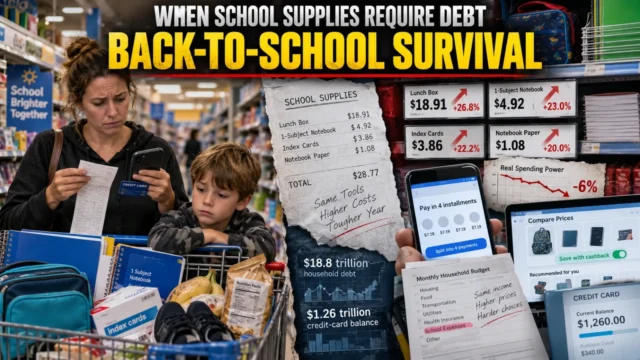
American parent comparing school supplies and household expenses during the 2026 back-to-school affordability crisis

When School Supplies Require Debt: Back-to-School Survival

America’s 2026 back-to-school season is exposing a widening affordability crisis as families face higher prices, shrinking real spending power and growing reliance on debt. Parents are cutting other expenses, draining savings and financing basic school supplies through credit cards and BNPL services.
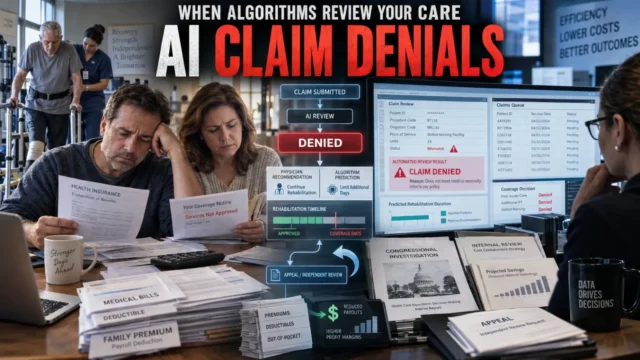
American patient facing medical bills beside a health insurance claims review dashboard representing AI-driven healthcare claim decisions

When Algorithms Review Your Care: AI Claim Denials

Artificial intelligence is increasingly shaping how US health insurers review claims and post-acute care. Lawsuits, congressional scrutiny and rising household costs are intensifying debate over automated healthcare decisions.

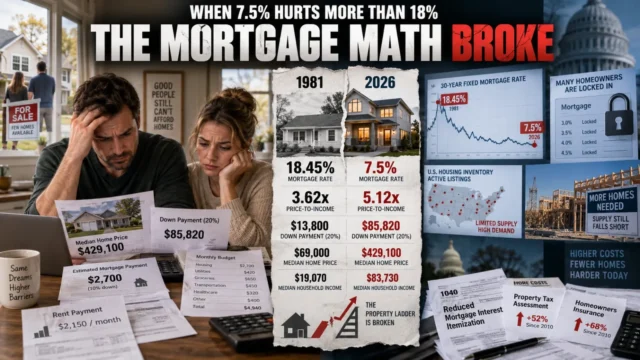
American family reviewing mortgage costs beside a home price and interest-rate comparison between 1981 and 2026

When 7.5% Hurts More Than 18%: The Mortgage Math Broke

A 7.5% mortgage rate in 2026 can impose a heavier affordability burden than 18.45% did in 1981 because home prices have far outpaced household incomes. Down payments, reduced tax advantages, mortgage lock-in and housing shortages have further weakened access to homeownership.

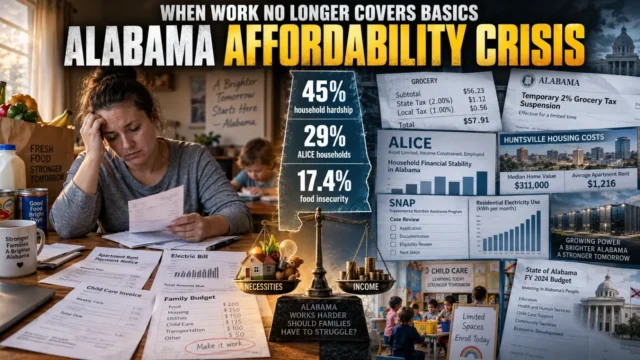
Alabama working family facing grocery, housing, electricity and child care costs during the state's affordability crisis

When Work No Longer Covers Basics: Alabama Affordability Crisis

Alabama families face mounting pressure from regressive taxes, rising housing and grocery costs, high utility bills, food insecurity and unaffordable child care. Nearly half of households are experiencing financial hardship despite many remaining above the official poverty line.

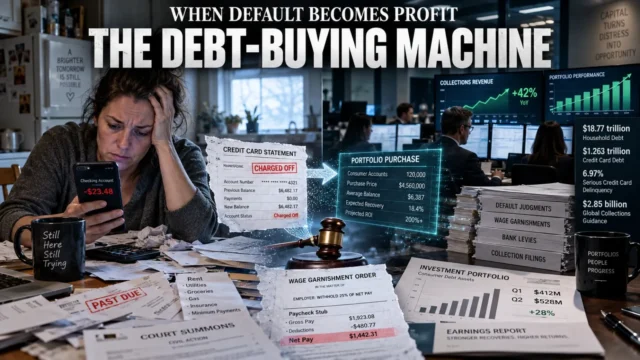
American consumer facing credit card bills and court papers beside financial data representing Encore Capital Group's debt-buying business

When Default Becomes Profit: The Debt-Buying Machine

Encore Capital Group’s 2026 financial growth shows how charged-off consumer debt can become a highly profitable asset. The analysis examines portfolio purchases, litigation, default judgments, garnishment and the household distress feeding the debt-buying industry.

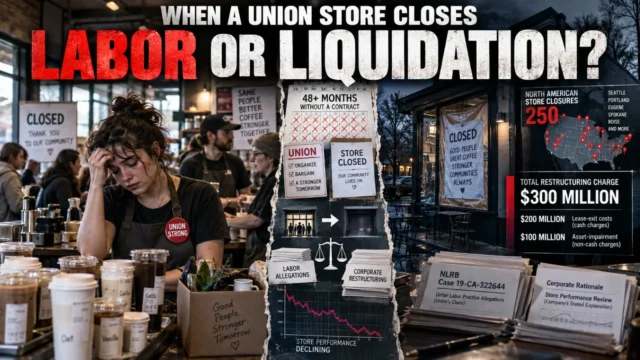
Unionized Starbucks workers and a closing coffeehouse symbolize the Oregon Starbucks closure dispute over bargaining, restructuring and worker rights

When a Union Store Closes: Labor or Liquidation?

The closure of Starbucks’ unionized Willamette Street store in Eugene intensifies scrutiny of bargaining delays, restructuring and retaliation allegations. Workers face displacement after years without a finalized labor agreement.

Elderly American patient and exhausted caregiver contrasted with private equity financial documents, debt charts and nursing-home assets

When Care Becomes an Asset: Private Equity in Eldercare

Private equity firms have expanded deeply into US eldercare through nursing homes, hospices and home health agencies. Research cited in the article links this financial model with debt pressure, workforce instability and troubling patient-care outcomes.

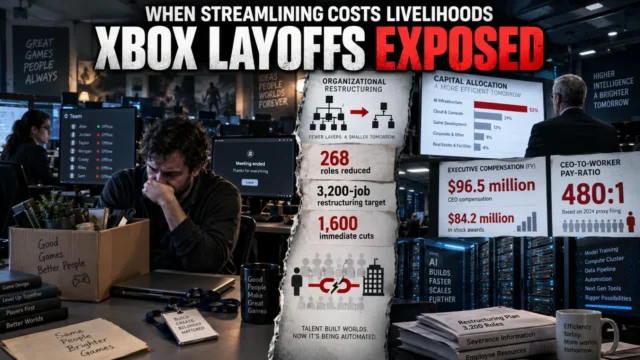
Game developer facing layoff uncertainty beside corporate restructuring dashboards and AI infrastructure imagery

When Streamlining Costs Livelihoods: Xbox Layoffs Exposed

Xbox’s latest restructuring highlights how corporate language can soften the human reality of layoffs. The analysis examines studio closures, survivor syndrome, executive compensation and Microsoft’s broader AI-driven capital shift.

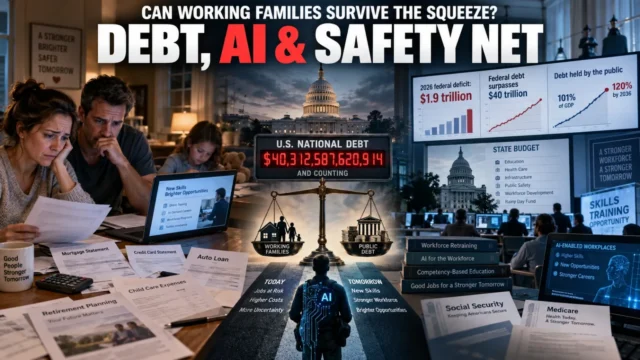
American working family facing federal debt pressure, AI-driven job disruption and a strained social safety net

Can Working Families Survive the Squeeze? Debt, AI & Safety Net

The American Opportunity Project brings governors and policy leaders together as rising federal debt, AI disruption and strained safety-net systems reshape working-family security. The initiative focuses on state-led solutions for workforce development, fiscal pressure and economic mobility.

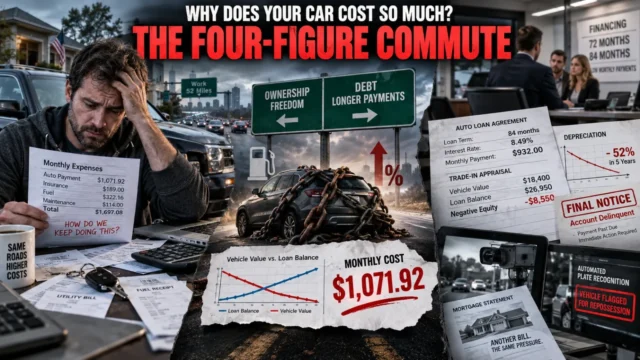
American commuter beside a modern vehicle with auto loan paperwork, payment figures and depreciation data illustrating rising US car ownership costs

Why Does Your Car Cost So Much? The Four-Figure Commute

The average cost of owning and operating a new vehicle reached $12,863 a year in 2026. Depreciation, high financing costs, negative equity and rising delinquencies are deepening the financial burden on American households.

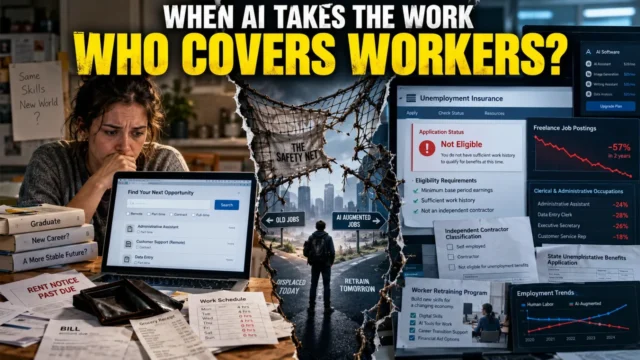
Displaced American worker facing financial pressure beside unemployment insurance documents and AI-related labor market data

When AI Takes the Work: Who Covers Workers?

AI-driven labor-market disruption is exposing long-standing gaps in US unemployment insurance, particularly for gig workers, part-time workers and new entrants. The coverage gap can leave displaced workers with little financial runway to retrain or search for suitable employment.

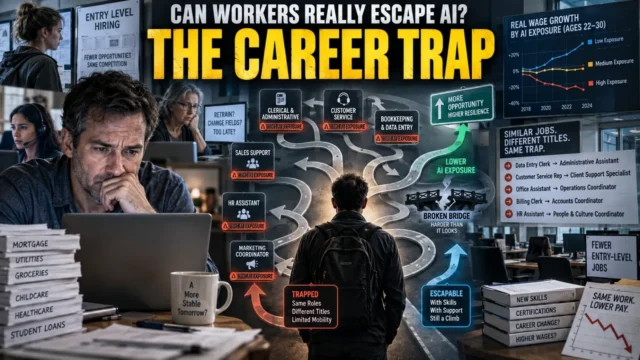
American workers navigating career transitions while AI automation threatens administrative and bridge occupations

Can Workers Really Escape AI? The Career Trap

New worker-mobility research suggests AI exposure alone does not reveal who can realistically escape automation risk. Career networks, bridge occupations, demographics and wage losses may determine who becomes trapped.

American worker facing rising living costs, declining labor income and growing barriers to household wealth building

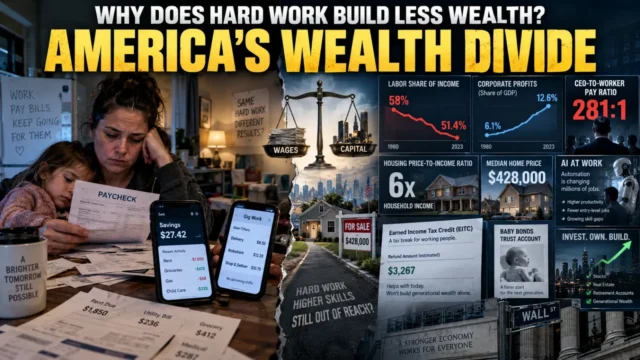
Why Does Hard Work Build Less Wealth? America’s Wealth Divide

The link between steady work and long-term wealth has weakened as labor income loses ground to capital, housing becomes less affordable, and job volatility increases. Urban Institute researchers argue that income support and asset-building policies must work together to restore economic security.

Stressed American employee at a workstation contrasted with workplace monitoring dashboards and artificial intelligence systems

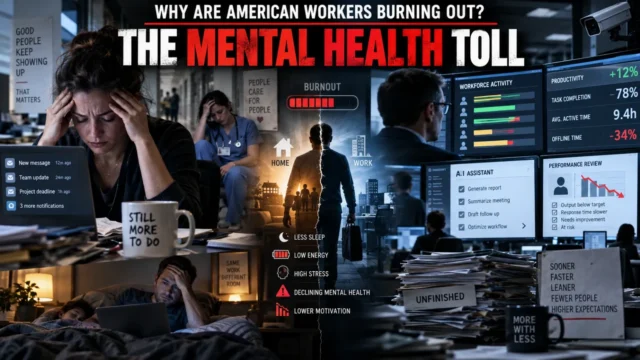
Why Are American Workers Burning Out? The Mental Health Toll

American workers are facing severe burnout, chronic stress, electronic monitoring and growing anxiety over artificial intelligence. Global and U.S. health frameworks increasingly argue that employers must address the workplace conditions driving psychological harm.

Michigan workers, restaurant staff and families representing debates over wages, childcare costs, employment and labor protections

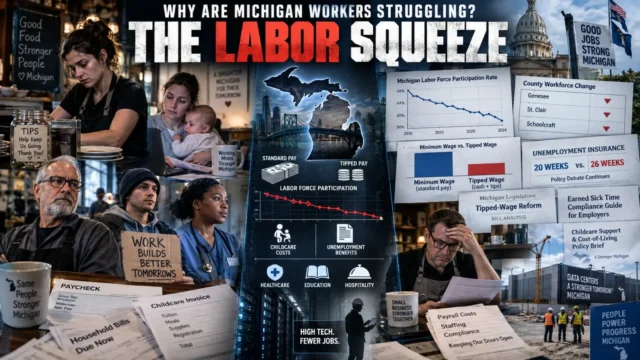
Why Are Michigan Workers Struggling? The Labor Squeeze

Michigan’s labor market combines shrinking participation, expensive childcare, wage disparities and contested workplace reforms. This analysis examines the competing worker, policy and small-business perspectives shaping the state’s economic future.

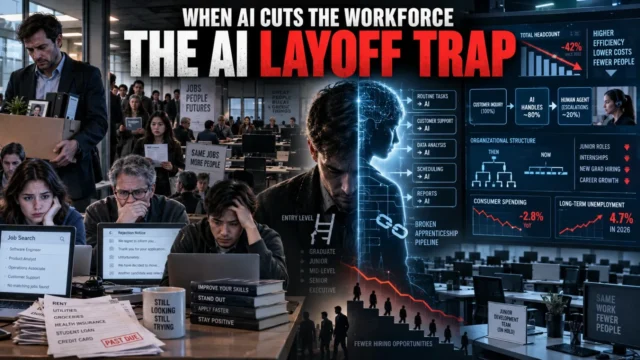
Displaced technology worker facing AI-driven restructuring, shrinking hiring opportunities and corporate automation pressures in 2026

When AI Cuts the Workforce: The AI Layoff Trap

The 2026 wave of AI-driven restructuring is cutting white-collar jobs, weakening junior hiring and intensifying competition for comparable work. Economic research and Klarna’s automation reversal reveal how aggressive cost-cutting can also damage demand, service quality and long-term talent pipelines.

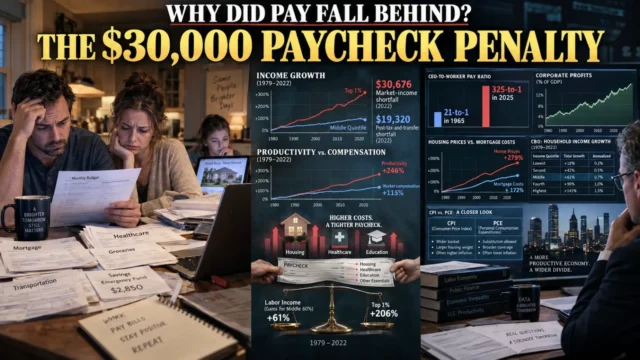
American middle-class family reviewing household expenses beside wage, productivity and income inequality data

Why Did Pay Fall Behind? The $30,000 Paycheck Penalty

Decades of uneven income growth have left middle-class households far behind the top one percent. The divide between productivity, worker compensation and living costs is now central to America’s affordability crisis.

Gig workers facing algorithmic management under ILO Convention 193

Global rights for GIG workers: US votes NO

ILO Convention 193 creates a binding international framework for labor rights in the platform economy. The United States voted against the treaty as it advances protections on classification, algorithms, and worker rights.

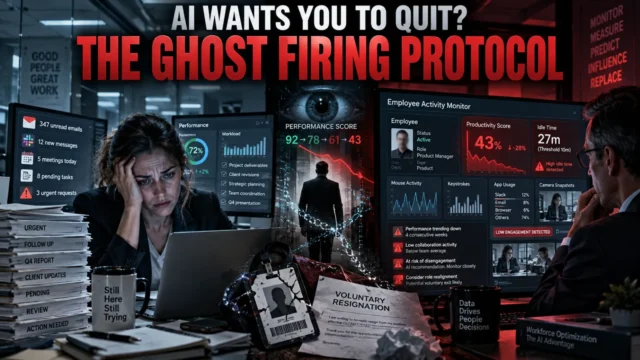
AI ghost firing and workplace surveillance pushing an exhausted American employee toward resignation

The “Ghost Firing” Protocol: How AI-Driven Management Can Push Employees to Quit

Your boss may never call you into a room and fire you. The algorithm may do something quieter. Impossible targets appear. Every idle minute becomes a metric. Meaningful projects disappear. Surveillance intensifies, performance scores deteriorate, and eventually quitting feels easier than staying. This investigation examines the emerging idea of “ghost firing”—the use of AI-driven management, workplace monitoring and psychological pressure to create conditions that can push employees out without a conventional layoff.